
Light
Bright Indirect Light
Requires bright, filtered sunlight; protect from harsh, scorching afternoon sun in mid-summer.
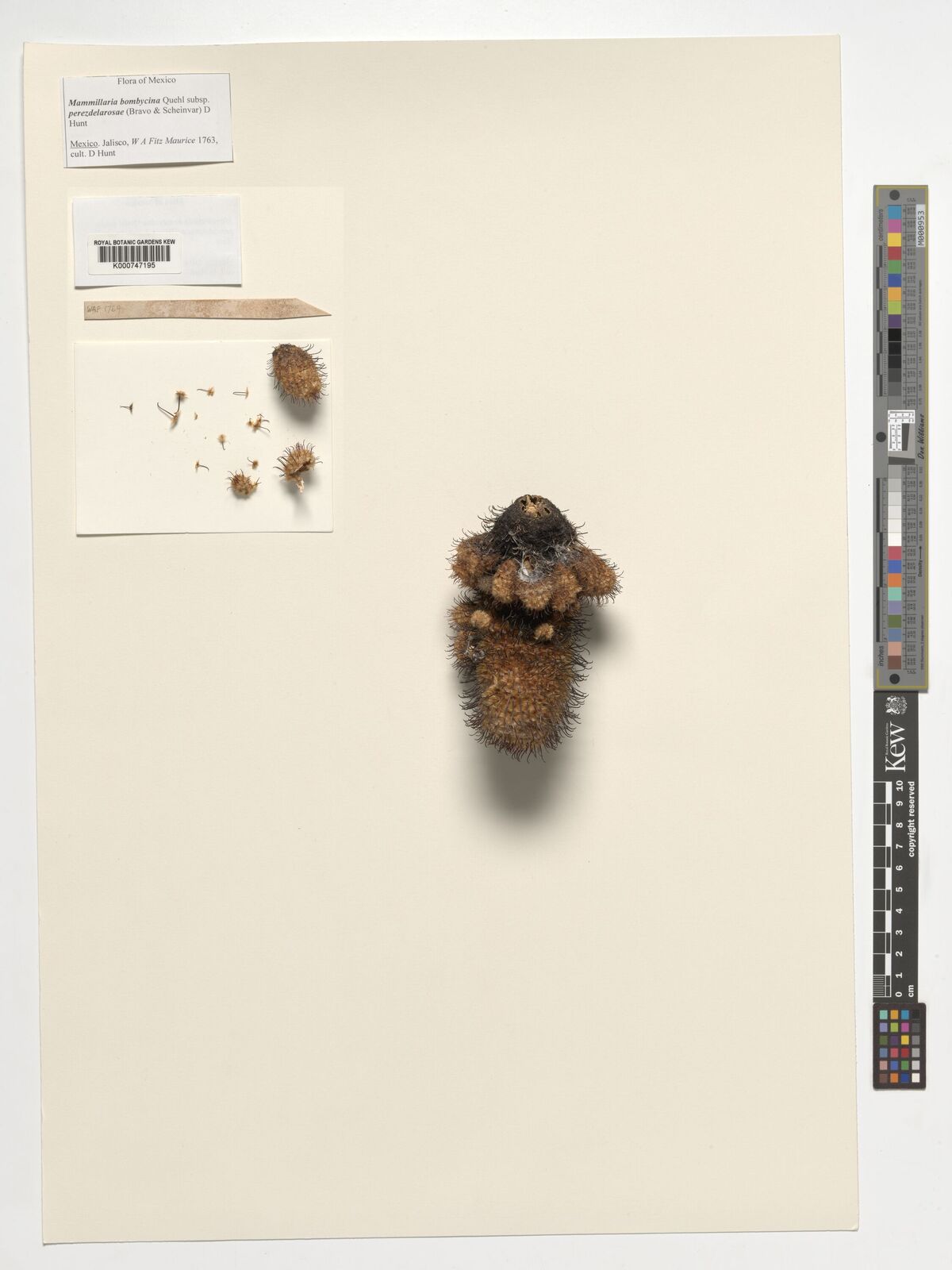 Reference image
Perez de la Rosa's Pincushion
Mammillaria perezdelarosae is a highly sought-after and visually stunning miniature cactus belonging to the family Cactaceae. It is highly prized among succulent enthusiasts for its dense, snow-white radial spines that contrast beautifully with dark, hooked central spines 1.
First formally described in 1985, this species was named in honor of the Mexican botanist Jorge Pérez de la Rosa 2. Within the genus Mammillaria, it is classified under the series Lasiacanthae, which is characterized by species with very dense, fine, and plumose spine coverage 1.
This species is strictly endemic to Mexico, specifically found in the states of Jalisco and Aguascalientes 2. It grows at high altitudes of over 2000 meters above sea level, typically wedged in the crevices of steep volcanic rocks and dry shrublands. Due to illegal wild collection and habitat loss, it is currently listed as Critically Endangered (CR) on the IUCN Red List 3.
The stem is globose to shortly cylindrical, usually remaining solitary but occasionally offsetting from the base with age. The entire body is hidden beneath a dense covering of white, pectinate radial spines. From the center of each areole emerges a prominent, sharply hooked central spine of a dark reddish-brown to black coloration. In spring, it produces a ring of small, creamy-pink to pale yellow flowers near the crown 1.
In cultivation, this species requires a highly porous, mineral-rich substrate to prevent root rot, to which it is extremely susceptible 2. Water thoroughly during the active spring and summer growth seasons, allowing the soil to dry out completely between waterings. In winter, maintain a completely dry regime and keep the plant in cool conditions.
The most frequent mistake is overwatering or using heavy, organic-rich soil that retains moisture. Lack of adequate winter chill and dryness often results in a failure to bloom and weak, etiolated growth.
Requires bright, filtered sunlight; protect from harsh, scorching afternoon sun in mid-summer.
Water only when the substrate is completely dry. Suspend watering entirely during winter.
Requires a highly porous, gritty mix composed primarily of mineral elements like pumice and coarse sand.
Non-toxic, but the sharp, hooked central spines easily catch on skin or clothing; handle with care.
Moderately challenging due to its high sensitivity to excess moisture and root rot.
Endemic to high-altitude volcanic cliffs and dry shrublands of Jalisco and Aguascalientes in Mexico, growing in narrow rock crevices at elevations exceeding 2000 meters.
