
Light
Direct Sun
Requires at least 6 hours of direct sun daily; low light leads to leggy growth.
 Reference image
 Reference image
Rock-Loving Mammillaria
Mammillaria petrophila is a highly resilient cactus species belonging to the family Cactaceae. Growing as a succulent subshrub, this plant has adapted excellently to survive in rocky terrains and arid, nutrient-poor soils of dry shrublands 1.
Classified within the species-rich genus Mammillaria, the specific epithet petrophila derives from the Greek words petra, meaning 'rock', and philos, meaning 'loving'. This directly refers to the plant's natural preference for growing on vertical rock faces 2.
This species is endemic to Mexico, specifically occurring in the state of Baja California Sur. It is primarily found in the Sierra de la Laguna mountain range, inhabiting granite rock crevices, cliffs, and dry desert shrublands 1.
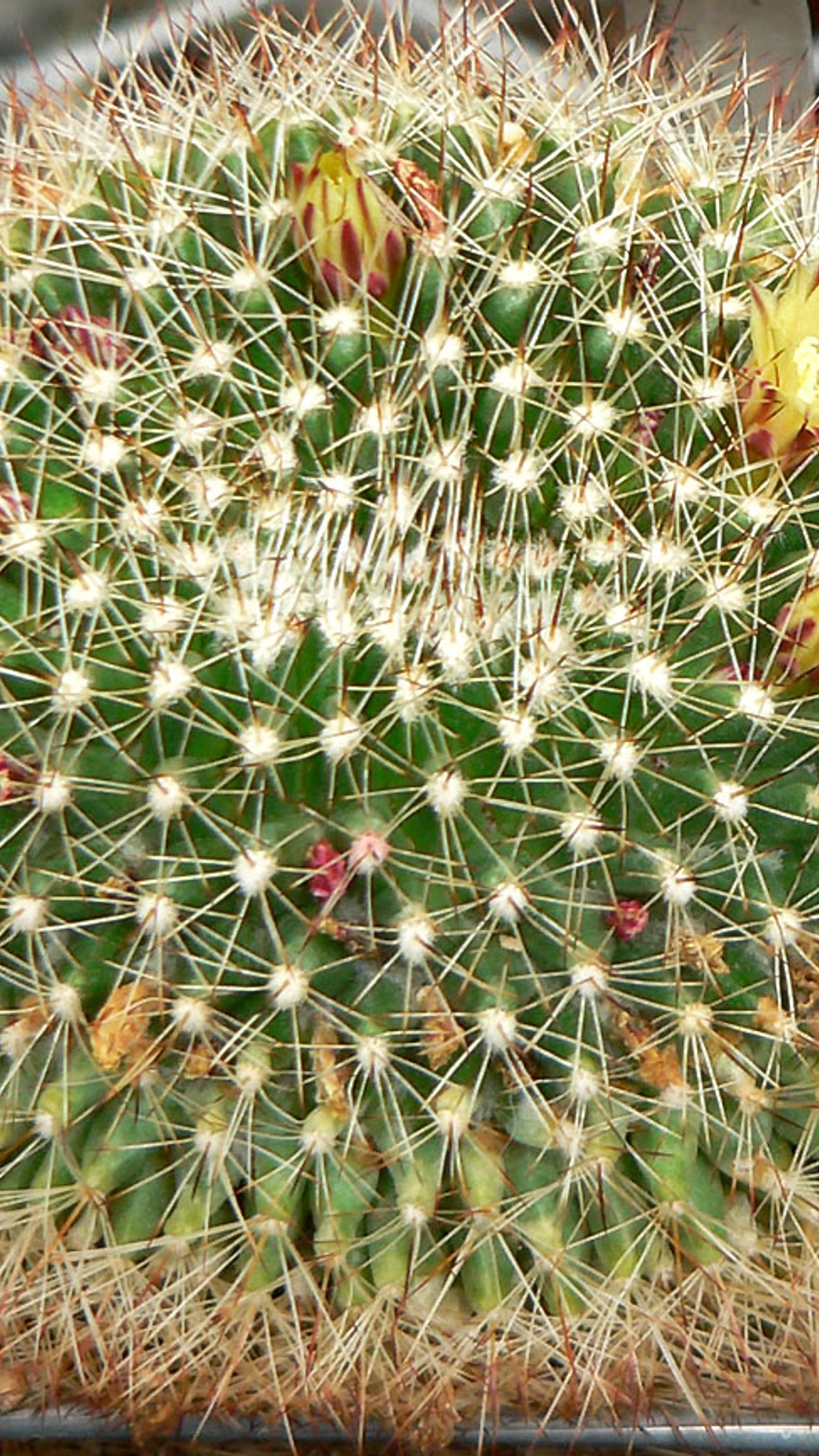
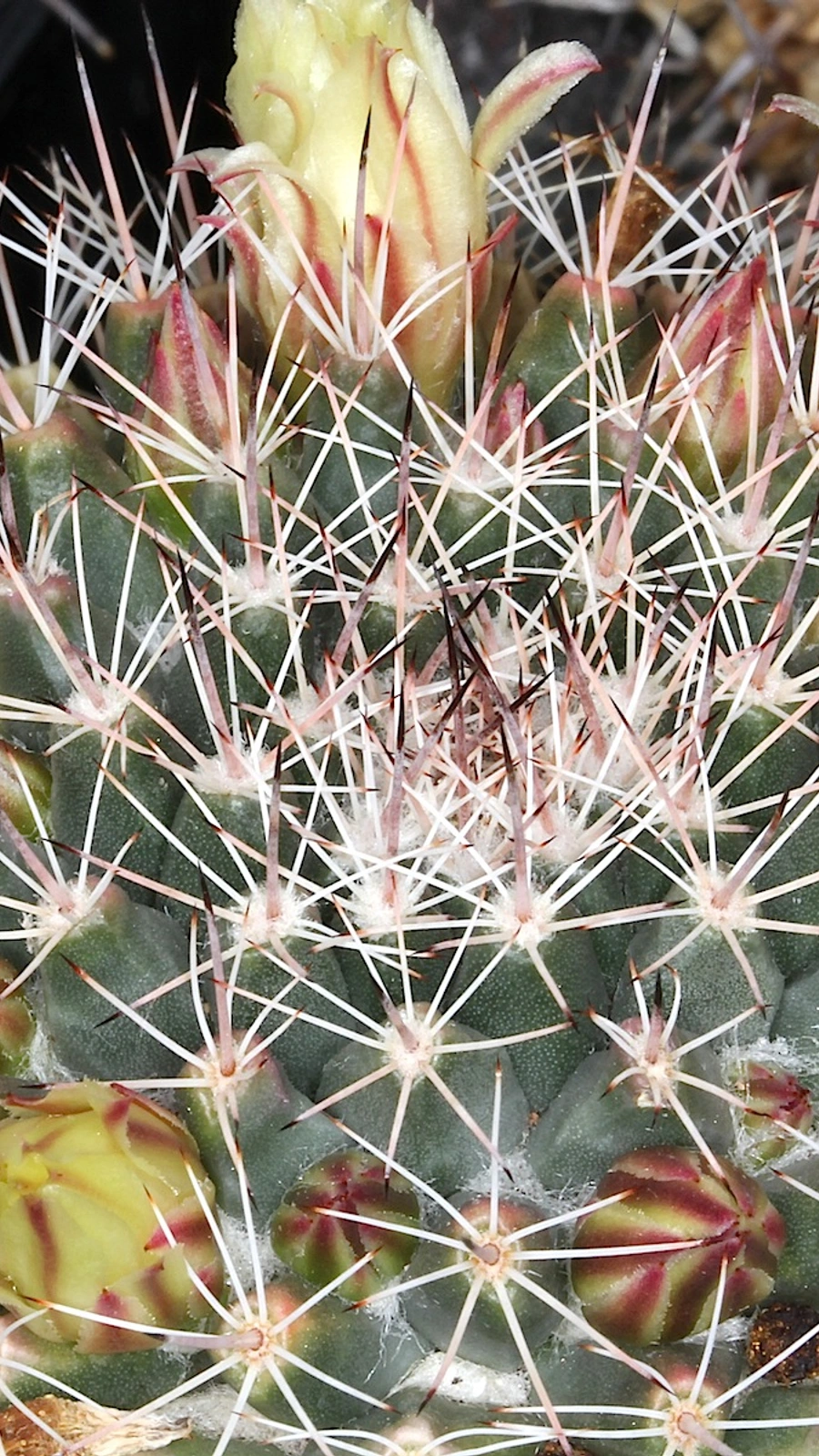
The stems are typically solitary but can cluster from the base over time. The globose to short cylindrical stems are covered in distinct tubercles. Sharp, yellowish-brown to dark brown central and radial spines emerge from the areoles. The flowers are pale yellow or cream-colored, often featuring reddish-brown midstripes on the petals 2.
Mammillaria petrophila is an easy-to-grow species in home collections. It requires direct sunlight to maintain its compact shape and produce strong spines. Watering must be strictly limited to when the soil is completely dry 2.
The most frequent issue is overwatering combined with poorly draining soil. This causes root rot, which is fatal. Additionally, keeping the plant in low-light conditions results in etiolation 1.
Requires at least 6 hours of direct sun daily; low light leads to leggy growth.
Allow soil to dry out completely between waterings. Reduce to a minimum in winter.
Requires gritty, mineral-based soil with excellent drainage (pumice, sand, perlite).
Non-toxic, but features sharp spines that can cause physical injury to pets and humans.
Very easy; highly drought-tolerant and perfect for beginners.
Endemic to the rugged granite peaks of the Sierra de la Laguna range in southern Baja California, Mexico, where it thrives directly in rocky crevices.
