
Light
Direct Sun
Requires full, direct sun for at least 6 hours daily to develop healthy spines and flowers.
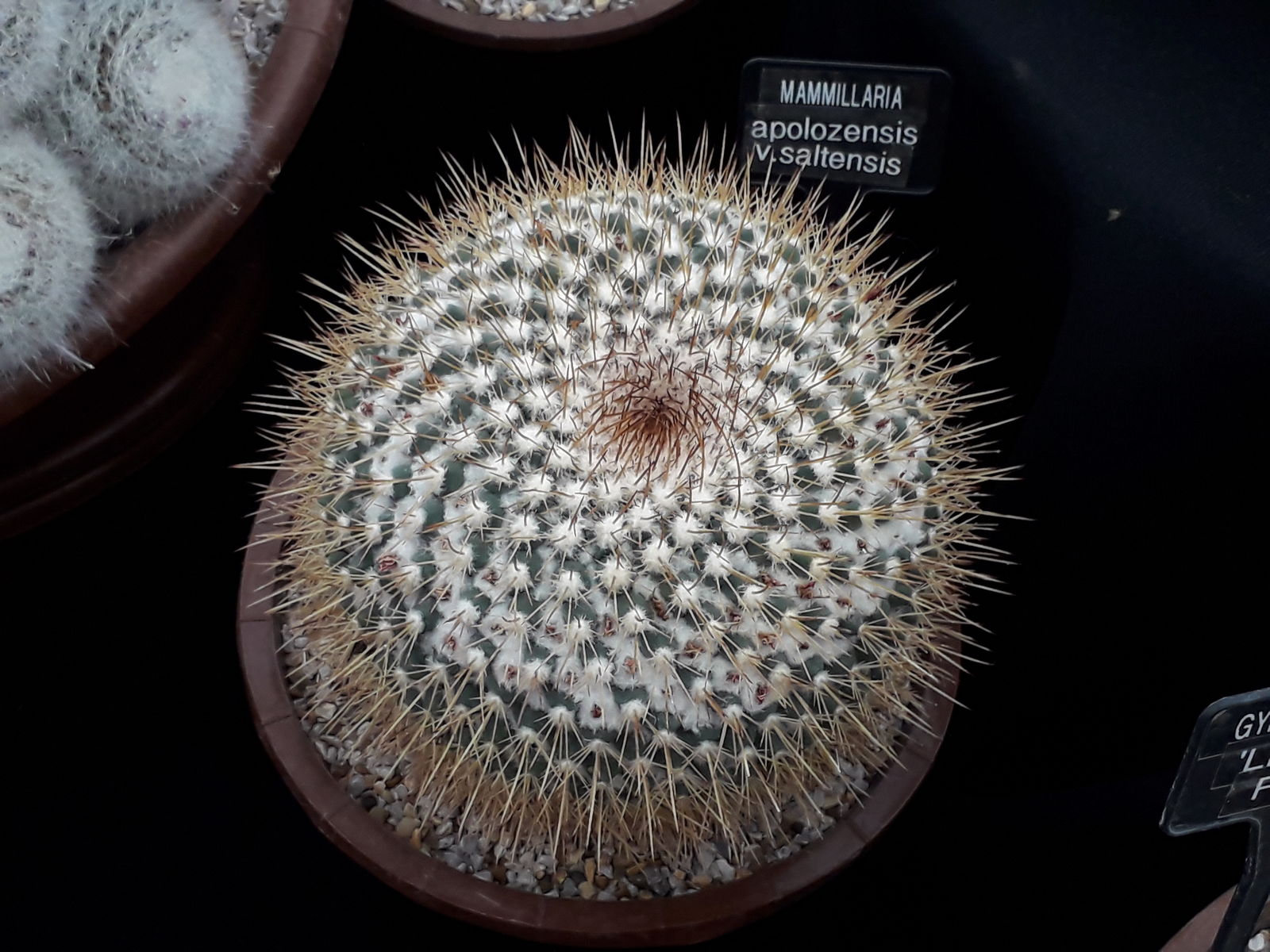 Reference image
Pettersson's Nipple Cactus
Mammillaria petterssonii is a highly resilient and visually striking globose cactus belonging to the massive Mammillaria genus in the family Cactaceae. Native to the high-elevation arid regions of Mexico, it is well-regarded among hobbyists for its strong, robust spine formation and beautiful bell-shaped flowers 1.
First formally described by Hildmann, the species epithet honors J. R. Pettersson, a dedicated Swedish plant collector and botanical enthusiast. Like other members of the genus Mammillaria, its generic name derives from the Latin 'mammilla' (meaning nipple or tubercle), referencing the prominent tubercles covering the stem 2.
This species is widely distributed across the Mexican states of Aguascalientes, Zacatecas, San Luis Potosí, Guanajuato, Jalisco, Michoacán, and Querétaro. It thrives in dry shrublands, volcanic rocky crevices, and dry oak forests, usually at elevations ranging from 1,800 to 2,400 meters above sea level 1.
Mammillaria petterssonii typically grows as a solitary globose to shortly cylindrical stem, occasionally clustering from the base as it matures. The stem can reach up to 12 cm in diameter and 20 cm in height. The tubercles are robust and conical, with woolly axils. Areoles bear stiff, yellowish to greyish-brown spines. In late spring or early summer, it produces small creamy pink to pale-yellow flowers arranged in a ring near the crown.
In cultivation, Mammillaria petterssonii requires plenty of direct sunlight to maintain its dense, colorful spine structure and to stimulate abundant flowering 2. Watering must follow the 'soak and dry' method, allowing the substrate to dry out completely. Mineral-rich, porous, and fast-draining soil mixes are vital.
The most prevalent issue is root rot, caused by heavy clay soils and overwatering. Another common mistake is insufficient lighting, which causes the cactus to stretch and lose its beautiful spherical shape (etiolation).
Requires full, direct sun for at least 6 hours daily to develop healthy spines and flowers.
Water deeply but infrequently; soil must dry out 100% between waterings. Dry in winter.
Thrives in mineral-rich, gritty substrate containing plenty of pumice, coarse sand, and minimal organic matter.
Equipped with strong, sharp spines; handle with thick gloves and keep away from pets and children.
Very easy for beginners, provided they avoid overwatering and heavy clay soils.
Found naturally on rocky volcanic slopes and dry oak forest clearings at high altitudes across central and western-central Mexico.
