
Light
Full Sun
Requires full sun or very bright indirect light to maintain its golden spine color.
 Reference image
Pringle's Pincushion Cactus
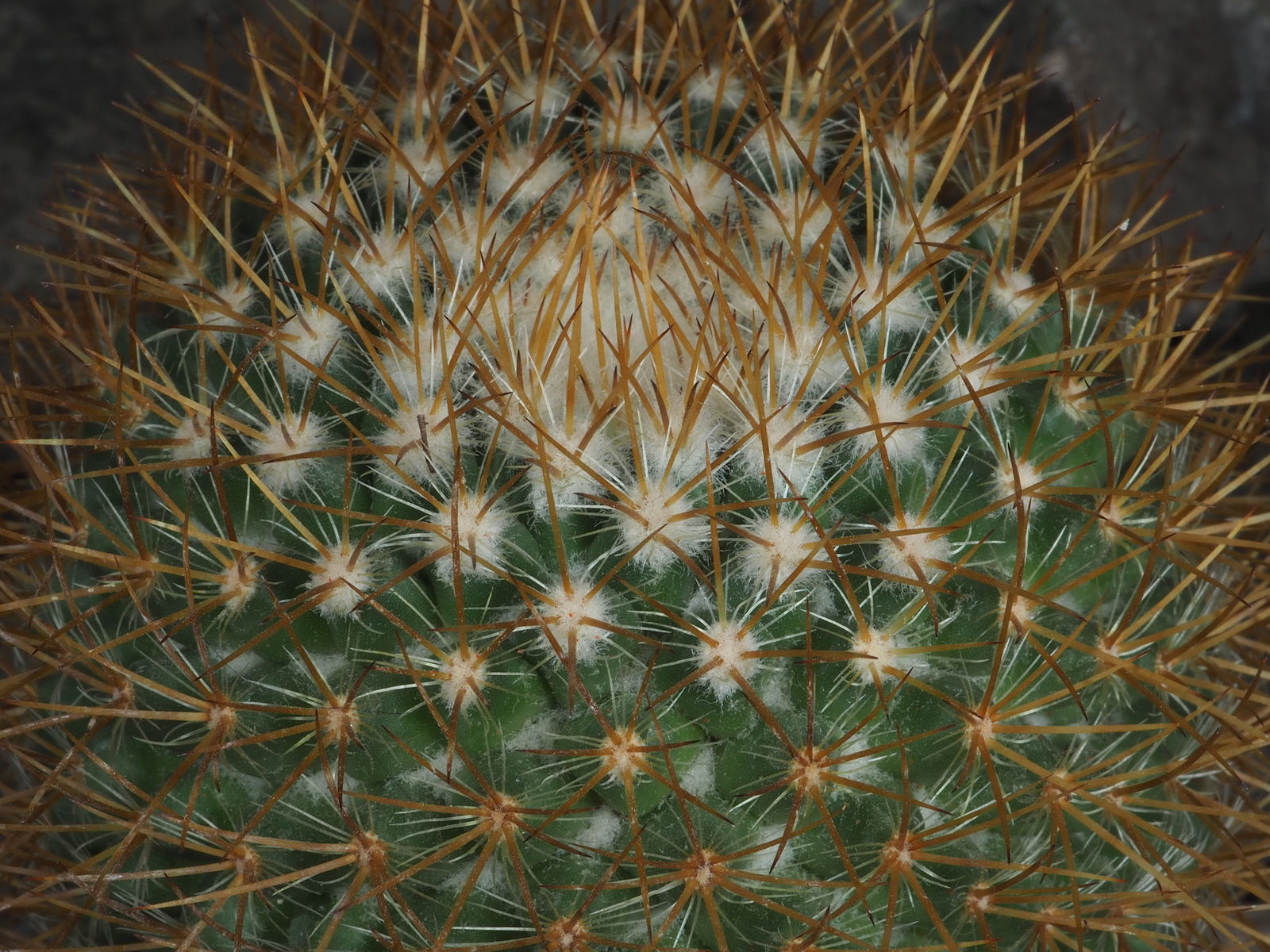
Mammillaria pringlei is a highly sought-after cactus species in the family Cactaceae, famous for its dense, golden-yellow spines and neat spherical form 1. Often referred to as Pringle's pincushion, this plant is favored by collectors for its brilliant coloration and reliable flowering habits.
Named after the prolific American botanical collector Cyrus Guernsey Pringle, this species belongs to the diverse genus Mammillaria 2. While taxonomically close to Mammillaria rhodantha and sometimes treated as a subspecies, its distinct golden-copper spine coloration distinguishes it in trade and botany.
This species is native to central Mexico, spanning states such as Jalisco, Guanajuato, Querétaro, and Michoacán 3. It thrives in dry shrublands, volcanic rocky hillsides, and semi-arid desert biomes, typically at elevations between 1,500 and 2,200 meters above sea level 2.
The stem is initially globose, later becoming short-cylindrical, reaching up to 30 cm in height. It is covered in spirally arranged tubercles, bearing 18 to 22 bright yellow to deep gold radial spines 1. In spring, a crown of deep pink to purplish-red flowers forms near the apex, followed by red club-shaped fruits.
Mammillaria pringlei requires full sun to maintain its dense spine coloration. Watering must be infrequent, allowing the substrate to dry completely. During winter, it requires a dry rest period at cooler temperatures to promote healthy spring blooms.
Overwatering and poor soil drainage are the most common causes of root rot. Lack of light leads to etiolation, causing the stems to stretch, weaken, and lose their vibrant golden spine density.
Requires full sun or very bright indirect light to maintain its golden spine color.
Water thoroughly only when the soil is completely dry. Keep dry in winter.
Requires extremely sandy, porous soil mix with excellent drainage.
Non-toxic to pets, but the sharp spines can cause physical injury.
Very easy to care for; perfect for beginners with sunny windows.
Native to the highlands of central Mexico, growing on rocky outcrops and dry slopes where it enjoys intense sunlight and sharp drainage.
