
Light
Filtered Sun
Requires bright, filtered sunlight; avoid harsh, direct midday sun during hot summer months.
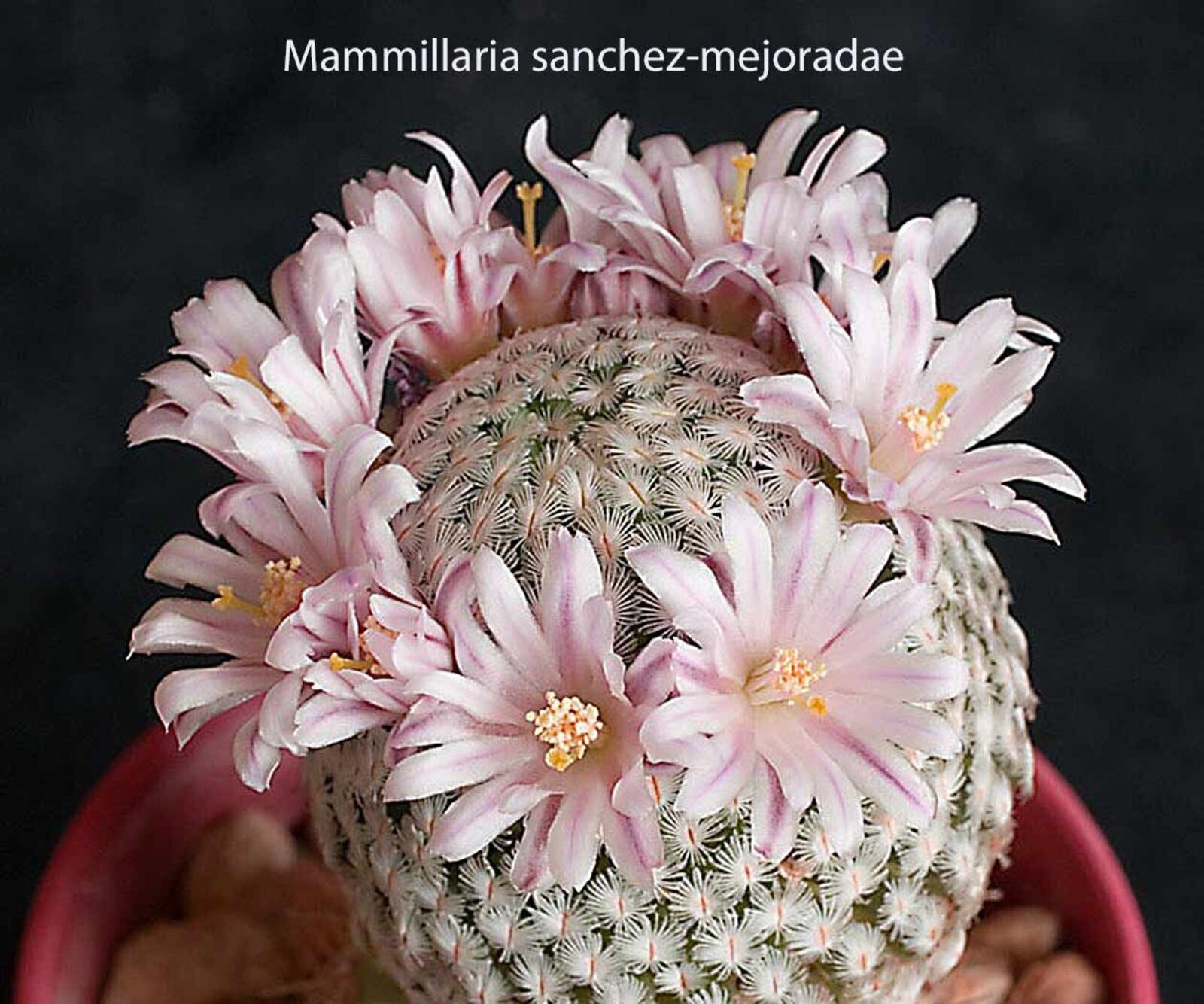 Reference image
Sanchez-Mejorada's Pincushion
Mammillaria sanchez-mejoradae is one of the rarest and most highly coveted miniature species within the Cactaceae family. Renowned for its delicate pectinate spines and petite habit, this globose cactus is highly prized by specialists and requires expert care due to its extreme sensitivity to moisture.
This species was named in honor of the prominent Mexican botanist Hernándo Sánchez-Mejorada, recognizing his significant contributions to the study of Mexican succulent flora 1. It belongs to the genus Mammillaria, characterized by its specialized spiral tubercles and lack of ribs.
Endemic to a very restricted area in Nuevo León, Mexico, this species grows in semi-desert shrublands on gypsum-rich soils and limestone gravel slopes 2. Due to illegal wild collection and specialized habitat requirements, it is classified as Critically Endangered (CR).
The stem is solitary, globose, and rarely offsets, reaching a maximum diameter of only 3 to 4 cm. The tubercles are tightly packed and covered with dense, flatly pressed, snow-white pectinate spines that give the plant a feathery appearance. In spring, it produces beautiful, bell-shaped flowers that range from pale pink to creamy white.
Cultivating this species requires precise watering and excellent ventilation. It is highly susceptible to root rot; hence, an exclusively mineral substrate is mandatory. Watering should only occur when the substrate is completely dry during the active spring and summer growth phase, while winter requires absolute drought.
Using standard peat-based potting soils and watering during winter dormancy are the most common causes of plant loss. Lack of light will quickly lead to unnatural elongation and loss of its compact form.
Requires bright, filtered sunlight; avoid harsh, direct midday sun during hot summer months.
Water only when the substrate is completely dry. Keep absolutely dry in winter.
Requires an exclusively mineral-based mix with high concentrations of pumice and grit.
Non-toxic to pets, but the tiny pectinate spines can cause mechanical irritation if handled roughly.
Highly susceptible to rot; best suited for experienced collectors with good climate control.
Restricted to a single small region within Nuevo León, Mexico, where it grows embedded in calcareous and gypseous gravels under the protection of low desert shrubs.
