
Light
Direct Sun
Requires at least 6 hours of direct sunlight daily; insufficient light causes weak, stretched growth.
 Reference image
 Reference image
Sonora Nipple Cactus
Mammillaria sonorensis is a drought-tolerant, perennial succulent subshrub belonging to the Cactaceae family 1. Revered for its structural resilience and elegant aesthetics, this species is a staple in both beginner and expert succulent collections due to its ease of cultivation and attractive display of spines and flowers.
The species was formally integrated into botanical taxonomy as Mammillaria sonorensis Craig 2. The genus name 'Mammillaria' points to the nipple-like tubercles lining the stem, while the specific epithet 'sonorensis' denotes its primary geographic provenance in the state of Sonora, Mexico.
Native to northwestern Mexico, Mammillaria sonorensis occupies arid deserts and dry shrublands across Sonora, Chihuahua, Durango, and neighboring regions 1. In its wild habitat, it thrives on steep rocky slopes, limestone crevices, and alluvial fans, enduring extreme sun exposure and low seasonal rainfall.
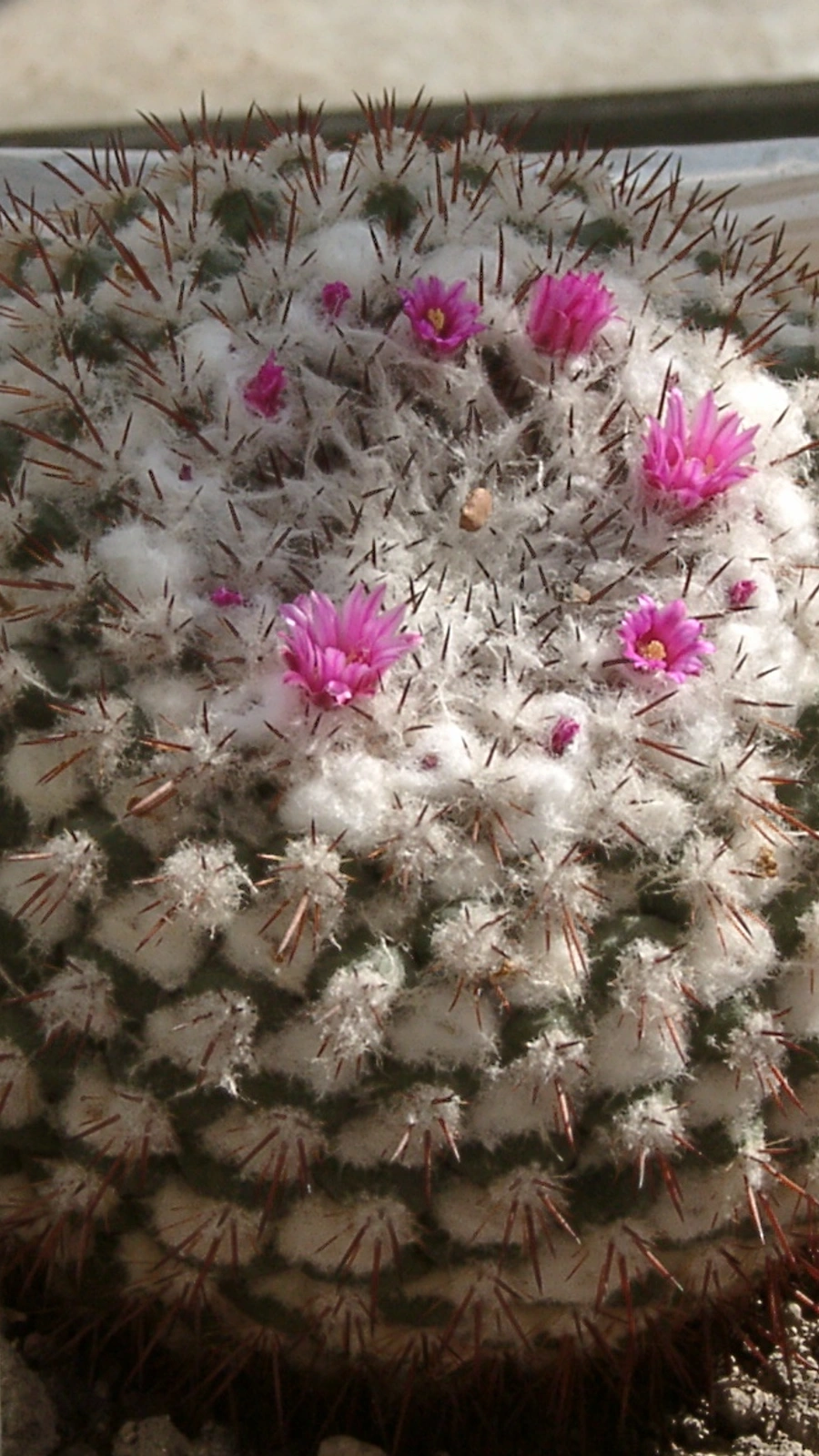
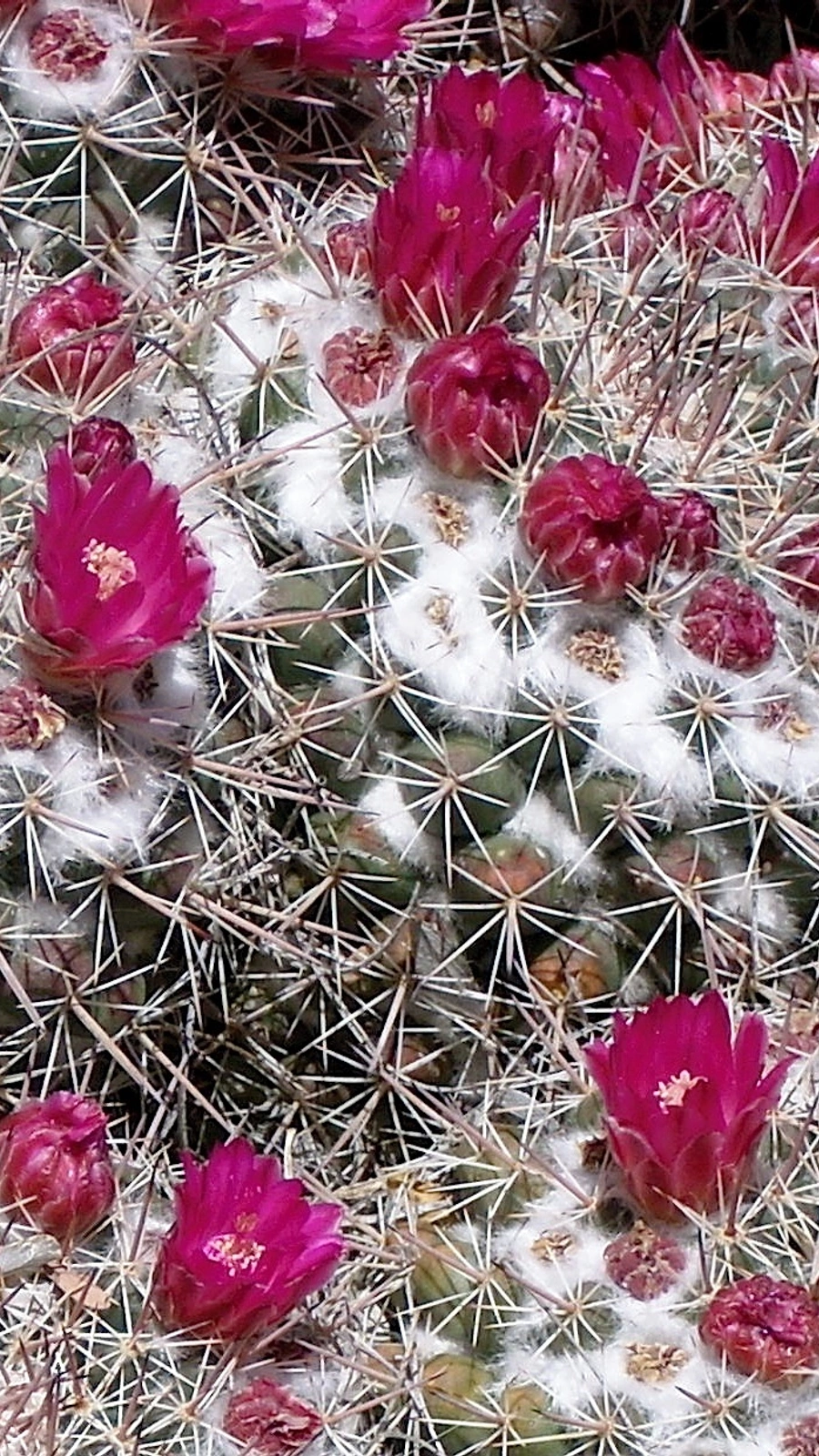
The plant features a grayish-green, globose to shortly cylindrical stem that readily offsets from the base to form dense, mounding clumps. The prominent pyramidal tubercles secrete a milky latex when punctured. Areoles are covered with dense white wool and bear strong, central spines with darker tips. During spring, it produces a ring of bright pink to magenta flowers near the crown.
This species demands maximum sunlight and highly porous growing media to prevent root pathogens 2. During the active growth phase, water thoroughly but allow the substrate to dry completely between applications. In winter, enforce a dry, cool dormancy period which simulates its native dry season.
The most frequent issue is root rot induced by overwatering or compacted soil lacking drainage 1. Inadequate light exposure leads to etiolation, wherein the spherical stem stretches and weakens, losing its symmetrical form and spine density.
Requires at least 6 hours of direct sunlight daily; insufficient light causes weak, stretched growth.
Water deeply but infrequently in spring and summer. Keep completely dry in winter.
Requires a highly mineral, gritty cactus soil mix rich in pumice, coarse sand, and lava rock.
Non-toxic to pets, but the sharp radial and central spines can cause physical injury.
Very easy to care for, provided you do not overwater or let it sit in soggy soil.
Thrives in the semi-arid, rocky terrains and desert hillsides of northwestern Mexico, growing under intense sun.
