
Light
Bright Indirect Light
Requires bright, indirect sunlight or filtered morning sun.
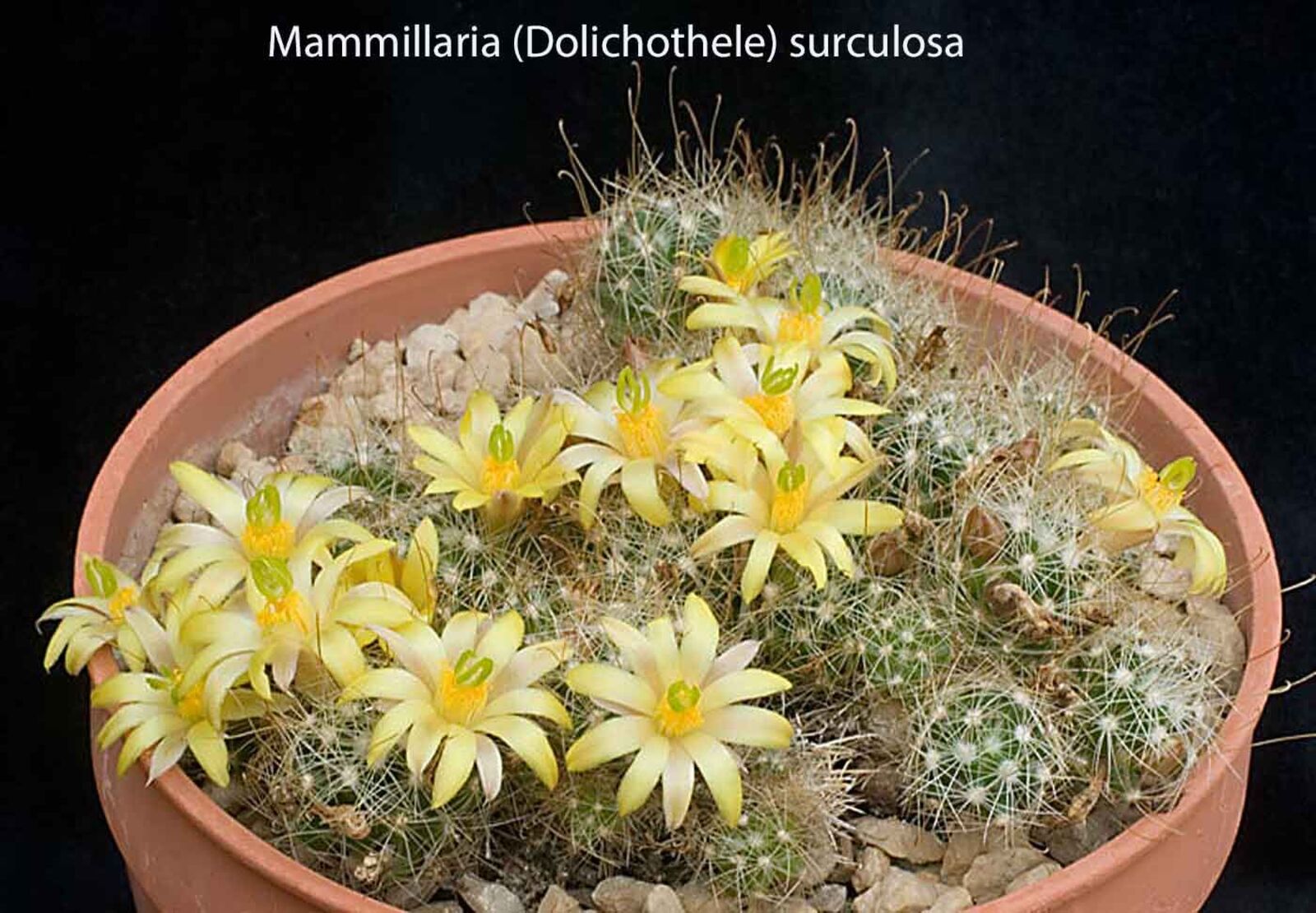 Reference image
Sprouting Pincushion Cactus
Mammillaria surculosa is a charming, small-growing, and clustering cactus species from the family Cactaceae. Famous for its bright yellow, hooked spines and highly fragrant lemon-scented yellow flowers, this plant is a popular choice among succulent collectors and greenhouse growers 1.
The species was formally described by the botanist Curt Backeberg in 1931. The specific epithet "surculosa" is derived from Latin, meaning "sprouting" or "producing suckers," which directly refers to the plant's prolific clustering habit from the base 2.
Mammillaria surculosa is endemic to Mexico, specifically occurring in the states of San Luis Potosí and Tamaulipas 1. In its natural habitat, it grows at elevations of 1000 to 1500 meters above sea level, typically nestled in rocky limestone slopes, gravelly soils, and semi-arid desert shrublands. Due to habitat destruction and over-collection, it is listed as Endangered (EN) on the IUCN Red List 3.
The plant consists of small cylindrical to globose stems that reach up to 3-4 cm in height and 2-3 cm in diameter. The stems feature prominent, soft tubercles. The radial spines are needle-like, yellow, and flexible. The central spines (usually 1-2) are slightly longer, amber or brownish-yellow, and sharply hooked. In spring and summer, it produces bright sulfur-yellow flowers that emit a pleasant sweet scent 2.
Mammillaria surculosa thrives in gritty, inorganic, and fast-draining mineral mixes. Regular watering is needed during the active summer growth phase, allowing the soil to dry completely between cycles. During winter, keeping the soil dry is critical to prevent rot and to induce the next season's blooms.
The most common issue is root rot resulting from waterlogged soils or excessive winter watering. Inadequate light causes etiolation, stretching the stems and weakening the beautiful golden spination.
Requires bright, indirect sunlight or filtered morning sun.
Allow soil to dry out completely between waterings. Dry in winter.
Very gritty, mineral-based cactus soil with pumice and coarse sand.
Non-toxic to pets, but has sharp hooked spines that require careful handling.
Very easy if overwatering is avoided and bright light is provided.
Native to the dry shrublands and rocky limestone formations of northeastern Mexico, where it forms dense mats under the dappled shade of desert shrubs.
