
Light
Direct Sun
Requires at least 6 hours of direct sunlight daily to prevent etiolation.
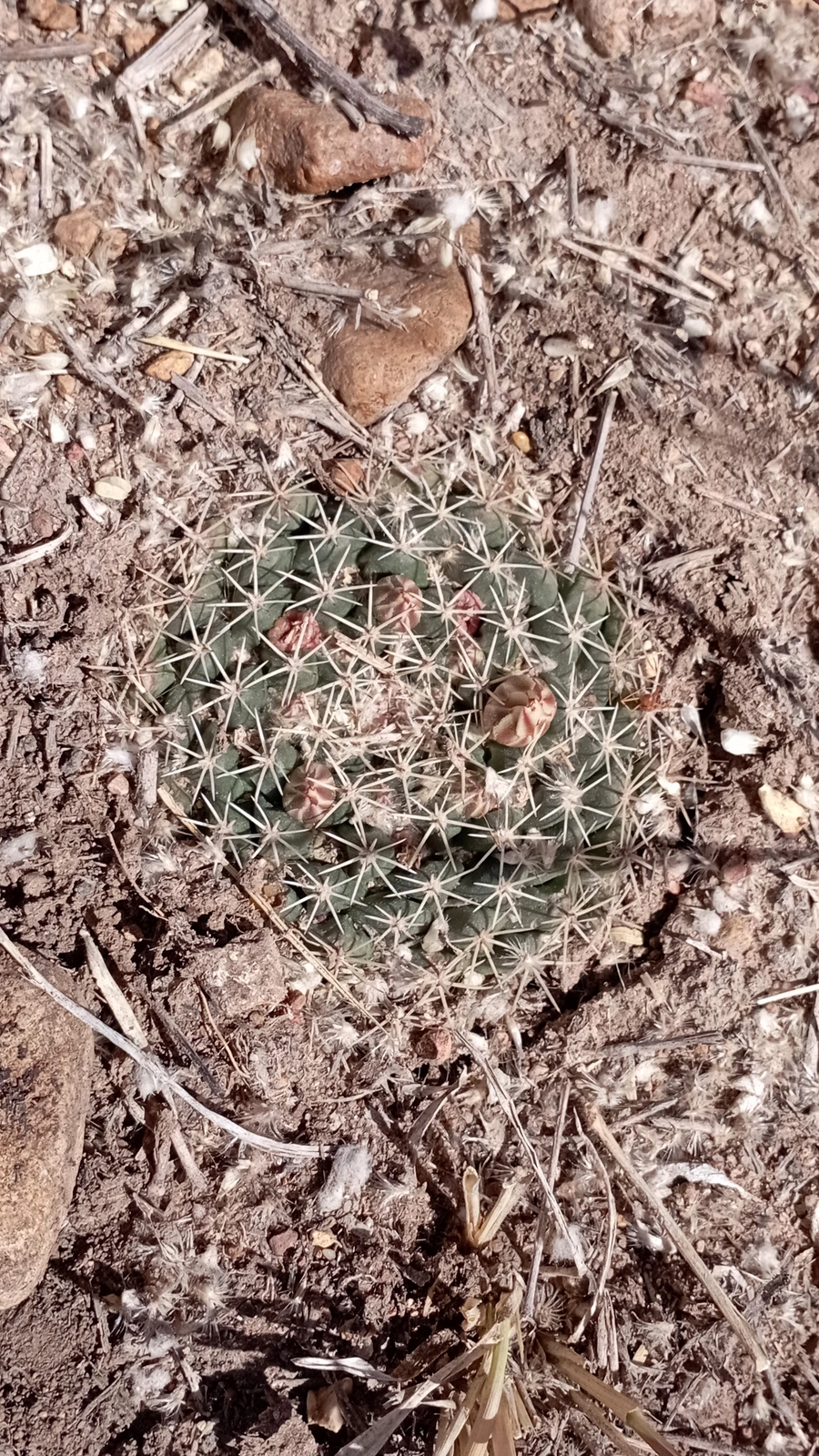 Reference image
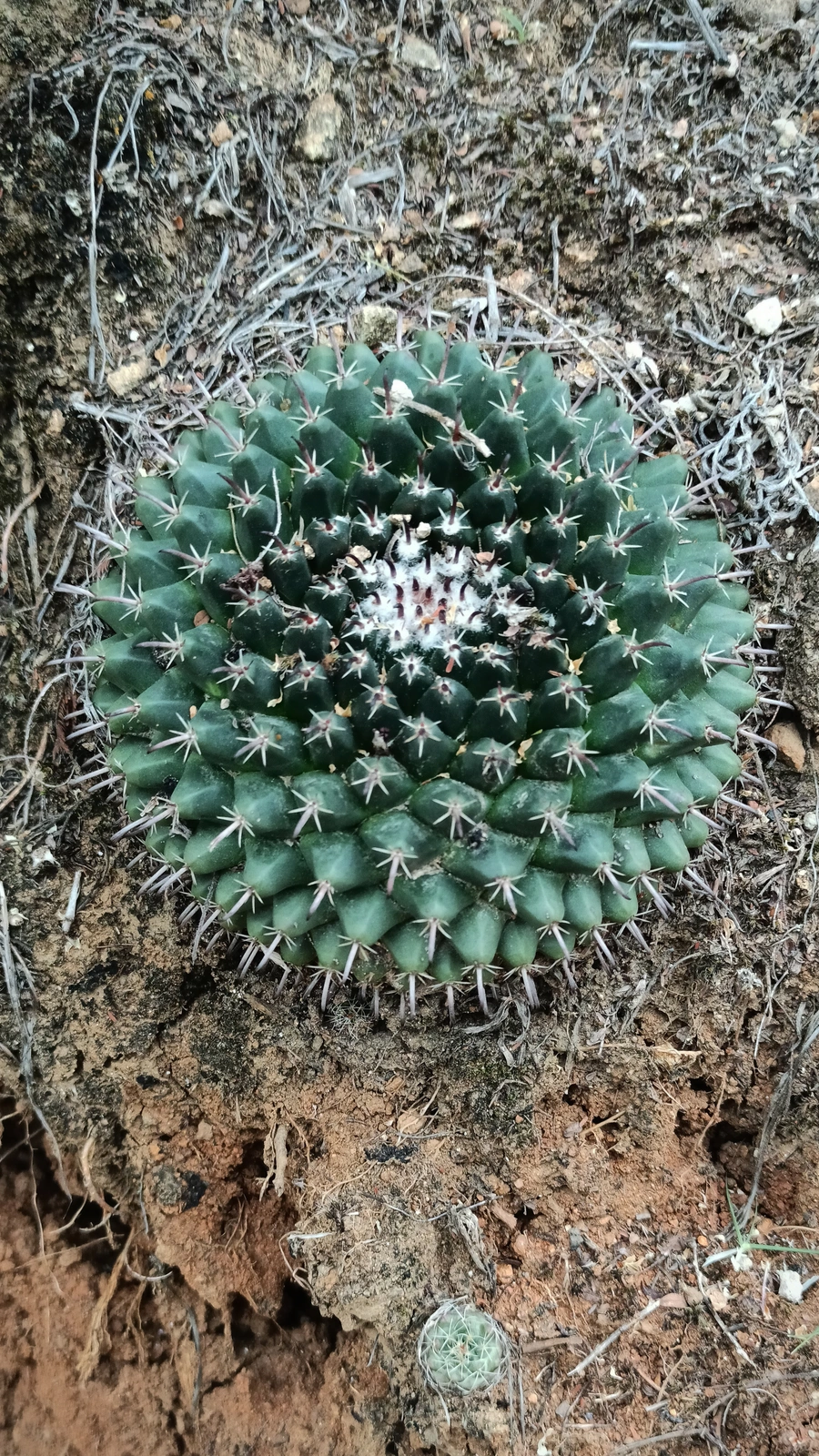 Reference image
Hooked-Spine Nipple Cactus
Mammillaria uncinata is a slow-growing, highly resilient cactus known for its flattened-globose shape and its tendency to grow flush with the ground level in its natural environment. It is highly valued by collectors for its geometric aesthetics and drought tolerance 1.
This species was formally described in 1837 by the German botanist Joseph Gerhard Zuccarini. The specific epithet 'uncinata' derives from Latin, meaning 'hooked' or 'barbed', highlighting the most distinctive feature of its central spines 2.
It is native to central and northern Mexico, spanning states such as San Luis Potosí, Jalisco, Hidalgo, Durango, and Guanajuato. Typically found at high elevations of 1,500 to 2,800 meters, it thrives in dry shrublands, grasslands, and rocky limestone cracks 1.
The stem is solitary, flattened-globose, up to 10 cm in diameter, and possesses a bluish-green hue. It contains a milky latex in its pyramidal tubercles. Areoles bear 4 to 7 radial spines and a single, strong central spine that is strongly hooked. Flowers emerge in spring, showing a pale yellow, cream, or light pinkish color with darker midribs 2.
This species requires full, direct sun to maintain its compact shape and promote blooming. It thrives in highly porous mineral substrate. Water thoroughly only when the soil is completely dry. In winter, keep it dry and cool to simulate its natural dormant cycle 2.
Overwatering and placing the plant in heavy clay-based soils are the leading causes of root rot. Lack of sufficient winter dormancy (cool and dry conditions) can prevent the cactus from producing its beautiful spring blooms.
Requires at least 6 hours of direct sunlight daily to prevent etiolation.
Allow substrate to dry completely out between waterings. Keep dry in winter.
Use a mineral-heavy mix containing up to 70% pumice, perlite, and coarse sand.
Non-toxic, but the hooked central spines can snag skin or fur; handle with care.
Very easy for beginners due to its outstanding drought tolerance.
Widely distributed across the high-altitude plateaus of central and northern Mexico, inhabiting dry xeric shrublands and limestone soils.
