
Light
Bright Indirect Light
Prefers bright indirect light or partial direct sun.
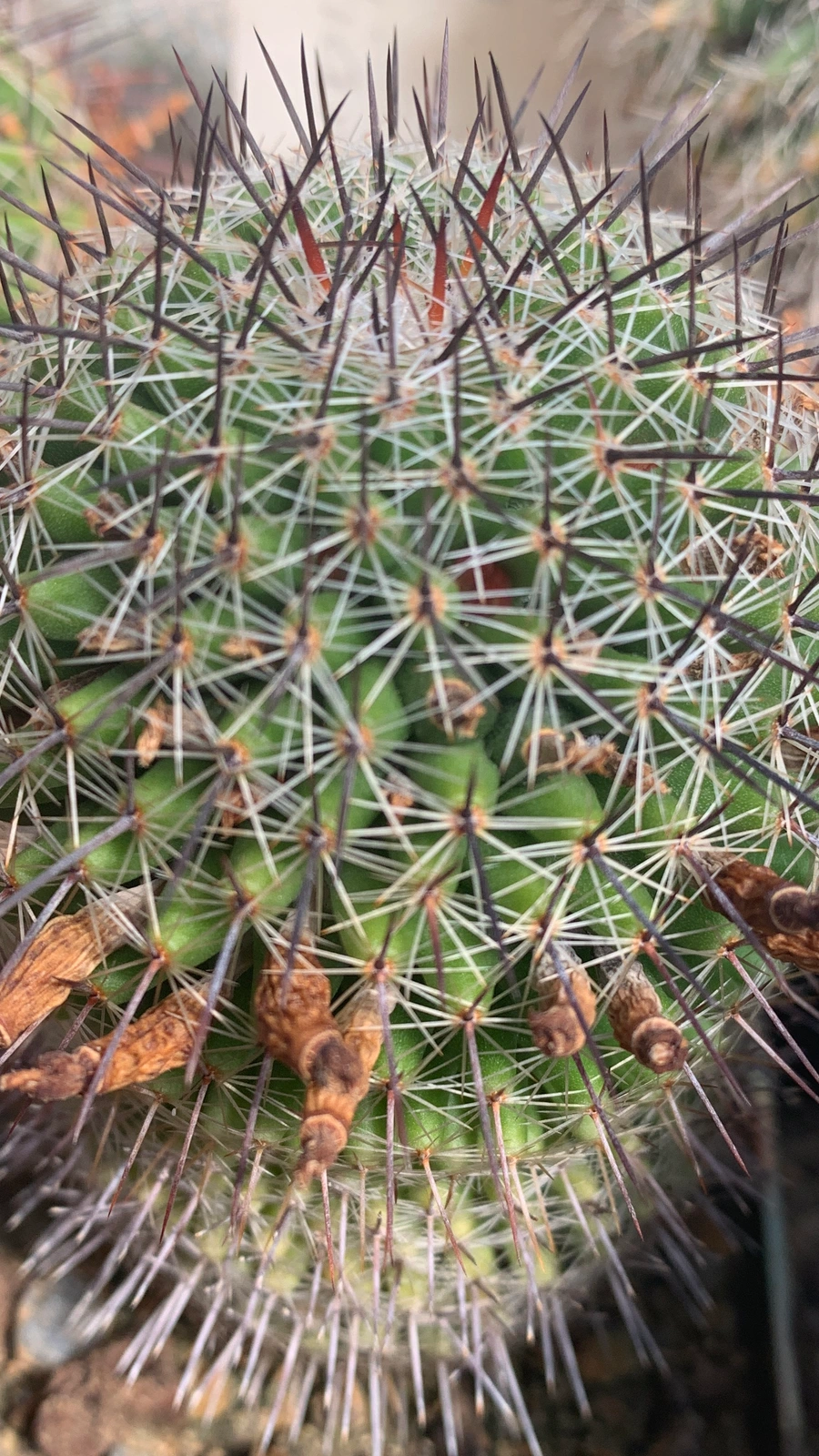 Reference image
Xaltianguas Mammillaria
Mammillaria xaltianguensis is a distinctive succulent subshrub species belonging to the Cactaceae family, known for its clustering growth habit and ease of cultivation.
Named after the locality of Xaltianguas in Guerrero, Mexico, where it was initially collected, this species belongs to the large genus Mammillaria 1. It is characterized by its typical tubercular structure and central-radial spine arrangements.
This species is endemic to southwestern Mexico, spanning states such as Guerrero, Michoacán, Jalisco, Colima, and Oaxaca 2. It thrives in seasonally dry tropical biomes, often clinging to rocky cliffs, gravelly slopes, and volcanic outcrops with excellent drainage.
The stems are cylindrical to globose, forming attractive clusters over time. The tubercles are tightly arranged, each bearing areoles covered with sharp, radial, and central spines that shade the epidermis. It produces small, delicate pink or cream-white flowers arranged in a ring near the crown of the stem.
In cultivation, it requires bright, filtered sunlight to retain its compact shape and vibrant spine color. Watering should follow the 'soak and dry' method, ensuring the soil is bone-dry between waterings. Winter requires strict drought conditions.
Overwatering and placing the plant in heavy, moisture-retentive soil are the primary causes of failure, leading to root rot. Insufficient winter dry periods can also prevent successful flowering in the spring.
Prefers bright indirect light or partial direct sun.
Allow soil to dry fully before watering; keep dry in winter.
Highly porous cactus mix rich in pumice and coarse sand.
Non-toxic, but handle with care due to sharp spines.
Very easy to care for if overwatering is avoided.
Native to the rocky terrains and seasonally dry tropical woodlands of southwestern Mexican states.
