
Light
Direct Sun
Requires direct sun for at least 6 hours daily to maintain its structural form and health.
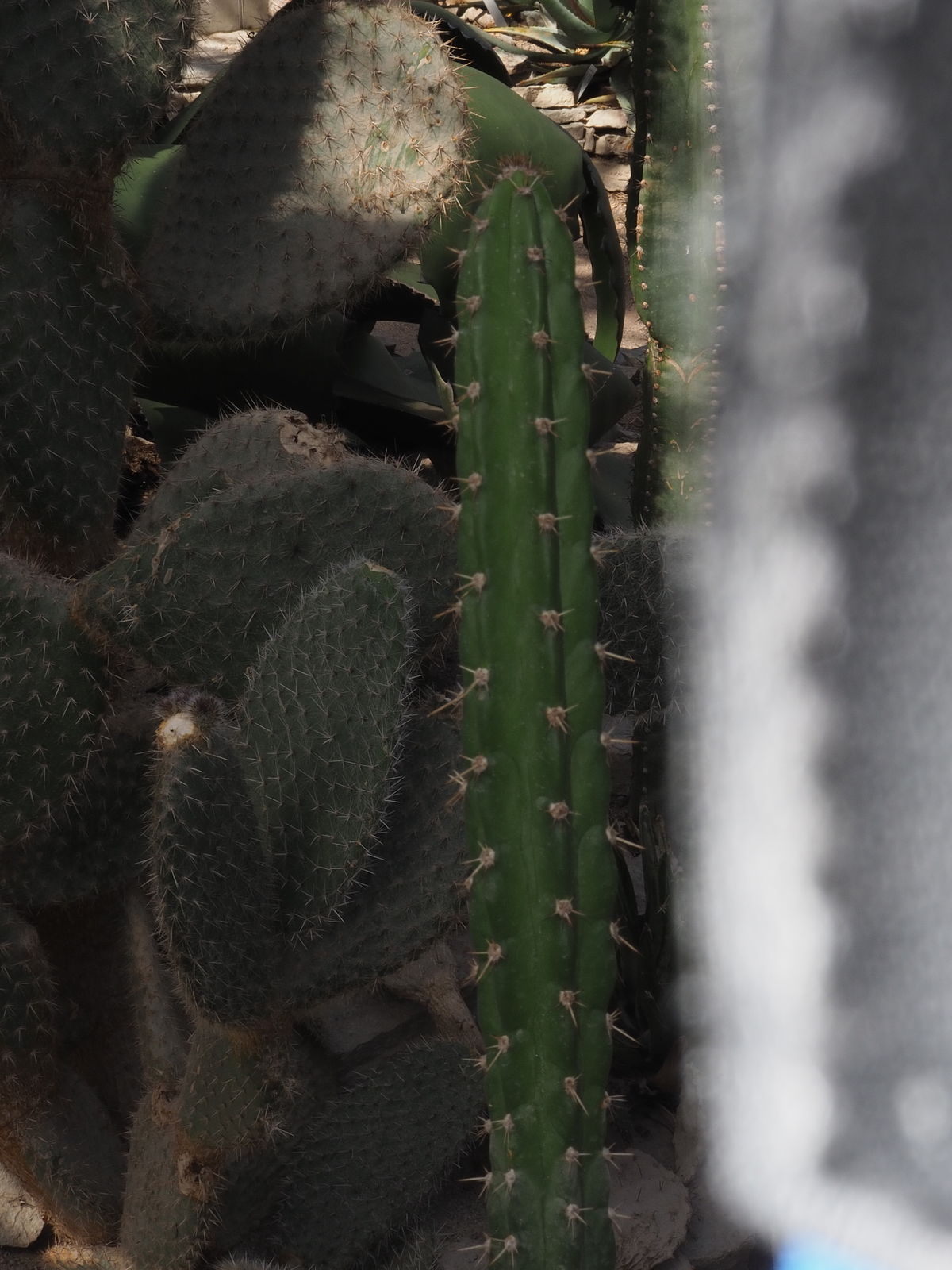 Reference image
Monvillea Cactus
Monvillea diffusa (often classified in modern taxonomy as Praecereus diffusus) is a semi-shrubby or tree-like columnar cactus belonging to the Cactaceae family 1. Renowned for its extreme drought tolerance, this species features night-blooming flowers and an attractive branching habit.
Originally described by Britton and Rose within the genus Monvillea, phylogenetic revisions have moved it under the genus Praecereus 2. Its primary accepted synonym is Praecereus diffusus. It is commonly referred to as the sprawling Monvillea or branched column cactus.
The species is native to western South America, specifically occurring across Ecuador, Peru, and Colombia 1. It thrives primarily in seasonally dry tropical forests, low-elevation valleys, and rocky slopes where it forms part of the arid scrub vegetation.
It forms slender, cylindrical stems that branch freely from the base to create a dense shrubby crown. Stems have about 7 to 9 shallow ribs populated with thin, yellowish to pale brown spines. During summer nights, it produces elegant, funnel-shaped white or greenish-white flowers that emit a delicate fragrance to attract nocturnal pollinators 2.
Monvillea diffusa requires maximum sunlight exposure and highly porous, mineral-rich soil. Water thoroughly only when the growing medium has dried out completely. In winter, the plant must be kept dry and cool to mimic its natural dormant period.
Overwatering and placing the plant in poorly draining soil are the leading causes of root rot. Inadequate light results in etiolation, causing the stems to become thin, weak, and pale.
Requires direct sun for at least 6 hours daily to maintain its structural form and health.
Water deeply only when soil is bone dry. Reduce watering to a minimum in winter.
Use highly porous, inorganic-rich soil amended with pumice, perlite, and coarse sand.
Equipped with fine, sharp spines. Keep away from pets and children to avoid injury.
A resilient species that is moderately easy to grow if overwatering is strictly avoided.
Inhabits the dry valleys, rocky terrain, and seasonally dry tropical forests of western South America, adapted to withstand prolonged dry spells and rocky soil conditions.
