
Light
Direct Sun
Thrives in direct sunlight; ideal for south or west-facing windows.
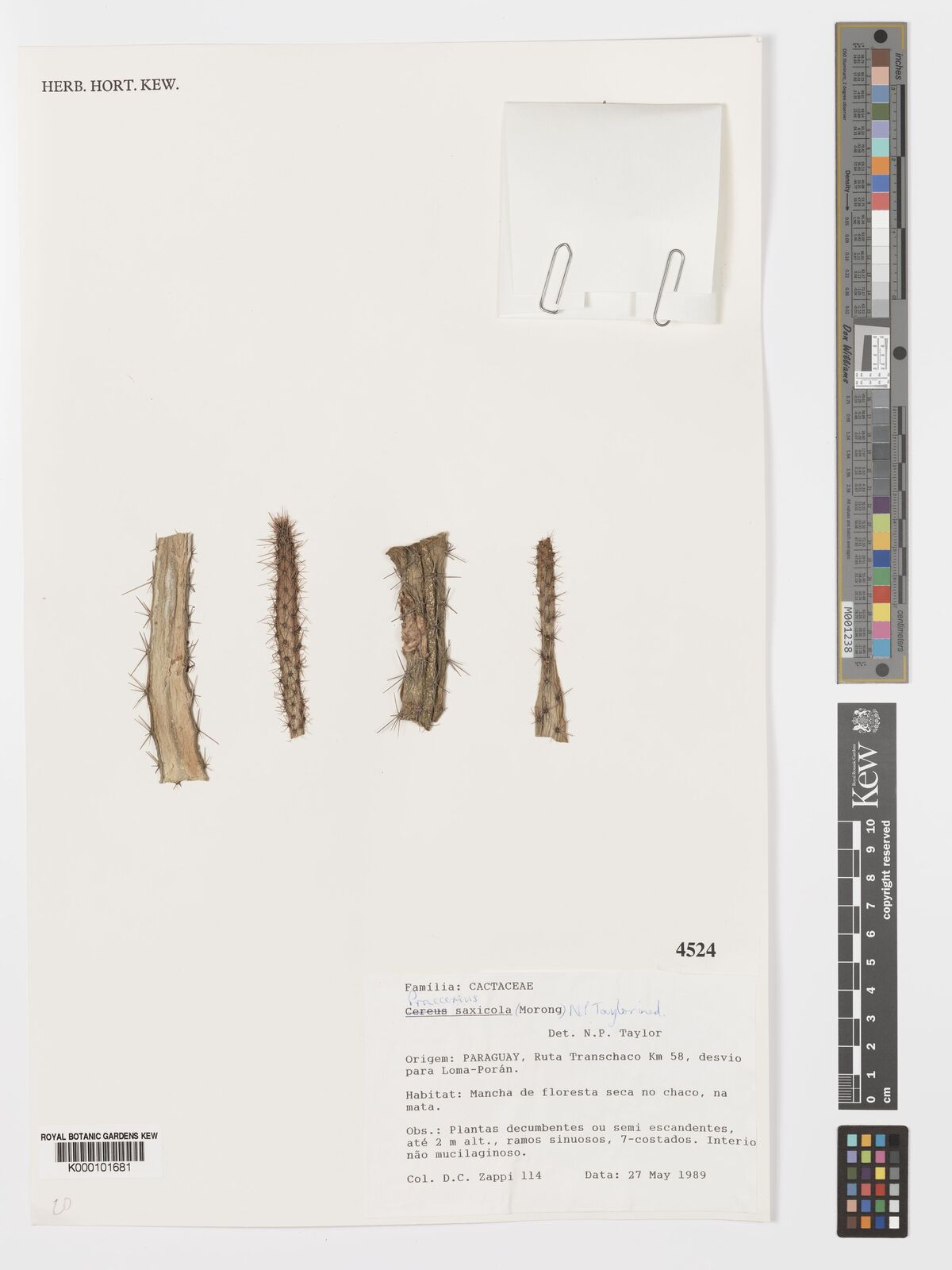 Reference image
Rock Monvillea
Monvillea saxicola (syn. Praecereus saxicola) is a slender, semi-scandent or shrubby cactus species belonging to the Cactaceae family 1. It is highly appreciated for its drought-tolerant nature and large night-blooming flowers.
Originally described by Morong, this species is frequently classified under the genus Praecereus as Praecereus saxicola 2. However, the name Monvillea saxicola remains widely used in cultivation. The specific epithet saxicola translates from Latin as 'rock-dwelling', referencing its primary habitat.
This cactus is native to South America, spanning across Paraguay, southern Bolivia, Brazil (Mato Grosso), and northern Argentina 1. It thrives in seasonally dry tropical forests, typically growing on rocky outcrops and well-drained slopes.
The stems are green, cylindrical, and carry 6 to 9 shallow ribs. The areoles bear small, greyish-to-brownish spines. During the summer, it produces spectacular, nocturnal, trumpet-shaped white flowers that close shortly after sunrise 2.
In cultivation, it requires a position in full sun to partial shade with excellent air circulation. Water thoroughly during the active growing season (spring and summer) only when the soil has completely dried out, and keep it nearly dry in winter.
Overwatering and using heavy, poorly draining soil are the main causes of root rot. Insufficient light exposure will lead to etiolation, causing the stems to become weak, pale, and unnaturally thin.
Thrives in direct sunlight; ideal for south or west-facing windows.
Allow soil dry out completely between waterings; restrict watering in winter.
Requires highly porous, sandy cactus soil mixed with pumice or perlite.
Non-toxic, but features sharp spines that can cause physical injury to pets and humans.
Very easy to care for, highly drought-resistant, and perfect for beginners.
Occurs naturally on rocky terrains and dry shrublands across Paraguay, Bolivia, Brazil, and Argentina.
