
Light
Bright Indirect Light
Requires bright, indirect sunlight. Avoid harsh afternoon sun to prevent sunburn on the slender stems.
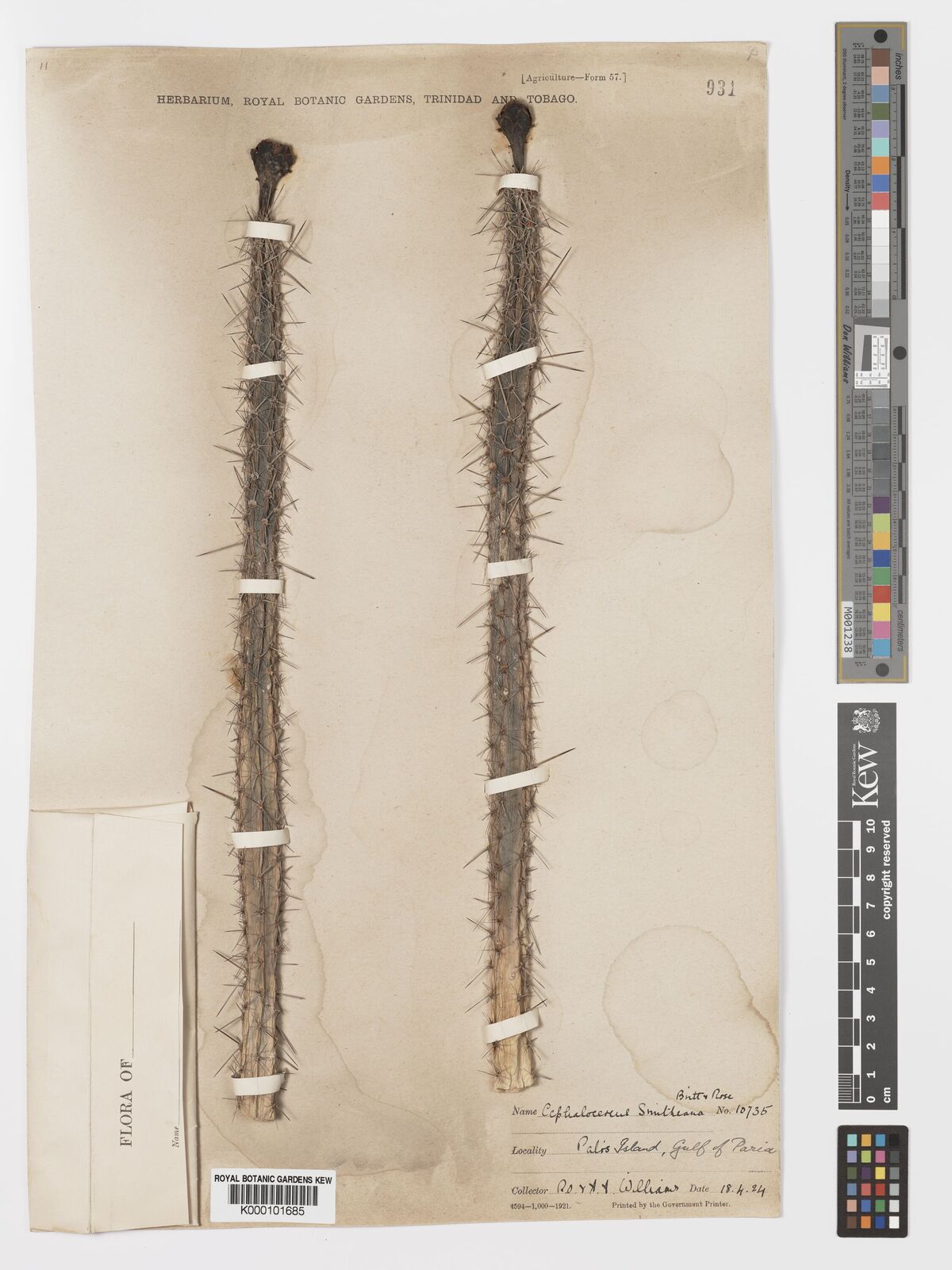 Reference image
Smith's Monvillea
Monvillea smithiana is a unique climbing and scrambling succulent species belonging to the Cactaceae (Cactus) family 1. In its natural habitat, it adapts to an epiphytic or lithophytic lifestyle, scaling forest trees and rocky crevices.
In botanical taxonomy, this species is sometimes referred to under synonyms such as Cereus smithianus or Praecereus smithianus 1. The genus Monvillea represents cereoid cacti known for their slender, sprawling, and climbing branches.
This cactus is native to the Caribbean and Northern South America, including regions in Venezuela and Trinidad 2. It thrives in seasonally dry tropical biomes, deciduous forests, and rocky riverbanks where dry seasons alternate with brief, heavy rains.
It features slender, ribbed, green cylindrical stems that require physical support as they climb. Small areoles along the ribs carry fine, greyish spines. The species is highly admired for its large, nocturnal, white-to-cream tubular flowers 2.
When grown indoors, it is best provided with a moss pole or trellis to support its climbing nature. It prefers bright, indirect sunlight and well-aerated soil. Watering should be deep but infrequent, allowing the substrate to dry completely.
Overwatering and poor drainage are the leading causes of root rot. Exposing the plant to drafts or temperatures below 10°C during winter will quickly lead to cellular damage and decay.
Requires bright, indirect sunlight. Avoid harsh afternoon sun to prevent sunburn on the slender stems.
Water thoroughly once the potting medium is fully dry during summer. Keep almost dry in winter.
Prefers a highly porous, gritty cactus mix enriched with perlite, pumice, and coarse sand.
Non-toxic to pets, but features small, sharp spines that can cause irritation, so keep out of reach.
Moderately easy to grow once its climbing support and drainage needs are adequately met.
Mainly distributed across Venezuela, Trinidad, and adjacent Caribbean regions, thriving in seasonally dry tropical forests, scaling trees or scrambling over rocky terrain.
