
Light
Full Sun
Requires full sun to maintain its branching form and striking blue-green epidermis.
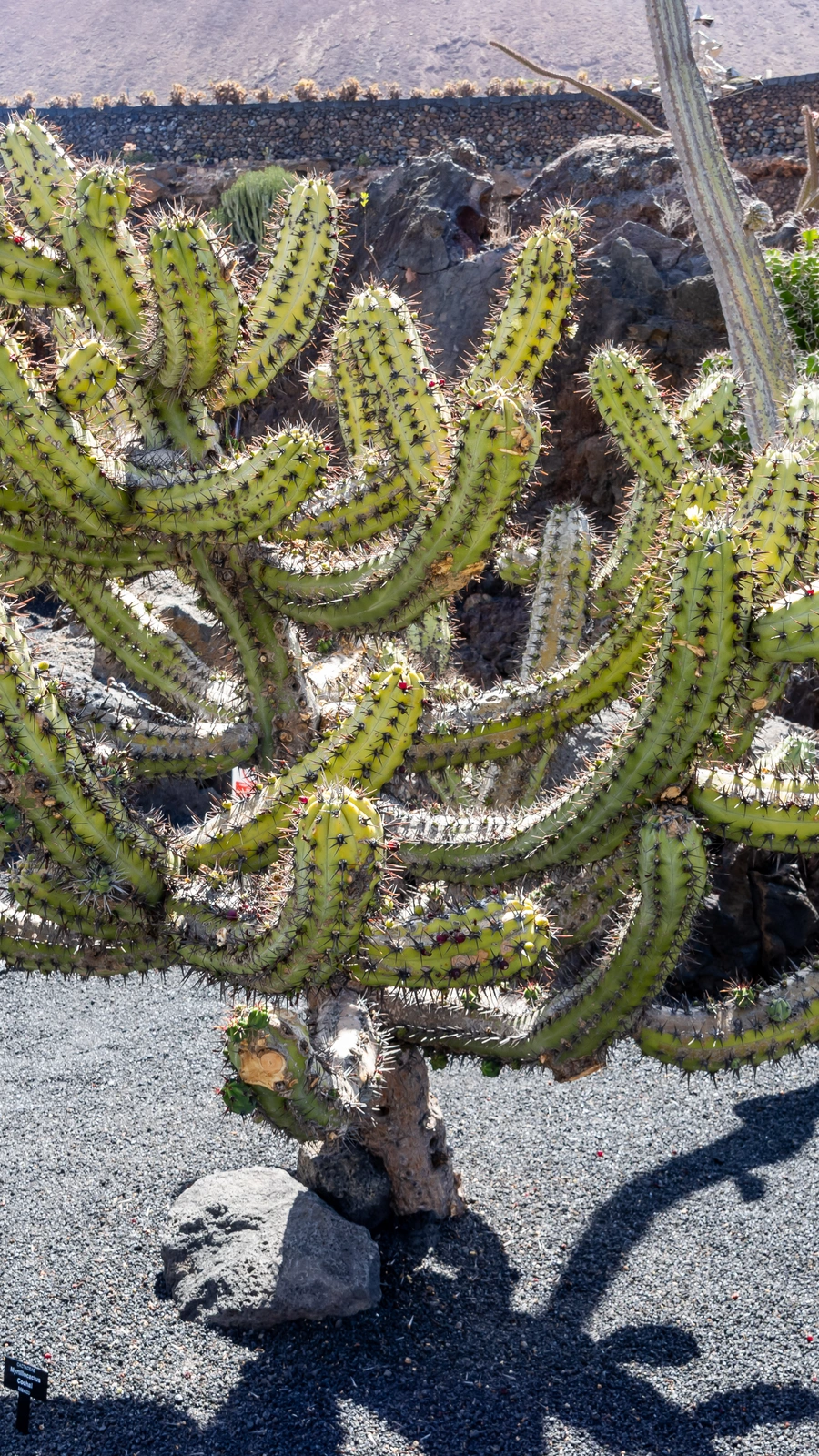 Reference image
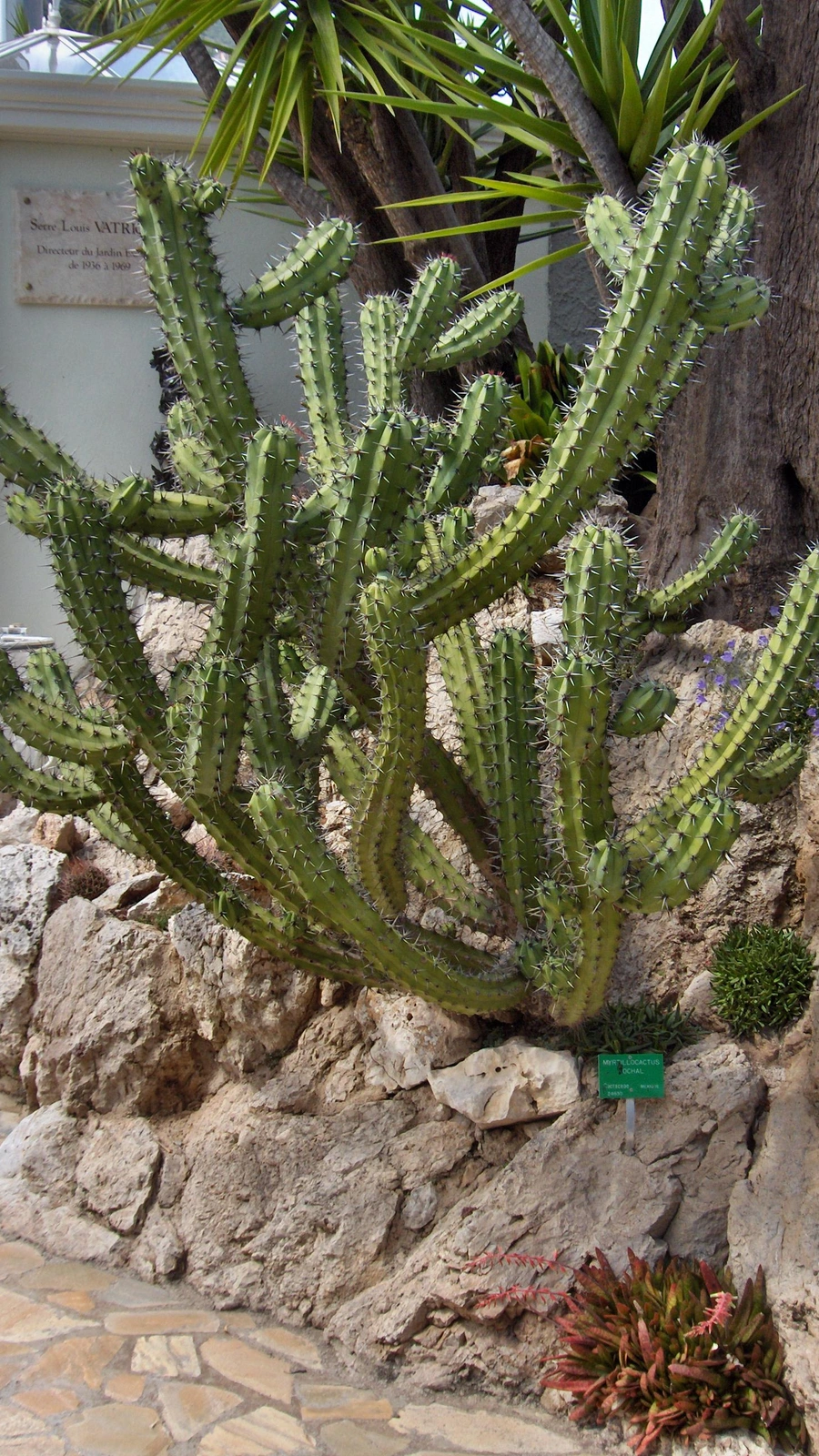 Reference image
Cochal Cactus
Myrtillocactus cochal is a striking arborescent, highly branched perennial cactus belonging to the family Cactaceae. In its native habitats, it is renowned for its candelabra-like growth habit, making it an ecological cornerstone of arid shrublands 1.
The species is commonly referred to as 'Cochal', a term derived from its indigenous Mexican name. The genus name Myrtillocactus translates to 'myrtle cactus', referencing the small, sweet, berry-like fruits that resemble those of the myrtle tree 2. It is closely related to the popular Myrtillocactus geometrizans.
Cochal is endemic to northwestern Mexico, predominantly distributed throughout the Baja California Peninsula, Sonora, and Sinaloa 1. It thrives on dry slopes, hillsides, and desert shrublands, preferring limestone soils and coastal influence up to elevations of 600 meters 2.
This cactus forms a densely branched, shrubby tree reaching heights of 1 to 4 meters. The stems are a distinct dull green to glaucous blue-green, featuring 6 to 8 deep, rounded ribs. Areoles bear stout, dark spines with a single prominent central spine. In summer, it produces small, funnel-shaped, yellowish-green to ivory flowers, which develop into edible, fleshy, purplish-red fruits.
In cultivation, Myrtillocactus cochal is highly valued for its architectural shape and resilience. It requires full sun exposure and a highly porous, mineral-rich substrate 2. Water should be applied thoroughly only when the soil has completely dried out, with moisture kept to a absolute minimum in winter.
The most prevalent errors in keeping Cochal are overwatering and using heavy soils, which trigger rapid root rot. Insufficient light exposure leads to etiolation, causing the stems to grow thin, pale, and structurally weak.
Requires full sun to maintain its branching form and striking blue-green epidermis.
Water deeply only when the potting medium is entirely dry; keep dry in winter.
Highly mineral substrate with plenty of pumice, coarse sand, and low organic matter.
Equipped with sharp, rigid spines. Handle with thick gloves and keep away from pets.
Very easy and low-maintenance, ideal for those who occasionally forget to water.
Indigenous to the coastal deserts and arid hillsides of the Baja California Peninsula and neighboring states in northwestern Mexico, thriving in gravelly soils.
