
Light
Full Sun
Requires full sun to develop its characteristic blue hue and stout spines.
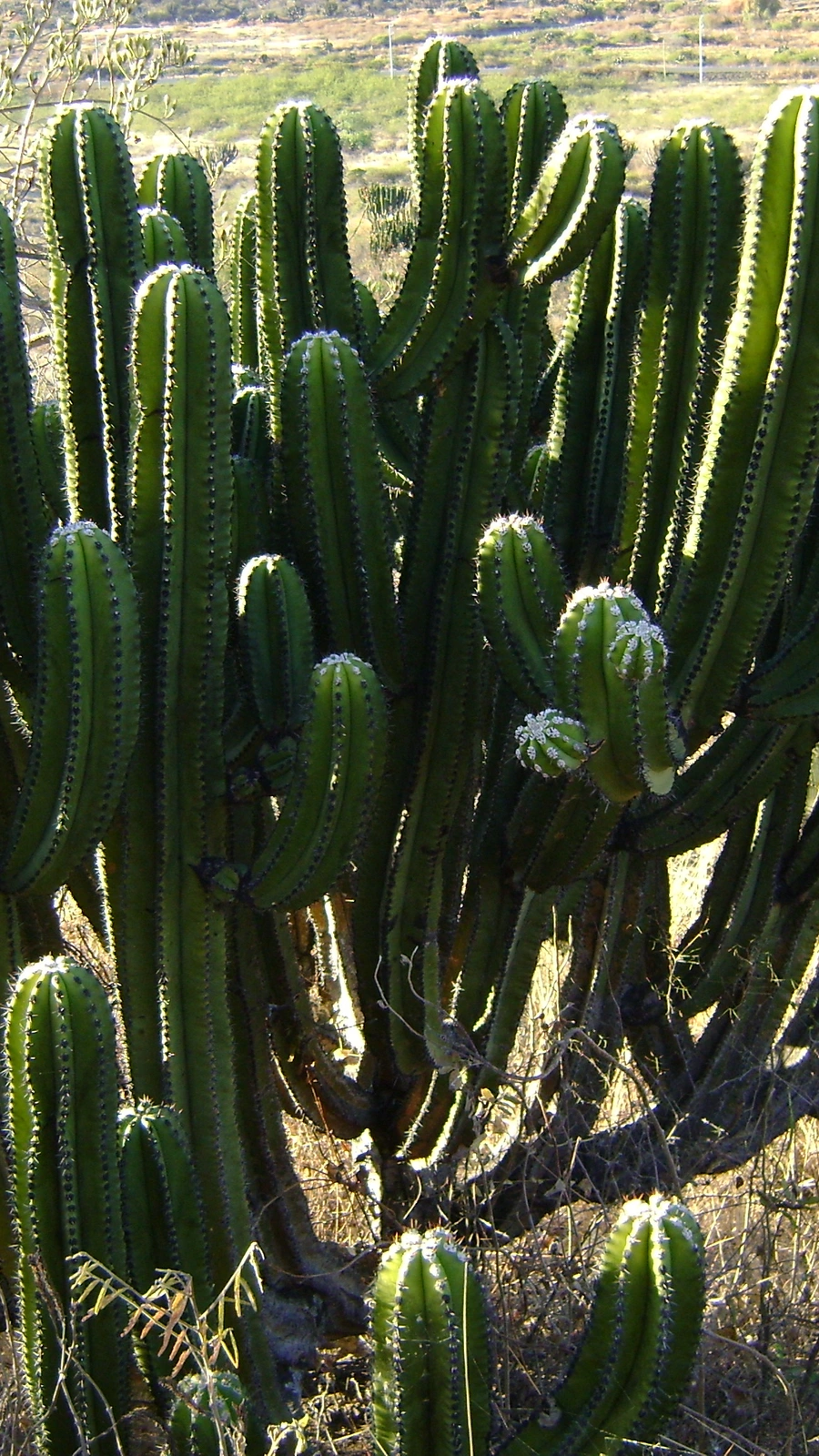 Reference image
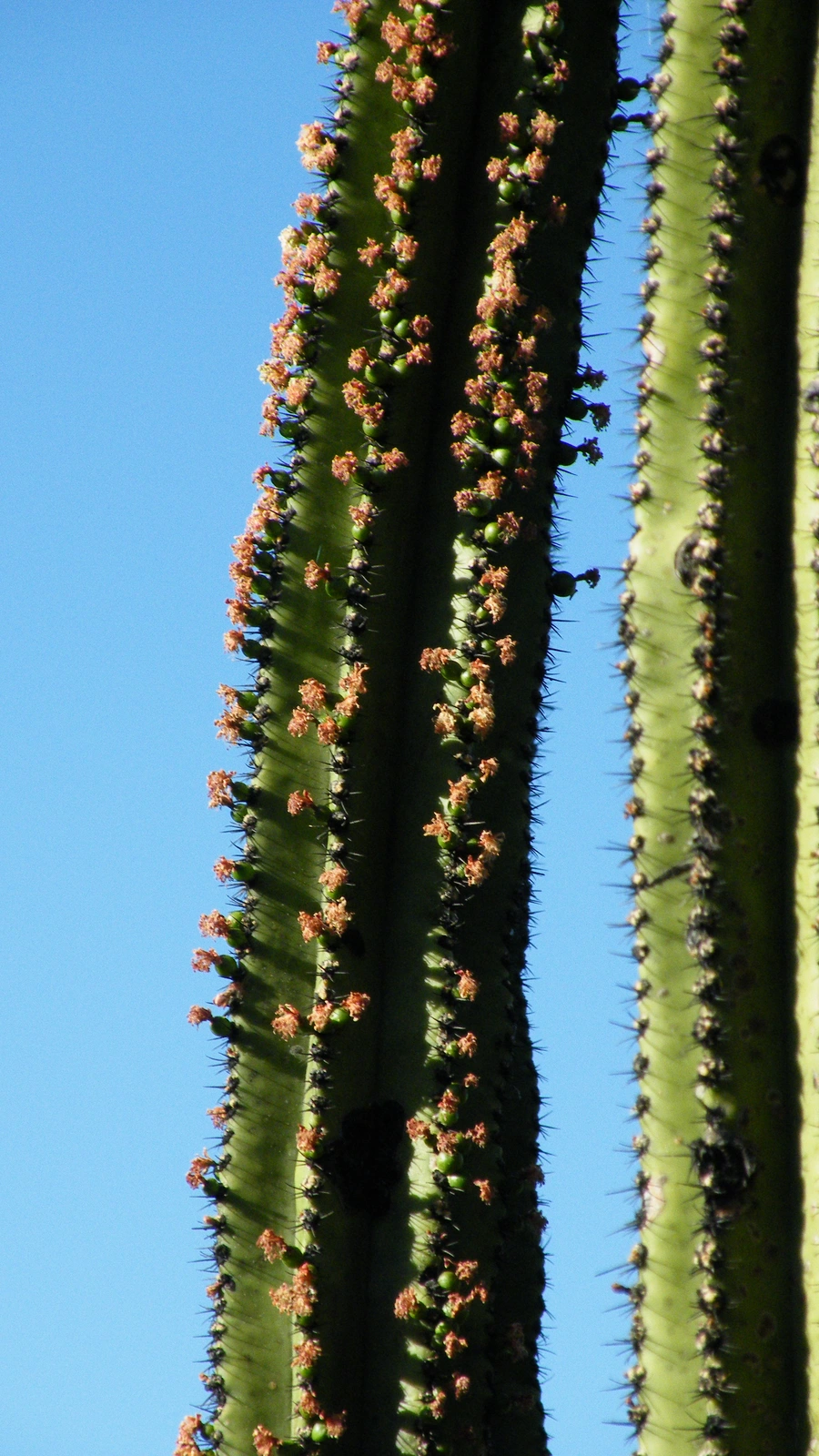 Reference image
Schenck's Blue Candle
Myrtillocactus schenckii, commonly known as 'Garambullo', is a striking, tree-like columnar cactus native to the arid and semi-arid regions of Mexico. Widely appreciated for its architectural habit and edible sweet fruits, it is a highly resilient species suitable for xeriscaping and container cultivation 1.
Belonging to the Cactaceae family, the genus Myrtillocactus comprises several candelabra-like species. This specific taxon was named in honor of the German botanist Georg Adolf Schenck. It is closely related to Myrtillocactus geometrizans but differs significantly in spine density and color 2.
This species is primarily native to Southern and Central Mexico, with major populations in Oaxaca and Puebla. It thrives on rocky slopes, dry deciduous shrublands, and valleys at elevations ranging from 1,000 to 2,000 meters above sea level 3.
Schenck's Blue Candle can grow up to 4-5 meters tall in its natural habitat, developing a heavily branched, tree-like crown. The stems are dark green to bluish-green, featuring prominent ribs adorned with dark brown or blackish spines. During spring, it produces small, yellowish-cream flowers that mature into delicious, deep red, berry-like fruits highly prized by local fauna and communities 2.
In cultivation, it requires minimal maintenance. It demands a position in full sun to maintain its rich coloration and robust spine development. Cultivators should utilize a very porous, mineral-based soil. Water thoroughly during the active growing season only when the substrate is dry, and keep completely dry during the winter 1.
Overwatering is the primary cause of failure, quickly leading to root rot. Additionally, placing the cactus in low-light environments causes etiolation, where stems stretch and lose their robust, bluish characteristic.
Requires full sun to develop its characteristic blue hue and stout spines.
Water deeply when soil is bone dry in summer; keep completely dry in winter.
Excellent drainage is vital. Use a mineral-heavy cactus soil mix with plenty of pumice.
Features stiff, sharp spines. Position away from high-traffic areas, pets, and children.
Very easy to grow as long as overwatering is avoided and bright light is provided.
Naturally distributed across the dry valleys and rocky hillsides of Southern and Central Mexico, particularly within the states of Oaxaca and Puebla, thriving in seasonally dry tropical environments.
