
Light
Full Sun
Requires at least 6-8 hours of direct, unfiltered sunlight daily; shades cause weak development.
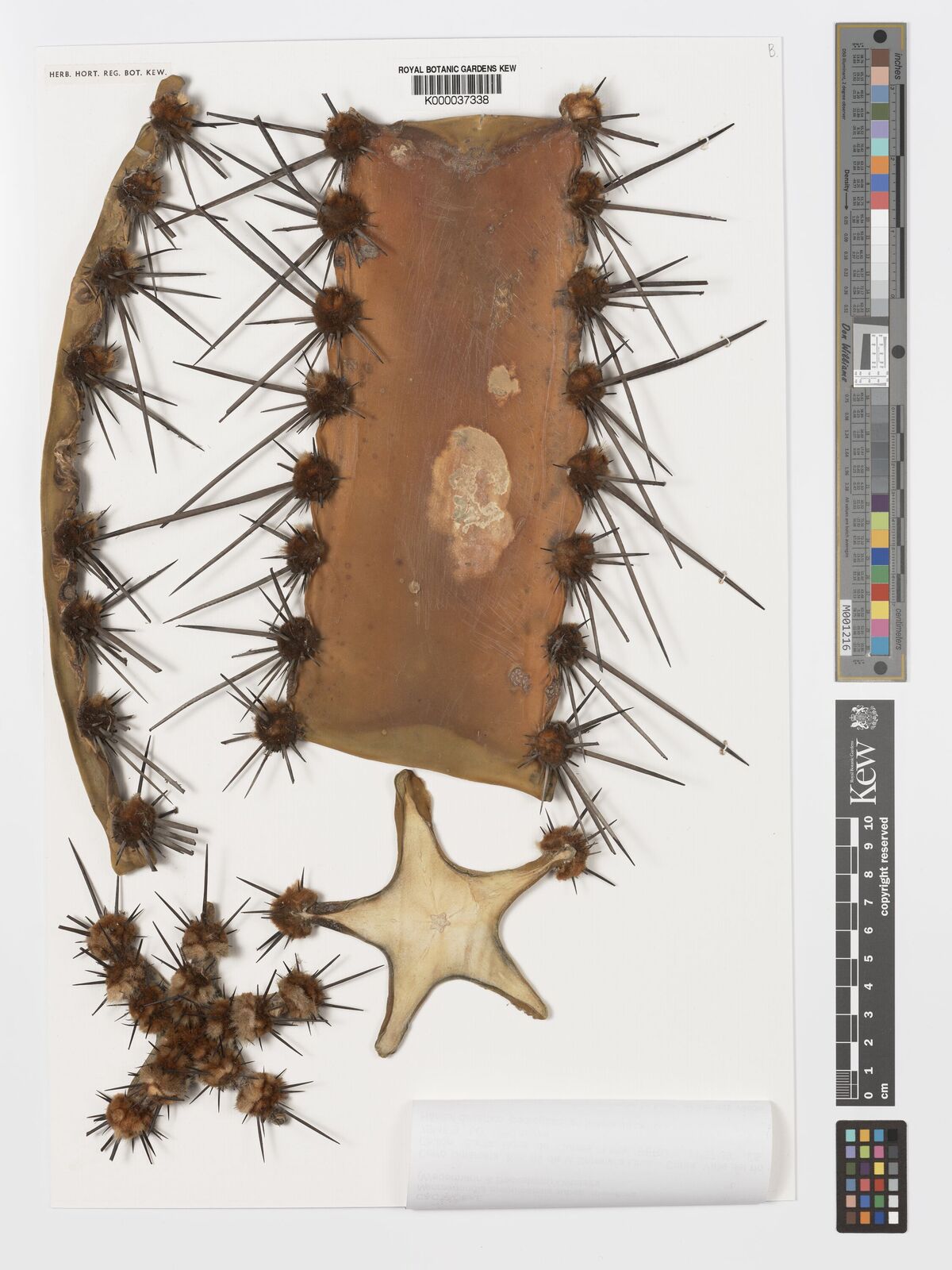 Reference image
Giant Peruvian Columnar Cactus
Neoraimondia arequipensis is a massive, candelabra-like columnar cactus species in the family Cactaceae, native to the hyper-arid coastal and valley regions of Peru 1. This giant, tree-like cactus gets its specific epithet from the city of Arequipa in southern Peru.
Originally described by Franz Julius Ferdinand Meyen as Cereus arequipensis, it was later reclassified under the genus Neoraimondia by Curt Backeberg 2. The genus name honors the prominent Italian-Peruvian geographer and botanist Antonio Raimondi.
It is endemic to Western South America, specifically coastal deserts, rocky slopes, and dry river valleys of Peru, occurring at elevations up to 2000 meters above sea level 1. It is well-adapted to survive extreme drought conditions.
Growing up to 10 meters tall, this species forms a substantial woody trunk branching near the base. Its defining morphological feature is its highly unusual, elongated, felted, woolly areoles (spurs) that can produce massive spines up to 25 cm long. Funnel-shaped pink to off-white flowers and edible spiny fruits emerge directly from these unique areolar short-shoots year after year.
In cultivation, N. arequipensis requires full, direct sunlight and a highly porous, gritty mineral substrate to thrive. Watering must be strictly limited; the soil must dry completely between sessions. During winter, watering should be ceased entirely to prevent root rot in cool conditions.
Overwatering and cultivation in poorly lit, poorly ventilated indoor areas are the leading causes of decline, leading to rapid stem rot or weak, thin etiolated growth.
Requires at least 6-8 hours of direct, unfiltered sunlight daily; shades cause weak development.
Never water unless the substrate is completely bone dry; keep entirely dry in winter.
Requires highly porous mineral substrate rich in pumice, gravel, coarse sand, and minimal organic matter.
Equipped with extremely long, sharp spines. Keep away from high-traffic areas, children, and pets.
Extremely easy to care for if provided with enough direct sun and protected from overwatering.
Native to the hyper-arid coastal deserts and rocky slopes of western South America, particularly surrounding the Arequipa region of Peru.
