
Light
Full Sun
Requires at least 6 hours of direct sunlight daily for healthy growth.
 Reference image
Chenille Prickly Pear
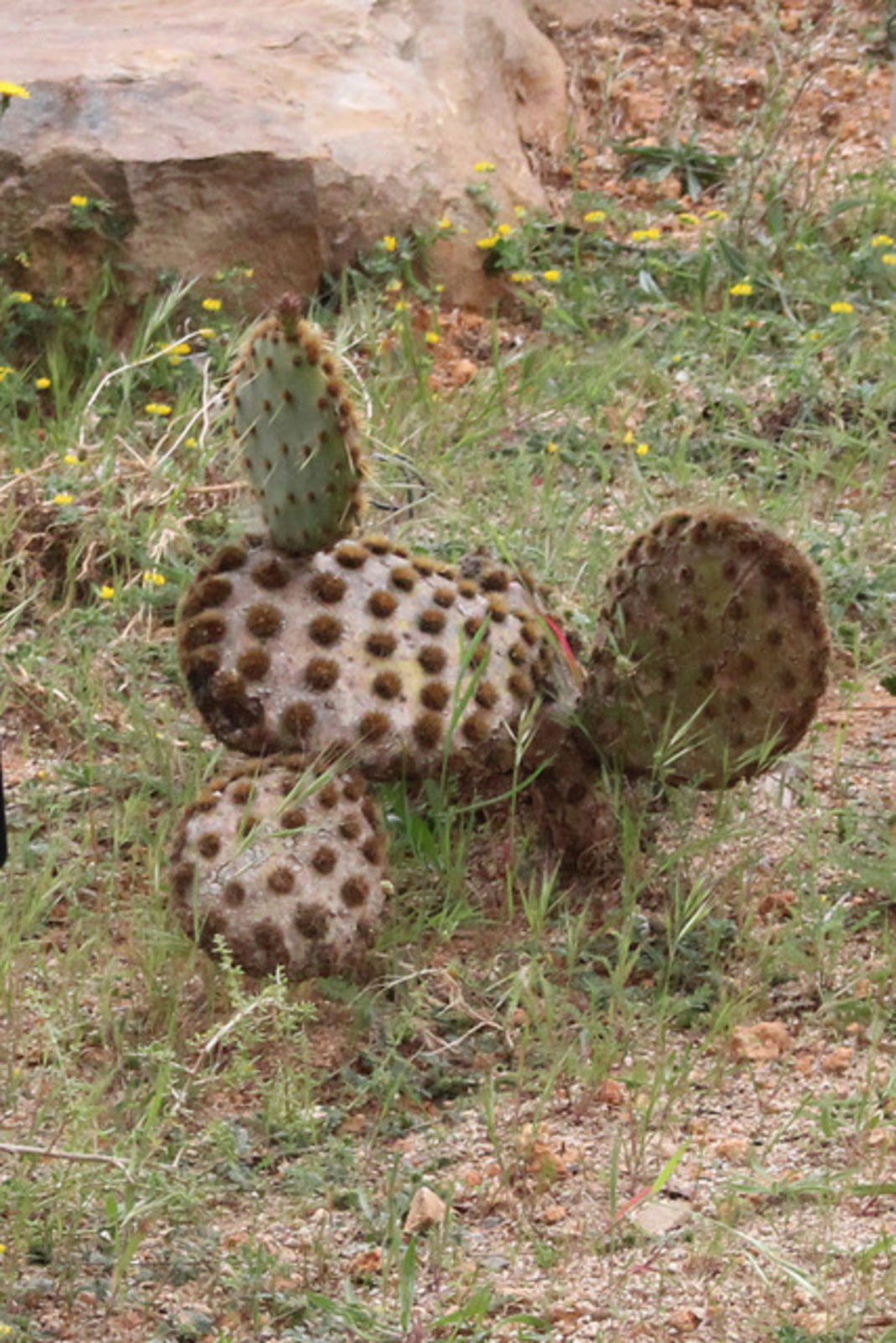
Opuntia aciculata, commonly known as the chenille prickly pear or old man's whiskers, is a highly decorative, perennial cactus species belonging to the Cactaceae family. Renowned for its dense tufts of golden-yellow or reddish-brown glochids, this succulent subshrub is a favorite in xeriscaping and domestic succulent collections 1.
The species was first formally described in 1919 by American botanists Nathaniel Lord Britton and Joseph Nelson Rose 2. The specific epithet aciculata means 'needle-like', referring to the prominent glochids. The genus name Opuntia traces back to the ancient Greek town of Opus, where a spiny plant was noted to grow.
This cactus is native to South-Central North America, primarily distributed across southwest Texas in the United States and extending into northeastern and central Mexico (including Coahuila, Nuevo León, Tamaulipas, and San Luis Potosí) 1. It thrives in arid desert environments, rocky slopes, and dry shrublands, typically in limestone-rich soils.
Opuntia aciculata exhibits a spreading, multi-branched shrubby habit, reaching up to 1 meter in height and spreading wider. It is composed of flat, obovate to orbicular grey-green pads (cladodes). While large central spines are usually absent, its circular areoles are densely packed with hundreds of fine, golden or coppery-red glochids. In late spring, it produces striking flowers in shades of bright yellow, orange, or deep red 2.
In cultivation, it requires full sun exposure and extremely well-draining, sandy-gritty soil. It is highly drought-tolerant and susceptible to root rot if overwatered. It exhibits decent cold hardiness, tolerating short-term drops in temperature down to -7 °C.
The most frequent error is overwatering, particularly during the winter dormancy. Insufficient light leads to etiolation (stretched, weak pads). Due to the easily detached, irritating glochids, physical handling should be kept to a minimum.
Requires at least 6 hours of direct sunlight daily for healthy growth.
Allow the soil to dry out completely between waterings; avoid standing water.
Use a porous, fast-draining cactus mix blended with coarse sand or pumice.
Equipped with numerous irritating micro-spines (glochids); unsafe for pets.
Extremely low-maintenance and highly resilient against drought.
Inhabits dry desert plains, limestone hills, and gravelly slopes stretching from southwestern Texas through northern and central Mexican highlands.
