
Light
Full Sun
Requires full sun or bright direct sunlight for at least 6 hours daily to maintain its shape.
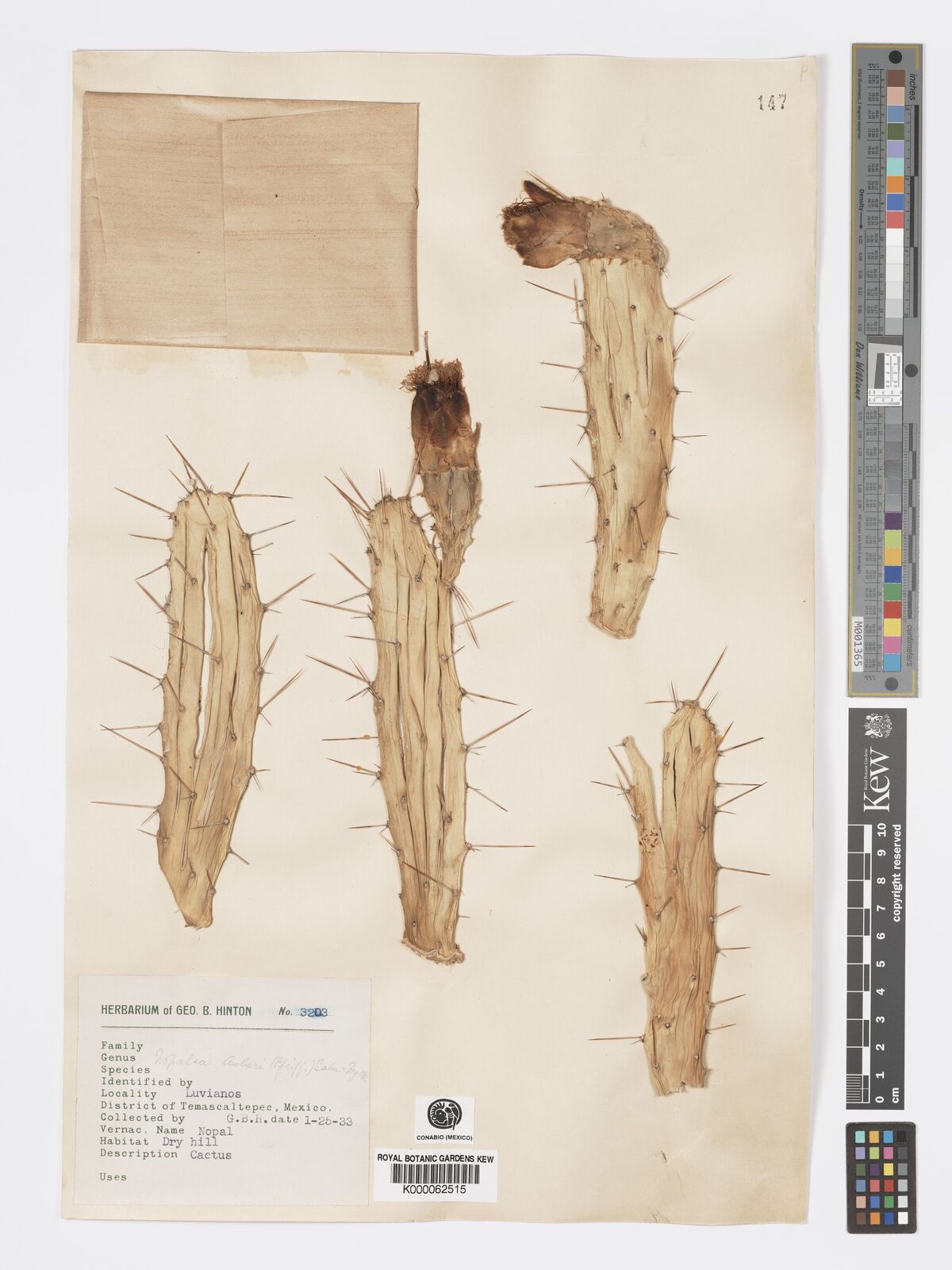 Reference image
Auber's Prickly Pear
Opuntia auberi is a striking, tree-like cactus species belonging to the genus Opuntia within the family Cactaceae. Known for its tall, erect habit and grayish-green, elongated joints, this species can reach several meters in height in its native habitat 1. It is highly valued in dry landscaping and xeriscape gardens for its architectural form.
The species was formally described in 1840 by the French botanist Charles Antoine Lemaire 2. The specific epithet auberi honors Pedro Alejandro Auber, who served as the director of the Havana Botanical Garden in Cuba.
This species is native to Central America and the Caribbean, including southern Mexico, Guatemala, and various Caribbean territories 1. It thrives in seasonally dry tropical biomes, rocky hillsides, and deciduous scrublands where dry conditions prevail.
Opuntia auberi features a woody, cylindrical trunk from which flat, elongated, obovate joint segments emerge. These pads are typically grayish-green to glaucous-green. The areoles contain few to no large spines but are equipped with tiny, irritating glochids. Its nocturnal or diurnal flowers are usually bright yellow, orange, or coppery-pink, blooming in late spring to summer 2.
In cultivation, it requires full sun exposure and extremely well-draining soil. Watering should be deep but infrequent, allowing the substrate to dry completely between sessions. During the winter dormancy, watering should be suspended.
Overwatering is the primary cause of plant loss due to root rot. Insufficient light exposure leads to weak, stretched growth (etiolation).
Requires full sun or bright direct sunlight for at least 6 hours daily to maintain its shape.
Water thoroughly when dry in summer; keep virtually dry during winter dormancy.
Use a porous cactus mix enriched with pumice, coarse sand, and perlite for rapid drainage.
Features tiny, irritating glochid bristles. Keep away from pets and curious children.
Very resilient and easy to grow, making it perfect for beginners who tend to forget watering.
Naturally distributed across the seasonally dry tropical forests and rocky arid zones of southern Mexico, Guatemala, and parts of the Caribbean islands.
