
Light
Full Sun
Requires at least 6 to 8 hours of direct, unfiltered sunlight daily.
 Reference image
 Reference image
Golden Prickly Pear
Opuntia aurea, commonly known as the Golden Prickly Pear, is a cold-hardy, low-growing succulent species belonging to the family Cactaceae 1. Highly valued for its tolerance to extreme freezing temperatures and drought, this plant is an excellent candidate for xeriscaping and alpine rock gardens.
First described botanically by Edgar Martin Baxter, the species name aurea refers to the bright golden-yellow color of its showy blossoms and the dense tufts of yellow glochids on its pads 2. It is classified under the genus Opuntia, which comprises some of the most resilient cacti in North America.
Native to the Southwestern United States, Opuntia aurea is primarily found in the transition zones of southern Utah and northern Arizona 1. It thrives in high-elevation desert scrublands, sand dunes, and sandstone crevices, usually between 1,500 and 2,200 meters above sea level, where it copes with both hot summers and freezing winters.
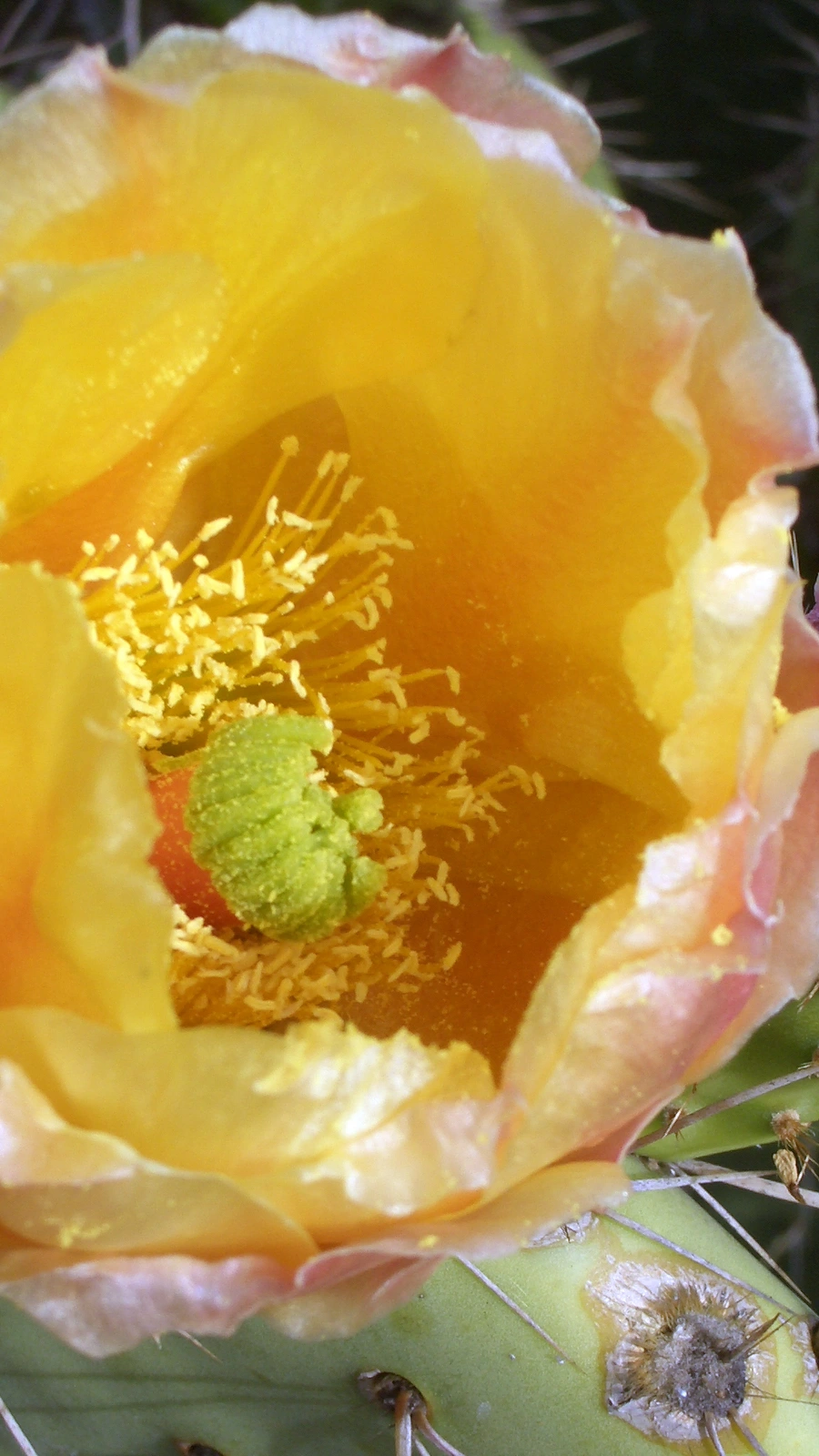
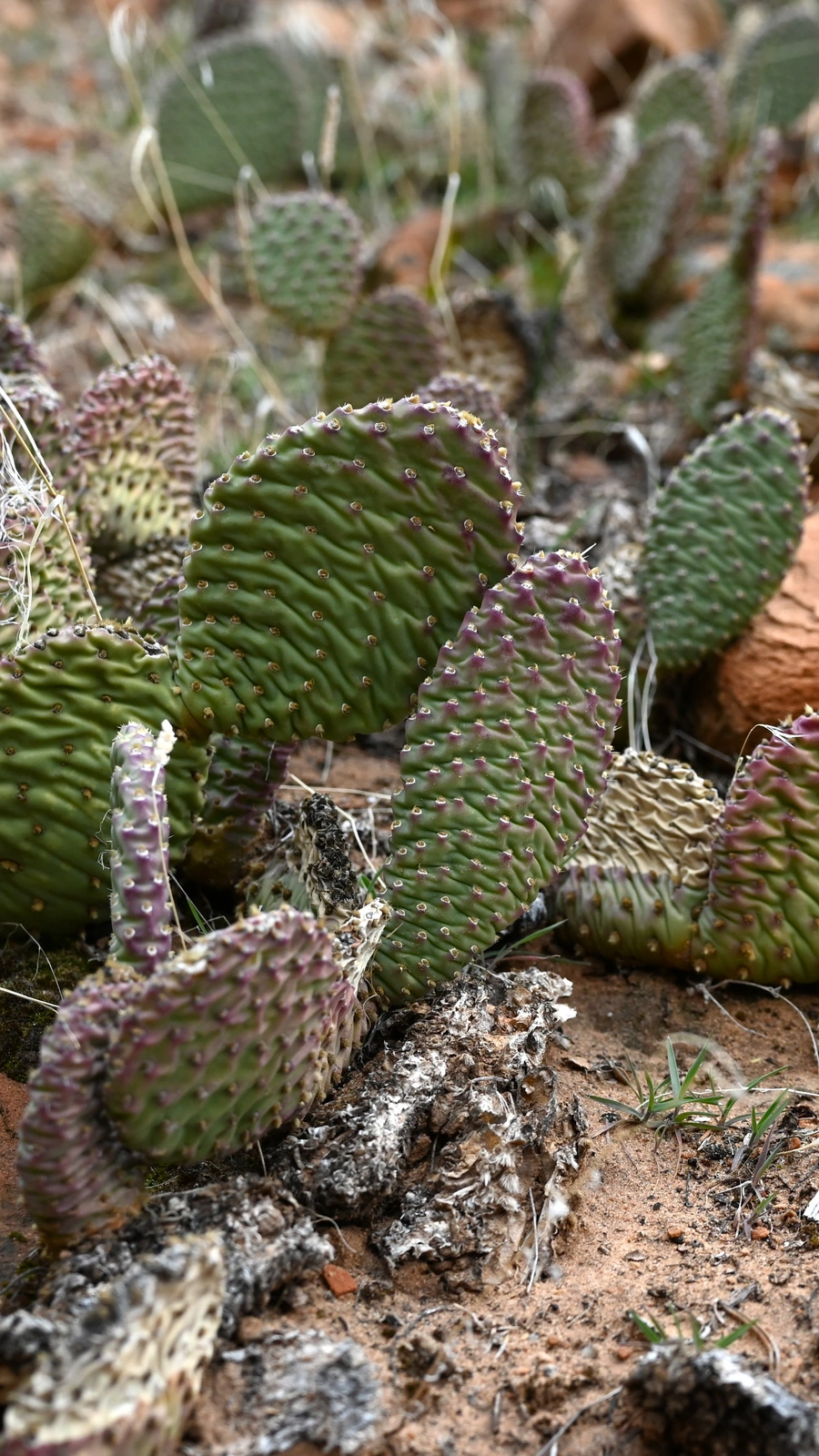
This cactus forms spreading, prostrate mats rather than upright tree-like structures. The fleshy, obovate stem pads are typically spineless but are heavily adorned with aureoles containing tiny, yellow, barbed glochids 2. During late spring, it produces a profusion of beautiful, saucer-shaped yellow to apricot-colored flowers, which later mature into spineless, dry fruits.
In cultivation, Opuntia aurea demands full sun and very lean, fast-draining mineral substrate. It is highly resistant to frost, surviving temperatures well below -20°C if kept dry during winter. Watering should be sparse, focusing solely on the active summer growing season.
The most prevalent issue is waterlogging caused by heavy clay soils, leading to rapid root rot. Indoor cultivation without sufficient supplemental lighting often results in weak, pale, and stretched stem pads.
Requires at least 6 to 8 hours of direct, unfiltered sunlight daily.
Water deeply only when the soil is dry. Suspend watering entirely during the winter.
Prefers mineral-heavy, fast-draining soil with plenty of pumice and coarse sand.
Lacks large spines but carries highly irritating, microscopic barbed glochids. Keep out of reach of pets.
Extremely easy to grow and highly neglect-tolerant, provided it is not overwatered.
This cold-hardy cactus is indigenous to the sandy plains, sandstone hills, and pinon-juniper woodlands of southern Utah and northern Arizona in the United States.
