
Light
Full Sun
Requires full sun. Best placed in south-facing windows, outdoor patios, or bright conservatories.
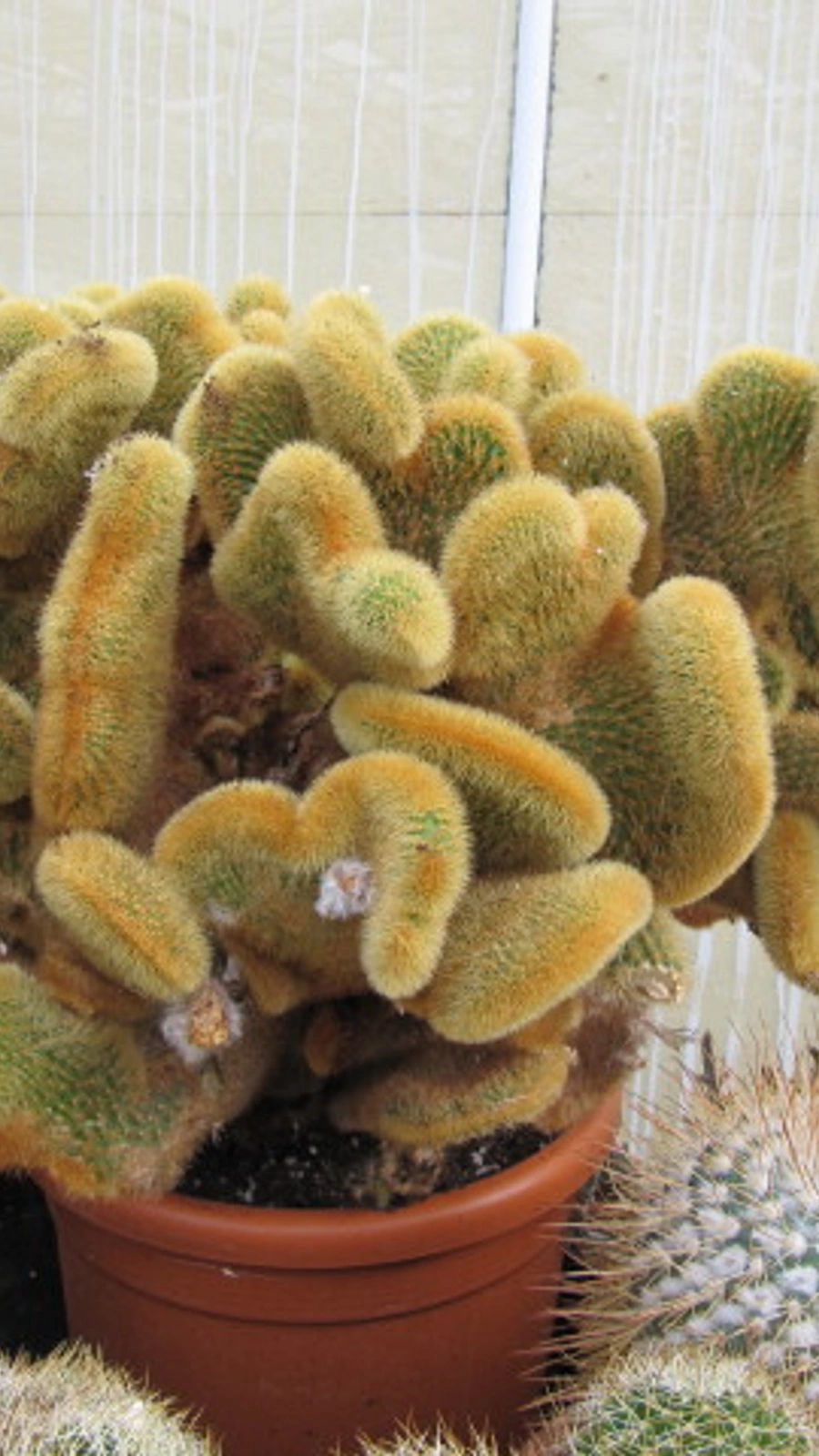 Reference image
Golden-spined Prickly Pear
Opuntia aureispina, commonly known as the golden-spined prickly pear, is a highly drought-tolerant, shrubby cactus species belonging to the family Cactaceae 1. It is highly appreciated by succulent collectors for its striking bright golden spines and attractive blue-green cladodes (pads).
This species was first described from the Trans-Pecos region of Texas 1. Placed within the genus Opuntia, its specific epithet aureispina combines the Latin words for gold (aureus) and spine (spina), highlighting the species' distinctive, golden-yellow needle-like spines 2.
Opuntia aureispina is native to a narrow geographical range along the Rio Grande valley in southwestern Texas (USA) and northern Coahuila (Mexico) 1. It typically grows on limestone hillsides, rocky slopes, and arid desert shrublands.
This plant grows as a branching shrub, reaching up to 1 meter in height. The pads are circular to obovate, displaying a distinct grayish-green or glaucous blue coloration. The areoles bear brilliant yellow, needle-like spines. In late spring, it produces magnificent flowers with bright yellow petals that transition into a vibrant red or orange center, followed by fleshy, spineless fruits.
This cactus thrives in locations with direct, unfiltered sunlight. It requires mineral-heavy, gravelly, or sandy soils with superb drainage. Watering must be sparse, allowing the soil to dry out completely between waterings to prevent root rot 2. During the winter dormancy, water should be withheld almost entirely.
The most common cultivation errors include keeping the plant in low-light environments, which causes pale, stretched growth (etiolation), and utilizing heavy, water-retentive soils that trigger fungal root rot.
Requires full sun. Best placed in south-facing windows, outdoor patios, or bright conservatories.
Water deeply but infrequently. Allow the soil mix to dry out 100% before watering again.
Use a specialized porous cactus mix enriched with perlite, pumice, and coarse sand.
Non-toxic, but the microscopic glochid bristles are highly irritating to skin and eyes.
Very easy to care for, making it ideal for beginners who can provide intense sunlight.
Its native habitat is restricted to the rocky limestone hillsides, canyons, and arid shrublands along the Rio Grande border region between southwestern Texas and Coahuila, Mexico.
