
Light
Full Sun
Requires at least 6 hours of direct sunlight daily. Lack of light causes thin, weak growth.
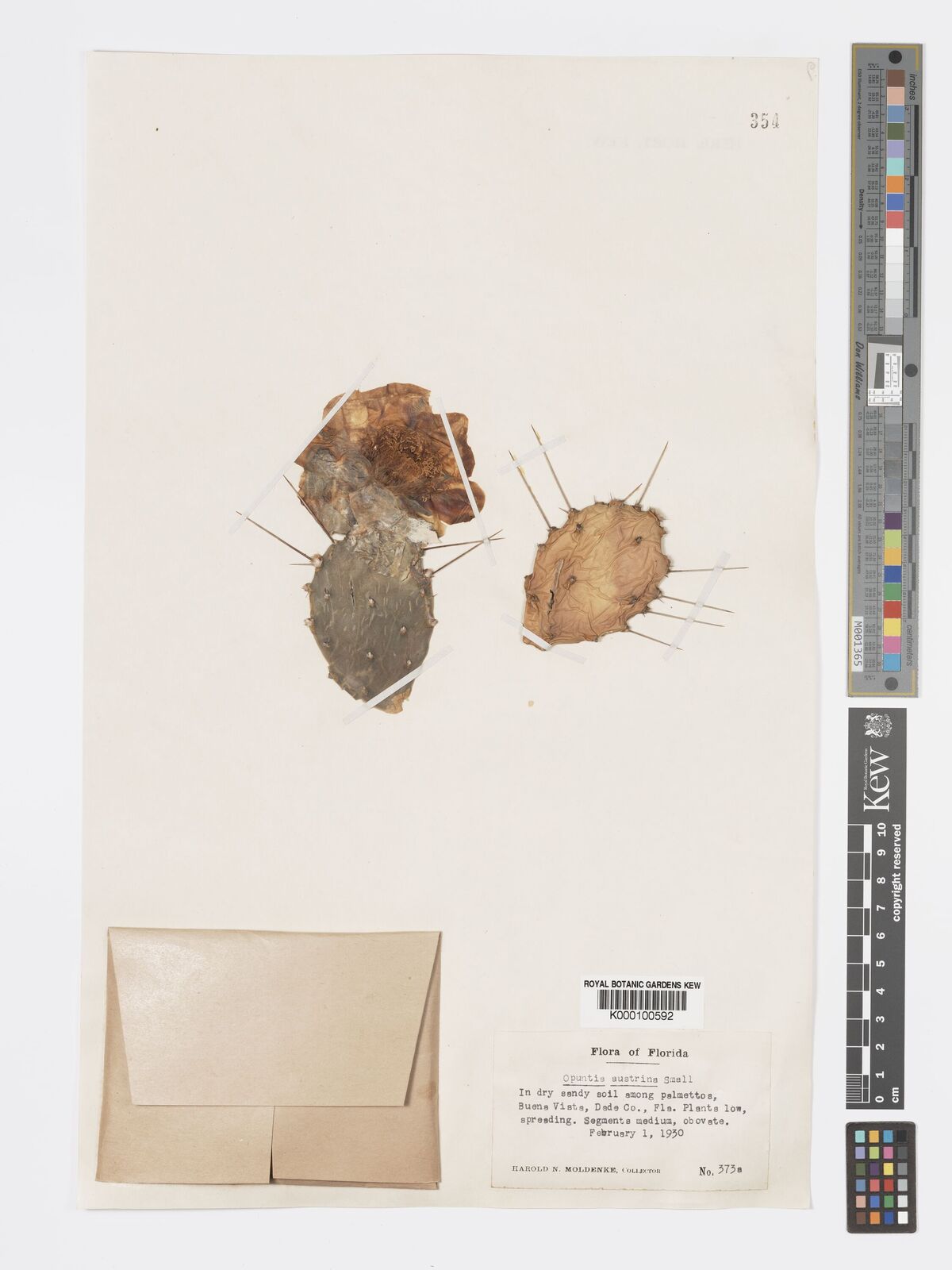 Reference image
Florida Prickly Pear
Opuntia austrina, commonly known as the Florida prickly pear, is a resilient and attractive cactus species native to Florida and the southeastern United States 1. This succulent subshrub is characterized by its low-growing habit, showy yellow flowers, and spiny green pads.
It belongs to the genus Opuntia within the family Cactaceae. The specific epithet austrina translates to "southern" in Latin, reflecting its primary distribution in the southern regions of the United States 2.
This species is primarily found in Florida’s coastal dunes, pine flatwoods, scrublands, and limestone glades. It thrives in subtropical climates, adapting perfectly to nutrient-poor and extremely well-draining soils 1.
It features flattened, fleshy, obovate stem segments (pads) of green to grayish-green coloration. The pads are armed with slender needles and clusters of tiny, irritating glochids. Bright yellow flowers emerge in late spring to summer, followed by edible, purplish-red fruits 2.
In cultivation, Opuntia austrina is highly drought-tolerant and easy to grow. It demands full sun exposure to maintain its compact growth form and promote blooming. Watering should be infrequent, only when the soil has completely dried out 1.
Overwatering is the primary cause of failure, quickly leading to root and stem rot. Placing the plant in low-light environments causes etiolation, where the pads stretch out and weaken.
Requires at least 6 hours of direct sunlight daily. Lack of light causes thin, weak growth.
Water deeply but only when the soil is bone-dry. Reduce drastically in winter.
Use a coarse cactus mix amended with coarse sand, pumice, or perlit for rapid drainage.
Features painful spines and microscopic glochids that easily lodge in skin. Handle with care.
Very easy and forgiving of neglect, provided it gets sufficient sunlight and dry soil.
Mainly distributed across the sandy scrublands, coastal dunes, and pine flatwoods of Florida.
