
Light
Full Sun
Requires full sun, ideally 6 to 8 hours of direct daily sunlight for strong growth and blooms.
 Reference image
 Reference image
Eastern Prickly Pear
Opuntia cespitosa, commonly known as the Eastern Prickly Pear, is a cold-hardy, low-growing succulent subshrub native to North America 1. Renowned for its clump-forming growth habit and exceptional frost resistance, this species is frequently cultivated in rock gardens and containers.
Originally described by Constantine Samuel Rafinesque, Opuntia cespitosa was historically grouped under a broad circumscription of Opuntia humifusa 2. Modern taxonomic studies have reinstated it as a distinct tetraploid species, distinguished by its unique floral coloration and geographical distribution.
This cactus is native to the eastern and central United States, spanning regions such as Tennessee, Kentucky, Ohio, and Indiana. It thrives in dry, sunny, and open habitats, including limestone glades, rocky ledges, sandy slopes, and open woodlands 1.
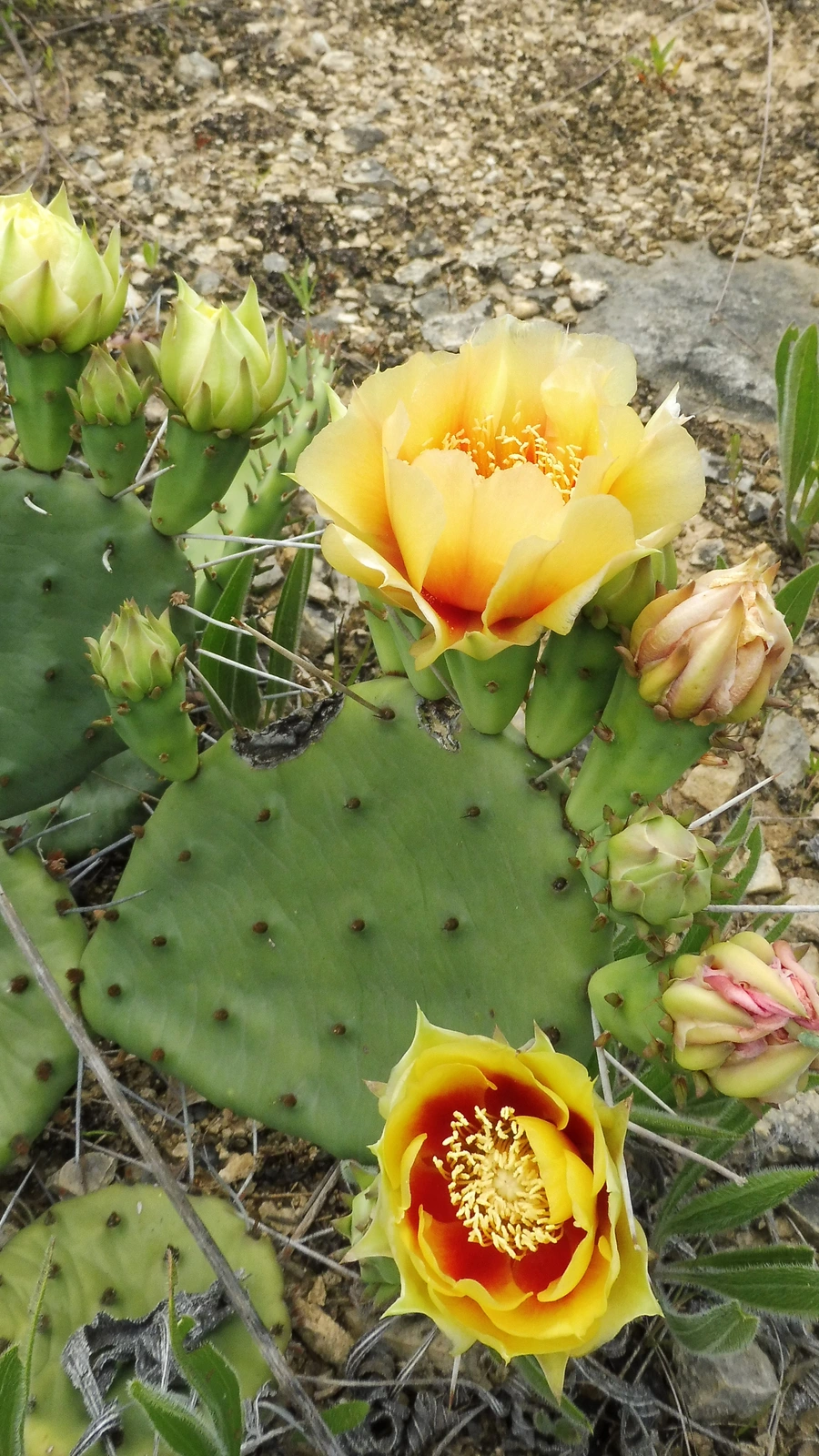
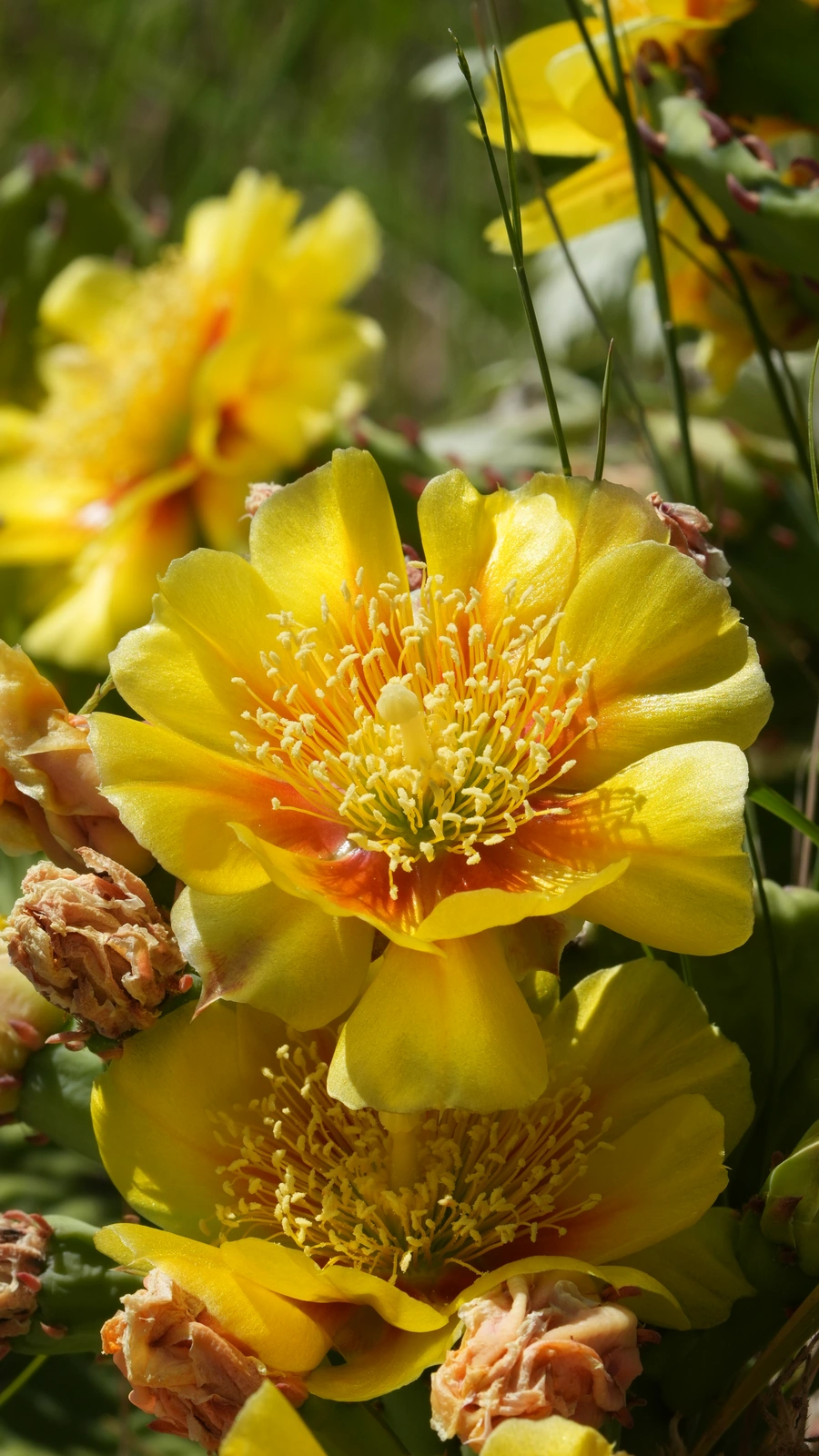
The plant consists of flattened, obovate to circular, fleshy green pads (cladodes). The areoles bear sharp glochids and occasionally longer, rigid spines. During late spring, it produces showy yellow flowers with a distinctive, bright reddish-orange center, followed by edible reddish-purple fruits 2.
Opuntia cespitosa requires full sun and exceptionally well-drained, gritty soil to prevent root rot. It is remarkably cold-hardy, surviving severe winter freezes by dehydrating and wrinkling, then quickly plumping up when warmer weather returns in spring.
The most critical mistake is overwatering, especially in winter, or planting in heavy, clay-rich soil with poor drainage, which invariably leads to rot 1. Insufficient sunlight leads to etiolation, causing weak, elongated pads.
Requires full sun, ideally 6 to 8 hours of direct daily sunlight for strong growth and blooms.
Water only after the potting medium is fully dry. Cease watering almost entirely during winter.
Extremely porous sandy loam mixed with pumice, coarse sand, or fine gravel.
Equipped with tiny barbed glochids that easily dislodge and irritate skin; keep out of reach of pets.
Extremely easy to care for and highly resistant to sub-zero temperatures and neglect.
Native to various eastern states of the US, inhabiting shallow soils over limestone, sandy prairies, and dry forest openings where it survives both hot summers and freezing winters.
