
Light
Full Sun
Requires full sun. At least 6 hours of direct sunlight daily is necessary for proper pad growth and blooming.
 Reference image
 Reference image
Grassland Prickly Pear
Opuntia cymochila, commonly known as the grassland prickly pear, is a highly resilient cactus species in the Cactaceae family, natively adapted to the harsh grasslands of North America 1. Exhibiting a low-growing, spreading succulent subshrub habit, it is famed for its extreme cold hardiness and drought tolerance.
Originally described by George Engelmann, Opuntia cymochila has historically been associated with the Opuntia humifusa or Opuntia phaeacantha complexes 2. Modern taxonomic databases such as Kew's POWO validate it as a distinct species based on its unique spine counts, geographic distribution, and seed morphology.
The species is native to the South-Central and North-Central United States, including Texas, New Mexico, Colorado, Kansas, and Nebraska 1. It thrives in shortgrass prairies, sandy hillsides, and rocky outcrops, where it experiences hot summers and freezing winters.
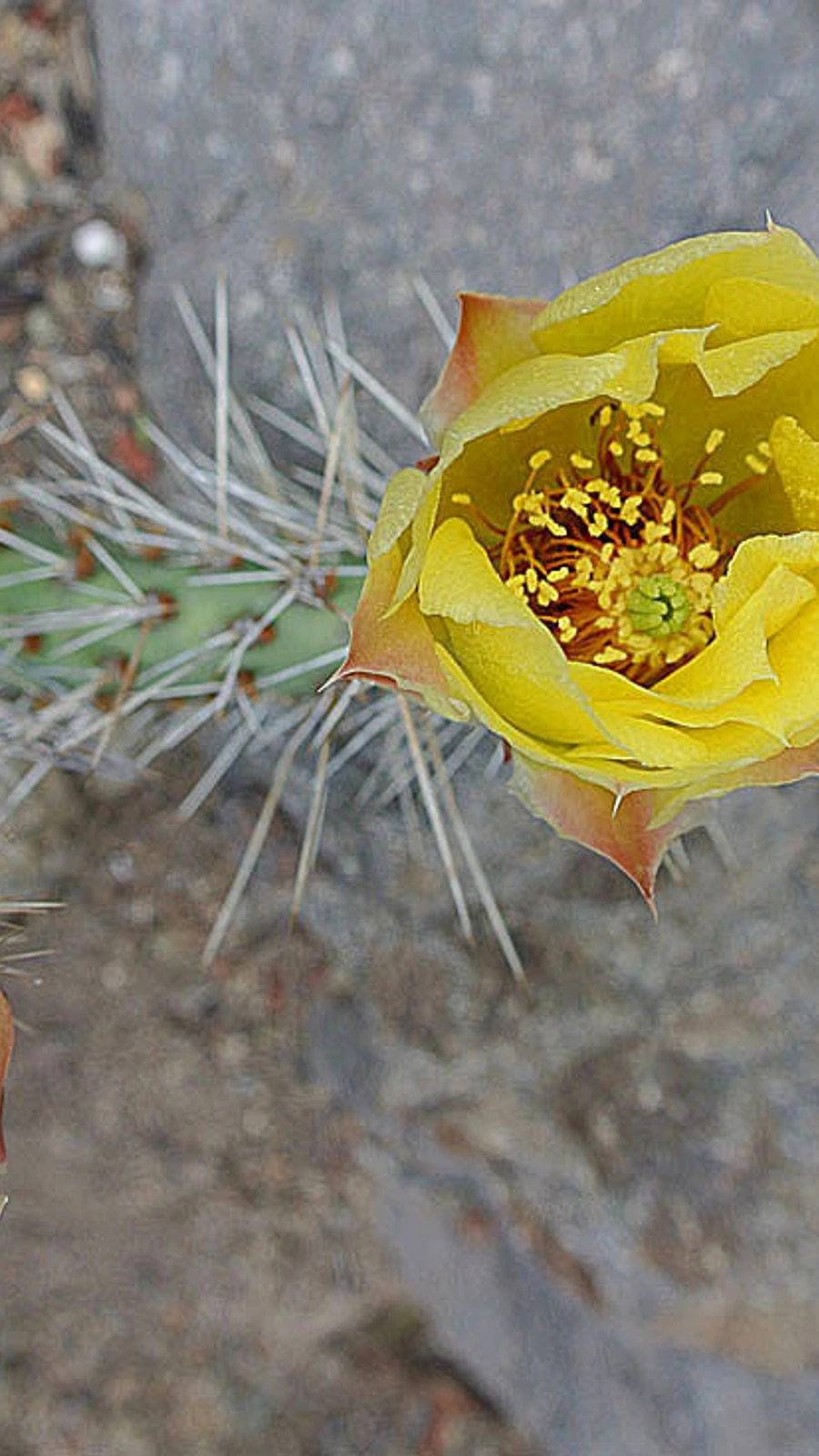
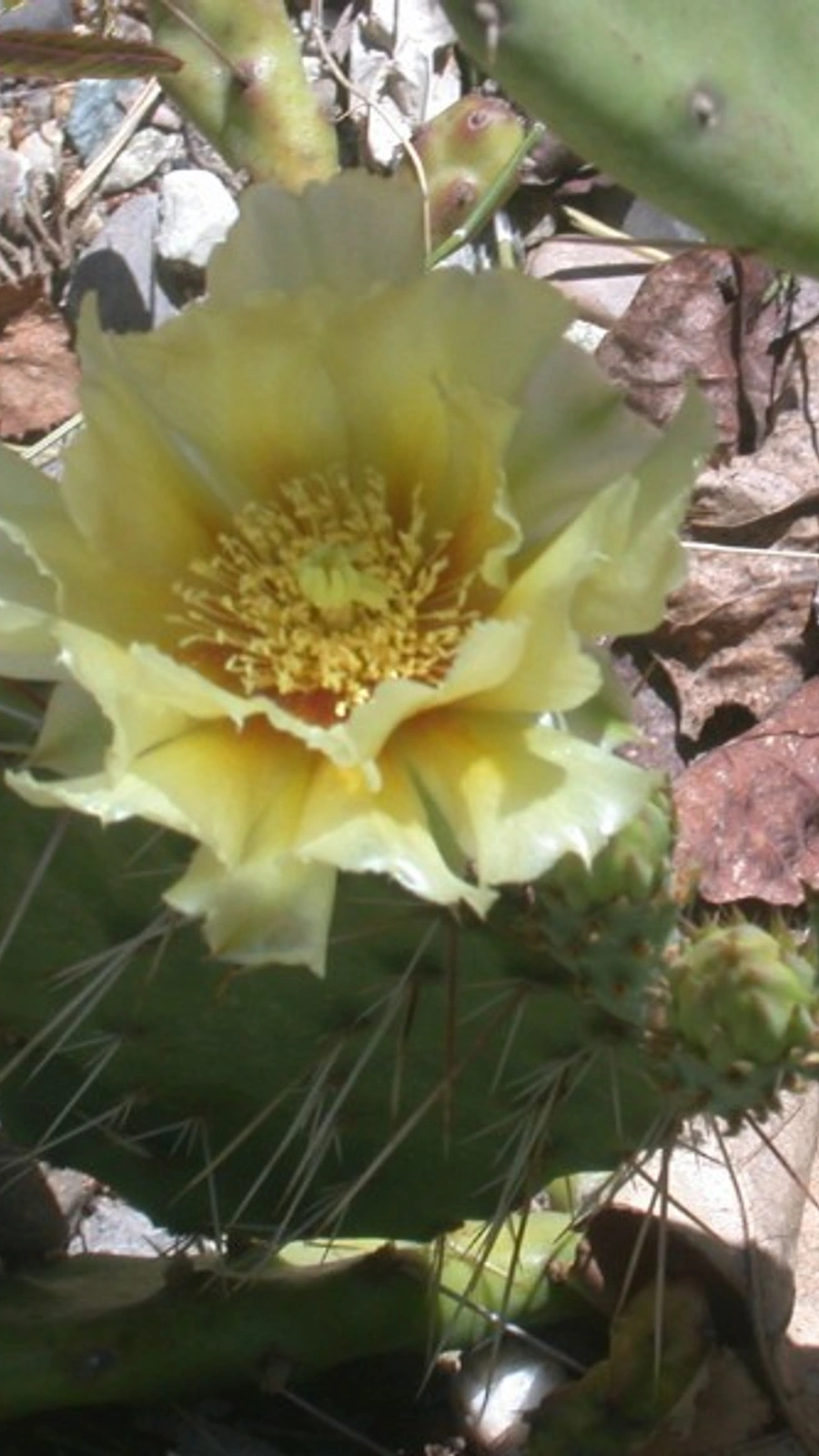
This cactus forms prostrate to semi-erect clumps made of flattened, obovate green pads (cladodes). The areoles bear prominent, sharp, needle-like spines alongside numerous tiny, irritating glochids. In late spring, it produces beautiful bright yellow flowers, often with reddish centers, followed by reddish-purple fleshy fruits.
In cultivation, it is highly valued for xeriscaping and rock gardens due to its low maintenance. When grown in pots, it demands highly porous, mineral-heavy substrate. It requires maximum sun exposure to encourage robust growth and abundant flowering.
The most prevalent error is overwatering during its winter dormancy, which quickly leads to root and pad rot. Insufficient sunlight will cause the pads to stretch unnaturally (etiolation) and weaken the plant's structural integrity.
Requires full sun. At least 6 hours of direct sunlight daily is necessary for proper pad growth and blooming.
Allow soil to dry out completely between waterings. Reduce to a minimum or zero during freezing winter months.
Needs excellent drainage. Use a sandy, gritty mineral mix with low organic matter to prevent root rot.
Equipped with tiny barbed glochids that easily lodge in skin and paws. Keep away from pets and children.
Extremely easy to care for, virtually indestructible if not overwatered, and remarkably frost-tolerant.
Widely distributed throughout the Great Plains and southwestern prairies, adapting perfectly to dry grasslands, sandy dunes, and rocky slopes from Texas up to Nebraska.
