
Light
Full Sun
Requires at least 6 hours of direct sunlight daily. Best placed on south-facing windows or outdoors.
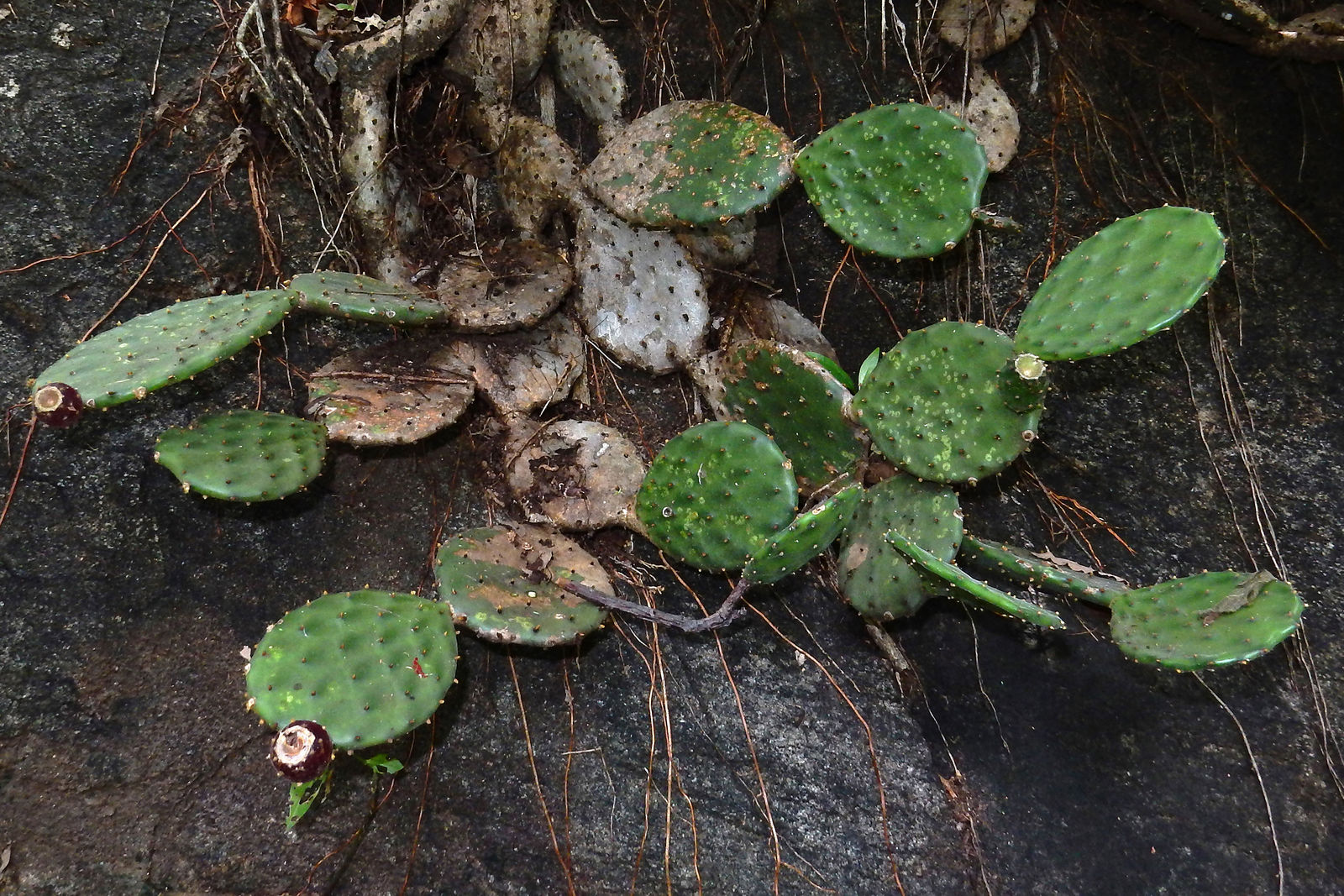 Reference image
Decumbent Prickly Pear
Opuntia decumbens, belonging to the Cactaceae family, is a distinctive, low-growing prickly pear species known for its sprawling growth habit. Widely integrated into dry and semi-arid scrub ecosystems in its native range, this plant is appreciated for its fleshy, flat pads and bright yellow blossoms 1. It is highly valued in dry gardens and container culture due to its resilience and structural appeal.
The species name "decumbens" is derived from Latin, meaning "reclining" or "lying down", which accurately describes its trailing and creeping growth form that tends to spread horizontally across the ground 2. Like other members of the genus Opuntia, it produces both standard spines and microscopic barbed bristles known as glochids.
This cactus is native to Mexico, spanning central, southern, and western regions, and extends southward through Central America into Panama 1. It thrives in seasonally dry tropical biomes, often found on rocky hillsides, volcanic substrates, and disturbed scrublands where it enjoys intense light and rapid soil drainage.
Opuntia decumbens forms a low shrub composed of dull-green to grayish-green, obovate to elliptical cladodes (pads). The areoles are spaced across the pads, housing fine yellowish glochids and typically one or two yellow-toned spines. During late spring, it produces attractive yellow flowers that transition into fleshy, dark reddish-purple, edible-but-spiny fruits 1.
In cultivation, it requires a position in full sun to maintain its compact habit and vibrant color. Soil must be highly porous, containing coarse sand, grit, and perlite. Watering should follow a strict "soak and dry" method, allowing the substrate to dehydrate completely between sessions 2.
Overwatering is the primary cause of failure, quickly leading to root rot. Keeping the plant in low-light environments causes etiolation, resulting in weak, elongated, and pale green pads that lack structural integrity.
Requires at least 6 hours of direct sunlight daily. Best placed on south-facing windows or outdoors.
Only water when the potting medium is 100% dry. Keep dry in winter to prevent rot.
Requires a gritty, fast-draining cactus mix with plenty of pumice or coarse sand.
Features tiny, irritating glochids that easily detach. Keep out of reach of curious pets and children.
Extremely drought-tolerant and easy to care for, ideal for beginners who tend to underwater.
Naturally distributed from the volcanic soils and dry scrub forests of Mexico down through the drier corridors of Central America to Panama, adapting well to rocky and nutrient-poor terrains.
