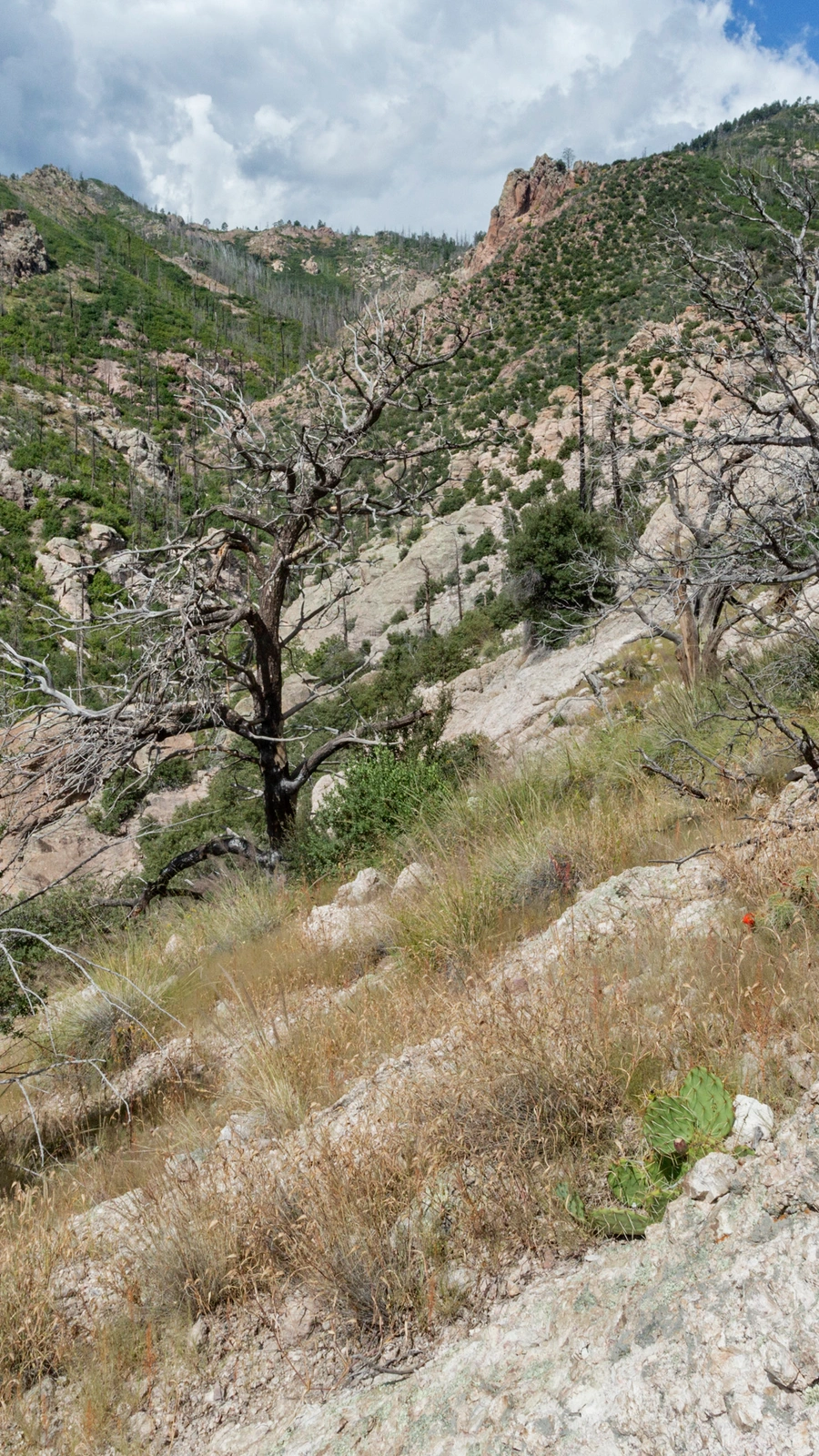
Opuntia dichotoma

Dichotomous Prickly Pear

Overview

Opuntia dichotoma is a distinctive member of the Cactaceae family, recognized for its uniquely branching growth pattern and highly resilient nature 1.

Taxonomy and Naming

The species name dichotoma refers to its dichotomous (forked) branching habit. Taxonomists study this species to trace the evolutionary adaptation of dry-land cacti under severe environmental pressures 2.

Distribution and Habitat

Its native range encompasses the arid and semi-arid regions of the Americas. It is typically found thriving on rocky slopes, gravelly plains, and thin soils where other vegetation struggles to survive 1.

Appearance

This cactus features flattened, fleshy segments called cladodes that store water efficiently. The areoles are armed with spines and fine, irritating glochids. During late spring, it produces beautiful, bright yellow to orange cup-shaped flowers 2.

Cultivation and Care

In cultivation, it requires full sun exposure and extremely well-draining, gritty soil. Water deeply only when the substrate is completely dry. Keep dry in winter to prevent cold-induced rot.

Common Cultivation Mistakes

The most prevalent issue is root rot caused by waterlogged soil. Insufficient lighting leads to weak, elongated, and pale green new growth (etiolation).

Bibliography

References

  1. Plants of the World Online (POWO), Royal Botanic Gardens, Kew.
  2. International Plant Names Index (IPNI), Cactaceae Records.
Light

Full Sun

Requires full sun, preferably at least 6 hours of direct sunlight daily.

Watering

12-35 Days

Water thoroughly only after the soil has dried out completely.

Soil

Well-drained, sandy and pumice-rich cactus soil

Highly porous cactus mix blended with pumice, perlite, and coarse sand.

Safety

Contact/Ingestion Risk

Contains tiny glochids that easily detach and irritate skin. Keep away from curious pets.

Difficulty

Easy

Very easy to maintain if you do not overwater and provide enough light.

Native Habitat

Arid regions of North and South America

Indigenous to the desert climates and rocky slopes across the American continent. It has evolved to withstand intense heat, poor mineral soils, and prolonged seasonal droughts.

Frequently Asked Questions

Can Opuntia dichotoma be grown indoors?
Yes, it can be grown indoors, but it must be placed near a south or west-facing window where it can receive at least 6 hours of direct sunlight daily.
How often should I water it?
Water once the soil dries out completely (about every 10-14 days in summer). In winter, reduce watering to once a month or suspend it entirely.
What is the correct soil mix?
Use a specialized cactus mix containing 50% inorganic grit (pumice, perlite, sand) and 50% organic matter to ensure fast drainage.
How can I encourage blooming?
Provide a cool (around 10°C) and dry winter dormancy period to trigger flower bud formation in the spring.
Is it toxic to pets?
While not highly toxic chemically, the microscopic glochids (tiny spines) can cause severe irritation to pets' mouths and digestive tracts.
What is its growth rate?
It grows at a moderate rate compared to other cacti, producing new stem pads (cladodes) each year under optimal sun and water conditions.
What does a softening stem mean?
A soft, mushy stem is usually a sign of root rot caused by overwatering. Stop watering immediately and propagate healthy pads if necessary.
How is it propagated?
Easily propagate by detaching a healthy segment, letting the cut calloused over for a few days, and then planting it in dry soil.
What kind of pot should I prefer?
Unglazed terracotta pots are ideal because their porous nature allows excess moisture to evaporate easily.
What should I do if the spines prick me?
Use adhesive tape or tweezers to pull out the microscopic glochids, then wash the affected area with warm, soapy water.