
Light
Full Sun
Requires full, direct sun all day to maintain its dense spine coat and prevent stretching.
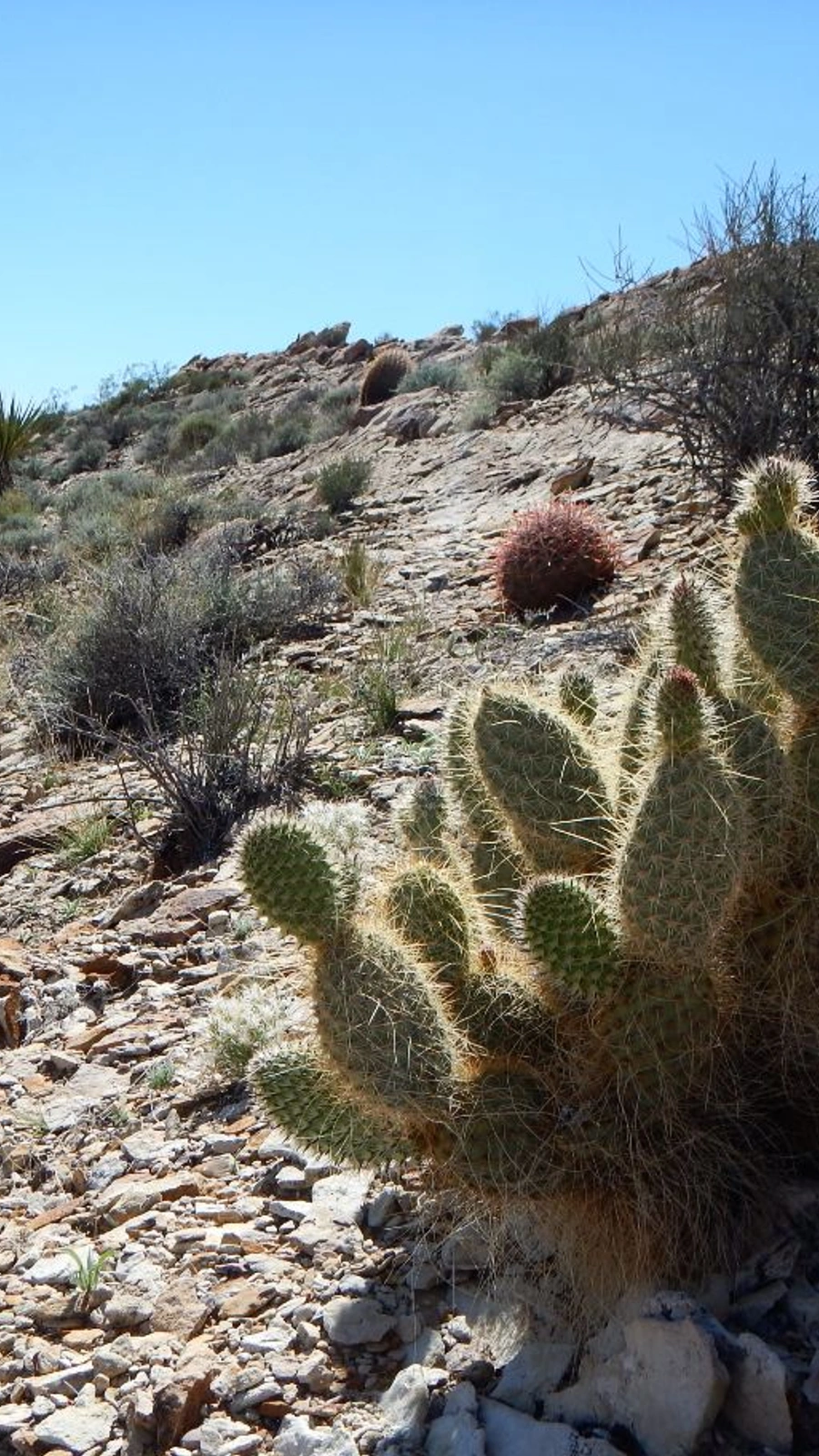 Reference image
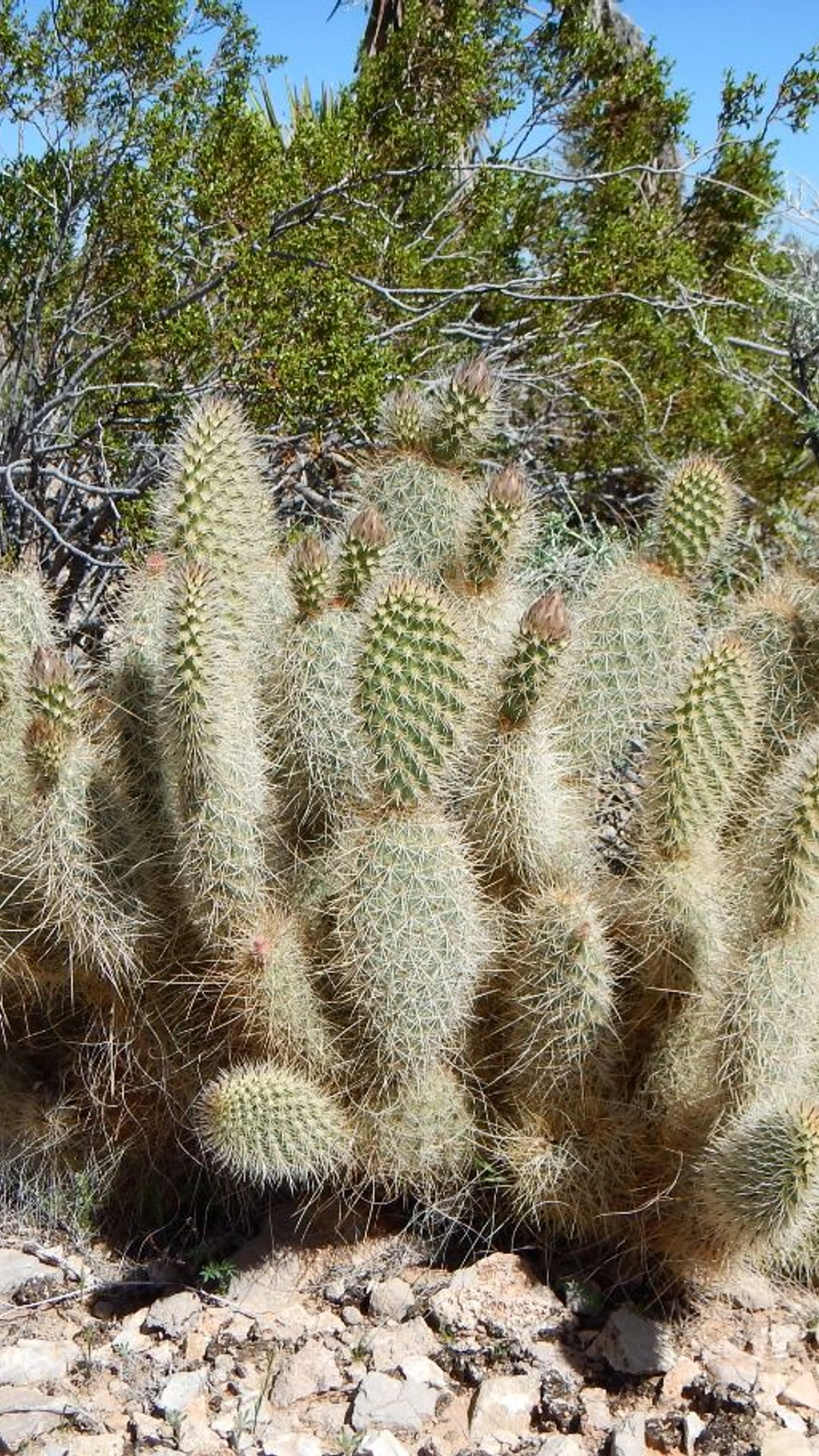 Reference image
Double-bear Prickly Pear
Opuntia diploursina is a densely spined, shrubby cactus species belonging to the family Cactaceae. Famously known as the Double-bear Prickly Pear, this resilient succulent is highly valued by arid-land gardeners for its dense jacket of flexible, glowing spines that resemble animal fur.
This species was formally described in 2001 by botanists Marc A. Baker and Jon P. Rebman 1. The specific epithet "diploursina" translates to "double-bear", referring to its resemblance to the grizzly bear prickly pear (Opuntia erinacea) but displaying distinct taxonomic features.
Opuntia diploursina is native to a narrow range in the Southwestern United States, specifically near the intersection of Utah, Arizona, and Nevada 2. It thrives in hyper-arid desert scrublands, gravelly alluvial washes, and rocky slopes at elevations ranging from 500 to 1,300 meters.
Growing as an erect or sprawling succulent subshrub up to 1 meter tall, it features flattened elliptical or obovate stem segments (pads). Each pad is heavily armored with numerous, slender, yellow-to-grey spines that obscure the epidermis. It produces bright yellow flowers in late spring, which transition to pinkish hues as they fade, followed by dry, spiny fruits.
In cultivation, it requires full sun and exceptionally well-draining mineral soil. It is highly drought-tolerant and possesses impressive cold-hardiness. If kept completely dry during winter dormancy, it can easily withstand temperatures down to -15 °C.
Overwatering and high atmospheric humidity are the primary causes of failure. In poorly drained soils, root and stem rot develop rapidly. Lack of intense, direct sunlight leads to weak, elongated pad growth (etiolation) and sparse spination.
Requires full, direct sun all day to maintain its dense spine coat and prevent stretching.
Water deeply in summer once soil is bone-dry. Suspend watering entirely in winter.
Use a strictly mineral-based mix rich in pumice, coarse sand, and grit with minimal organic matter.
Armed with countless sharp spines and irritating glochids; keep away from pets and children.
Very easy to maintain, provided you avoid overwatering and heavy, wet soils.
Occurs naturally in the Mojave Desert, colonizing dry gravelly slopes, rocky ledges, and alluvial washes.
