
Light
Full Sun
Needs at least 6 hours of direct sun daily to prevent etiolation.
 Reference image
 Reference image
Sweet Prickly Pear
Opuntia dulcis, commonly known as the sweet prickly pear, is a succulent shrubby cactus species belonging to the Cactaceae family. Highly adapted to harsh, arid desert conditions, this plant is appreciated both for its sweet edible fruits and its robust architectural presence in xeric landscapes 1.
Belonging to the genus Opuntia, the specific epithet "dulcis" means "sweet" in Latin, direct shorthand for its historically gathered sugary fruits. In various botanical discussions, it has been treated close to or within the Opuntia engelmannii complex 2.
This cactus is native to South-Central USA and Northern Mexico, particularly thriving in Texas, New Mexico, and adjacent desert ecoregions. It populates gravelly slopes, dry shrublands, and sandy plains 1.
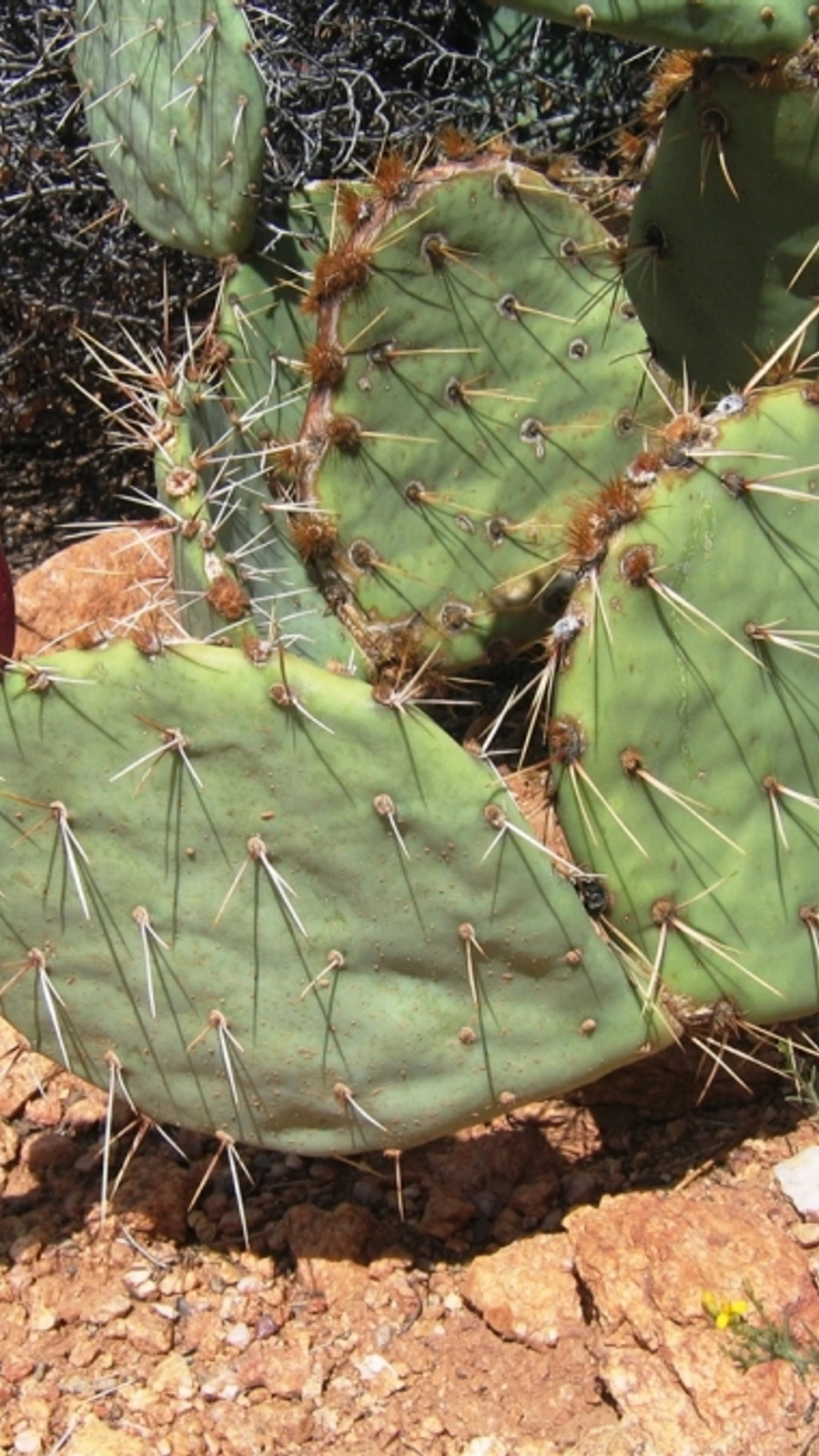
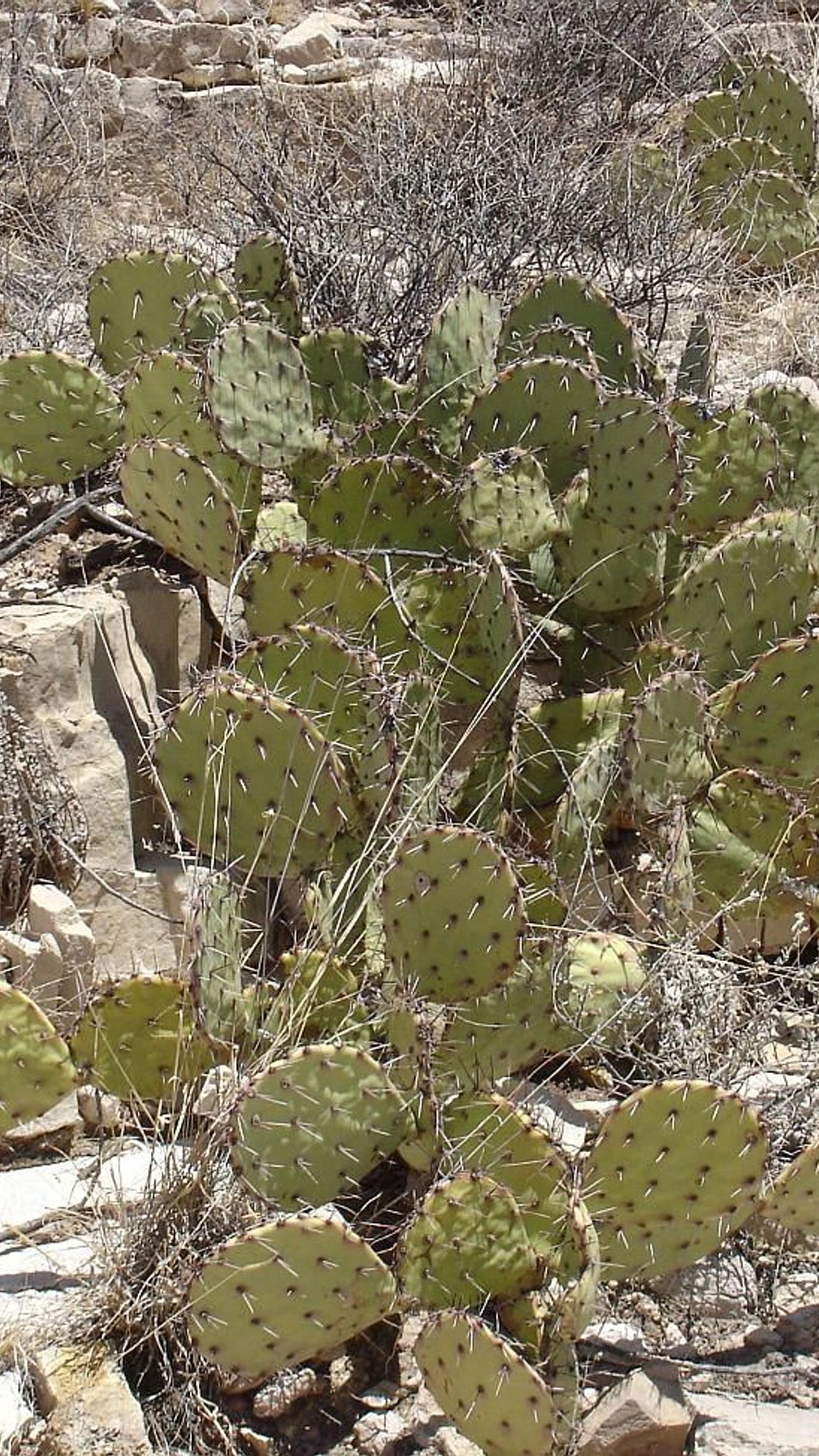
It forms spreading clumps of obovate, grayish-green pads (cladodes). The areoles bear prominent yellow spines as well as dense tufts of tiny, irritating glochids. Bright yellow flowers emerge in late spring, which transition into sweet, reddish-purple pear-like fruits 2.
Successful cultivation requires full sun exposure and extremely well-drained, porous soils. It has a notable cold tolerance down to sub-zero temperatures. Water thoroughly during summer dry spells and keep completely dry in winter.
The most prevalent failure is root rot from waterlogged soils. Inadequate sunlight leads to thin, weakened pads. Handling without thick protective gloves is also a frequent user error due to invisible glochids.
Needs at least 6 hours of direct sun daily to prevent etiolation.
Allow the soil to dry out 100% between thorough waterings.
Requires excellent drainage; add coarse grit or pumice to standard soil.
Contains tiny glochid spines that easily lodge in skin and irritate pets.
Very easy and resilient, provided it is not overwatered or kept in shade.
Naturally distributed throughout the dry shrublands and gravelly slopes of Texas, New Mexico, and northern regions of Mexico.
