
Light
Full Sun
Requires at least 6 hours of direct, unfiltered sunlight daily for compact growth.
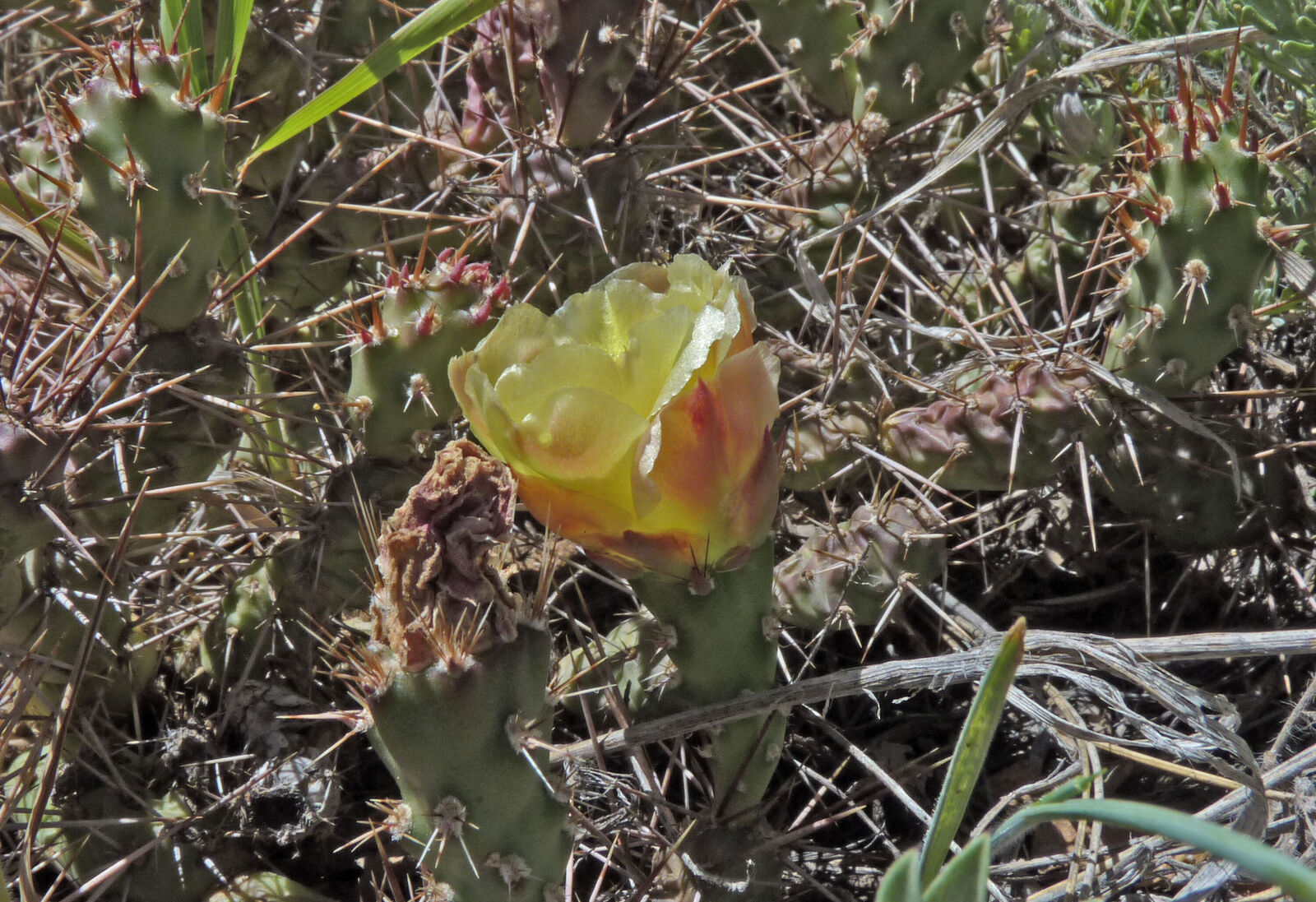 Reference image
Fragile Prickly Pear
Opuntia fragilis is one of the most remarkable and cold-tolerant members of the Cactaceae family 1. Commonly known as the fragile prickly pear, it is famous for its jointed stems that detach easily to propagate vegetatively.
Originally described as Cactus fragilis by Thomas Nuttall in 1818, it was later placed in the genus Opuntia 2. The specific epithet 'fragilis' directly refers to the plant's characteristic brittle stem segments.
This species boasts an extensive range across North America, stretching far north into Canada 1. It thrives in prairies, rocky hillsides, and sandy plains, adapting beautifully to severe winter conditions.
It forms low mats of small, rounded, fleshy green pads. The areoles bear sharp spines accompanied by clusters of short, irritating glochids. Bright yellow flowers appear in early summer.
Opuntia fragilis requires maximum sunlight and exceptionally well-draining soil 2. It can be grown outdoors year-round even in freezing climates, as long as winter wetness is prevented.
Overwatering and using heavy, clay-rich soil mixes are the leading causes of root rot. Lack of sufficient direct sunlight will lead to weak, pale, and stretched growth (etiolation).
Requires at least 6 hours of direct, unfiltered sunlight daily for compact growth.
Allow soil to dry out fully between waterings; suspend watering during freezing winter months.
Gritty, mineral-heavy substrate with high percentages of pumice, sand, and gravel.
The pads detach with minimal contact, and the tiny glochids can irritate skin.
Extremely easy for outdoor rock gardens due to its legendary frost tolerance.
Natively distributed across dry prairies, sand dunes, and rocky slopes from northern Canada through the central and western United States.
