
Opuntia galapageia

Galapagos Prickly Pear

Overview

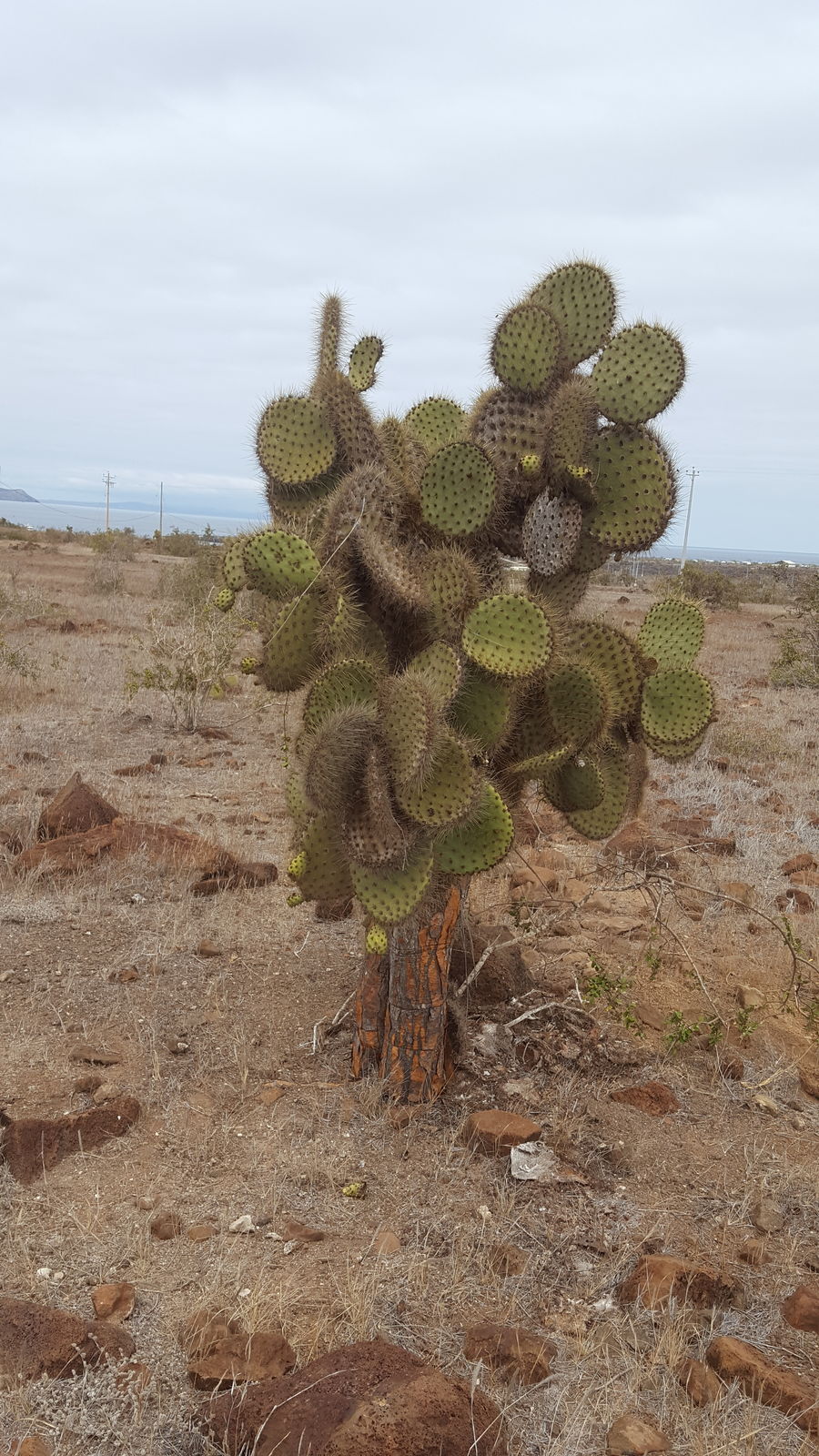
Opuntia galapageia is an extraordinary, tree-like cactus species belonging to the Cactaceae family. This unique succulent evolved its distinctive arborescent form in the harsh environments of the Galapagos Islands, partially as an adaptation to intense grazing pressure from giant tortoises and land iguanas 1.

Taxonomy and Naming

Historically documented during early botanical expeditions (including those associated with Charles Darwin), Opuntia galapageia is classified under the genus Opuntia. The specific epithet 'galapageia' directly references its native home in the Galapagos Archipelago 2.

Distribution and Habitat

This species is strictly endemic to the Galapagos Islands, Ecuador. It is found on islands such as Santiago, San Cristóbal, Pinta, Marchena, and Daphne 1. It thrives in arid, rocky volcanic soils, dry shrublands, and coastal deciduous forests.

Appearance

Opuntia galapageia grows as a massive succulent tree, reaching heights of 2 to 5 meters. It develops a thick, woody, well-defined trunk that can measure up to 1 meter in diameter, covered in dense, peeling, brownish bark and protective golden-brown spines 3. The round to obovate green pads are heavily armored with spines, particularly on younger growth, to deter herbivores. It produces beautiful bright yellow flowers followed by spiny, fleshy fruits.

Cultivation

In cultivation, this species is extremely rare and challenging to maintain. It demands full, unfiltered sun and exceptional air ventilation. It is highly susceptible to rot, requiring an ultra-draining mineral substrate and a strict watering regime where the soil is allowed to dry completely between sessions 2.

Common Cultivation Mistakes

The most prevalent mistakes are overwatering and providing inadequate sunlight. Cultivating this species in highly organic soil or stagnant indoor air will quickly trigger fungal stem rot and root dieback.

References

  1. Plants of the World Online (POWO) - Royal Botanic Gardens, Kew.
  2. IUCN Red List of Threatened Species - Opuntia galapageia Assessment.
  3. Porter, D. M. (1983). Charles Darwin and the Galapagos Opuntias.
Light

Full Sun

Demands absolute full sun, receiving at least 6-8 hours of direct, unfiltered sunlight daily.
Watering

14-45 Days

Water thoroughly only when soil is 100% dry. Maintain dry conditions during cold winter months.

Soil

Well-drained, mineral soil with volcanic pumice and coarse sand.

Requires a highly mineral substrate composed of volcanic rock, pumice, and coarse sand.

Safety

Contact/Ingestion Risk

Equipped with long spines and irritating glochids; keep out of reach of children and pets.

Difficulty

Hard

Highly challenging to cultivate due to strict light, temperature, and moisture requirements.

Native Habitat

Galapagos Islands, Ecuador

Endemic to the volcanic plains, rocky slopes, and arid scrub zones of the Galapagos Archipelago.

Frequently Asked Questions

Can Opuntia galapageia be grown in a pot indoors?
Yes, but it is extremely difficult. It requires intense direct sunlight, low humidity, and excellent air circulation, making it better suited for greenhouses or sunny south-facing outdoor balconies rather than typical indoor spaces.
How often should I water my Galapagos cactus?
During summer, water only after the soil is bone dry (roughly every 10-14 days). In winter, suspend watering almost completely (every 45 days or not at all).
What is the best soil mix for this cactus?
An almost purely mineral mix is required. A combination of 70-80% pumice, volcanic lava rock, and coarse sand with 20-30% sterile cactus potting soil is ideal.
Is Opuntia galapageia toxic to pets?
It does not contain toxic chemicals, but the sharp spines and tiny, microscopic glochids (barbed bristles) can cause severe irritation to pets' mouths, paws, and skin.
My cactus stem is getting soft, what should I do?
Softness is usually a sign of root or stem rot caused by overwatering. Stop watering immediately. If the rot is widespread, you may need to take cuttings of healthy pads, let them callus, and reroot them.
Is this plant winter hardy?
No, it is highly frost-sensitive. Do not let temperatures drop below 10°C (50°F), and keep the plant in a sheltered, dry environment during winter.
How fast does Opuntia galapageia grow?
In its native habitat, it takes decades to develop its tree-like structure. In pot culture, growth is very slow, often producing only one or two new pads per year.
When should I repot this cactus?
Due to its slow growth rate, repotting every 3-4 years in early spring is sufficient. Heavy-duty protective gloves must be worn during the process.
Will it bloom indoors?
Blooming indoors is exceptionally rare. To produce its yellow flowers, the plant needs to reach a substantial size and receive intense, direct sunlight all day long.
Why is it called a 'Tree Cactus'?
As it matures, the lower pads shed their spines and develop a thick, woody trunk covered in bark, giving the cactus the distinct appearance of a real tree.