
Light
Full Sun
Requires full sun; ideally placed in a south- or west-facing window receiving at least 6 hours of direct light.
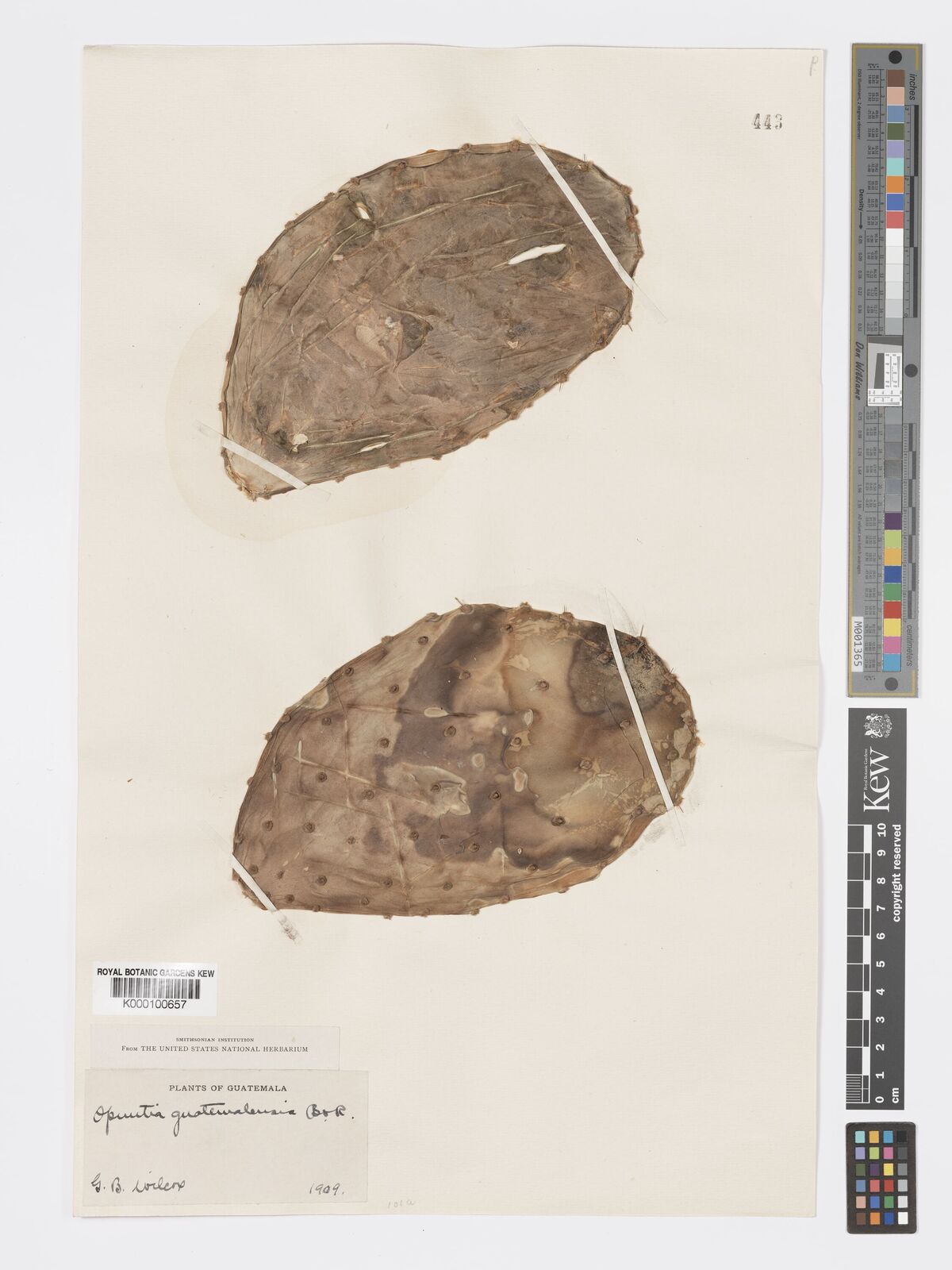 Reference image
Guatemalan Prickly Pear
Opuntia guatemalensis is a resilient, shrubby succulent species belonging to the Cactaceae family. Known for its remarkable drought tolerance and spreading growth habit, it is an excellent plant for rock gardens, arid landscapes, and sunny indoor spaces 1.
Classified under the subfamily Opuntioideae within the genus Opuntia, this species was formally described based on specimens collected in Guatemala. Its specific epithet directly references its native country, though its distribution extends throughout neighboring regions 2.
This cactus is native to southern Mexico and Central America, including Guatemala, Honduras, Nicaragua, Costa Rica, and El Salvador. It thrives primarily in seasonally dry tropical biomes, often growing on rocky hillsides and open, sun-drenched scrublands 1.
It features flattened, fleshy, obovate to elliptical stem joints (cladodes) that are dull green or slightly glaucous. The areoles carry fine, irritating glochids and occasional longer spines. When mature and given sufficient sun, it produces bright yellow to orange cup-shaped flowers 2.
Cultivation requires maximum light exposure and highly porous, well-draining soil. It is critical to let the substrate dry out completely between waterings to prevent root rot. During the spring and summer, it benefits from occasional light feeding with cactus fertilizer.
Growing this plant in low light results in weak, stretched stems (etiolation). Overwatering, particularly during the dormant winter period, is the most common cause of plant failure.
Requires full sun; ideally placed in a south- or west-facing window receiving at least 6 hours of direct light.
Allow the potting mix to dry out 100% before watering. Reduce to a minimum in winter.
Use a specialized fast-draining cactus mix amended with generous amounts of pumice, perlite, or sand.
Equipped with tiny, irritating glochids that easily dislodge. Keep away from curious pets and children.
Very easy to care for, requiring minimal attention as long as it receives sufficient sunlight and is not overwatered.
Naturally distributed across the seasonally dry tropical zones of southern Mexico, Guatemala, Honduras, El Salvador, Nicaragua, and Costa Rica, typically colonizing exposed rocky terrains and dry shrublands.
