
Light
Full Sun
Requires full sun, ideally at least 6 hours of direct sunlight daily.
 Reference image
Honduran Prickly Pear
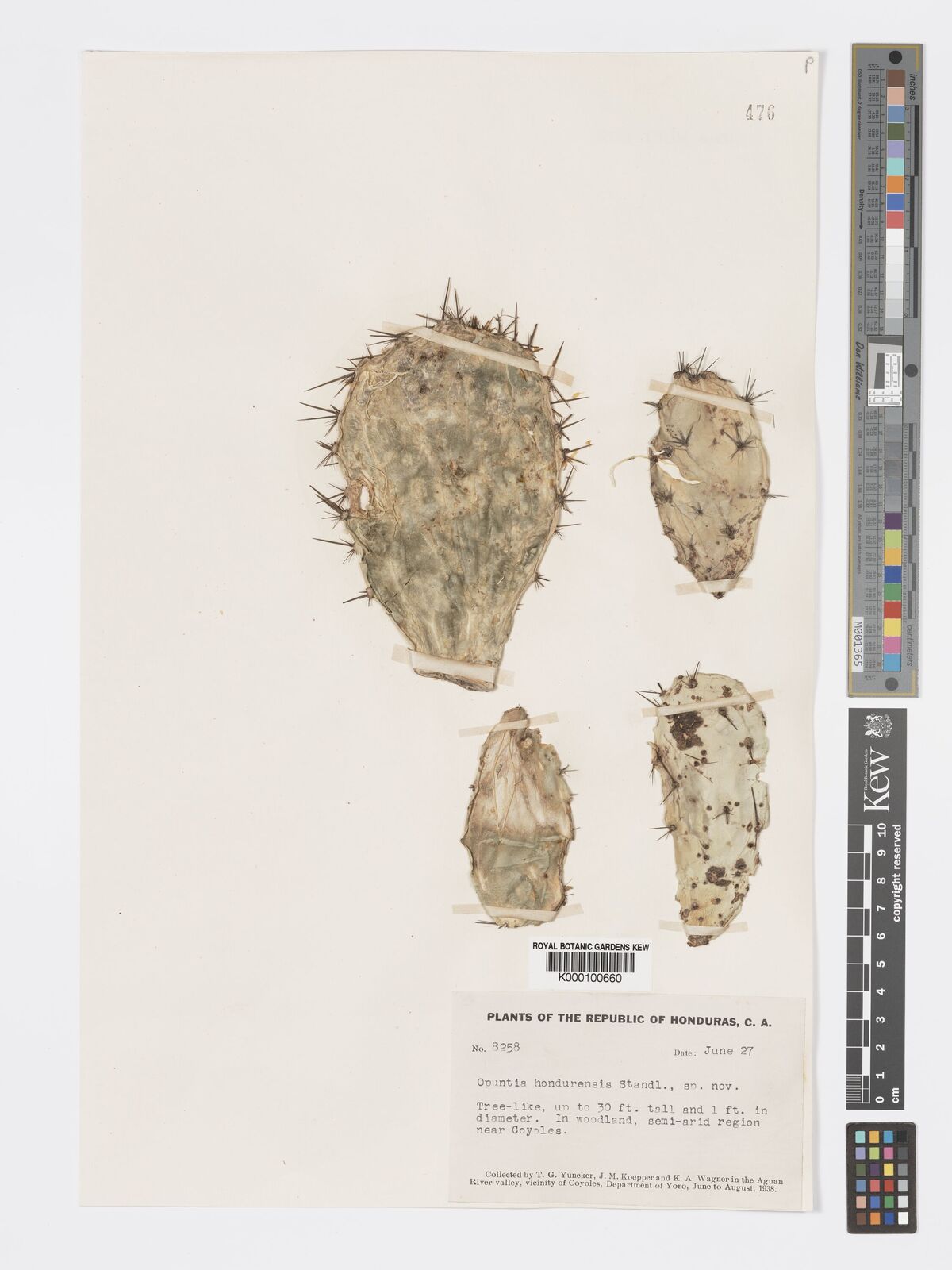
Opuntia hondurensis is a distinctive cactus species belonging to the genus Opuntia within the family Cactaceae. Known for its shrubby growth habit, this plant thrives in dry tropical forests, forming flattened stem segments called cladodes that store water efficiently during dry spells.
Scientifically described by Standley, Opuntia hondurensis represents the specific taxonomic variation of the prickly pear genus in Central America 1. Its specific epithet, hondurensis, directly references Honduras, the country from which the type specimen was documented and where it remains native 2.
The natural range of this species spans across Honduras and adjacent areas of Central America, predominantly in seasonally dry tropical biomes 1. It is well-adapted to rocky slopes, scrublands, and soils with rapid drainage, where rainfall is highly seasonal 2.
This cactus produces obovate to elliptic, bright green or grey-green pad-like segments. The areoles are armed with brownish-yellow glochids and several sharp, light-colored spines. Its flowers are typically bright yellow to orange, followed by fleshy, reddish, egg-shaped fruits.
In cultivation, Opuntia hondurensis requires very low maintenance. It demands maximum sunlight and extremely well-draining soil. Watering should be sparse, performed only when the soil substrate has dried out completely. Overwatering is the primary cause of plant decline.
The most frequent errors include placing the cactus in low-light environments, which leads to etiolation (pale, stretched growth), and using heavy soils that retain moisture for too long, inevitably leading to root rot.
Requires full sun, ideally at least 6 hours of direct sunlight daily.
Water deeply only when the soil is dry. Keep almost dry in winter.
Requires gritty, mineral-rich cactus soil with plenty of pumice and sand.
Features painful glochids that can irritate skin; keep away from children and pets.
Very easy to care for, thriving on neglect as long as it gets enough sun and dry soil.
Native to the seasonally dry tropical areas of Central America, specifically growing on rocky slopes and dry forest margins of Honduras.
