
Light
Full Sun
Requires full sun, ideally 6-8 hours of direct sunlight daily to maintain its shape and bloom.
 Reference image
Eastern Prickly Pear
Opuntia humifusa, commonly known as the Eastern Prickly Pear, is one of the most cold-hardy and widely distributed cactus species in the Cactaceae family. Characterized by its prostrate, spreading growth habit, this succulent subshrub is highly valued for its ability to withstand sub-zero winter temperatures in temperate zones 1.
Scientifically described by Constantine Samuel Rafinesque, the specific epithet humifusa translates from Latin as 'sprawling' or 'laid low,' referencing its decumbent growth habit. It belongs to the genus Opuntia, famed for its jointed flat stems 2.
Native to eastern and central North America, its range extends from southern Ontario in Canada down to Florida and Texas. It thrives in nutrient-poor, sandy, or rocky soils, pine barrens, coastal dunes, and open woodlands where competition from taller vegetation is minimal 1.
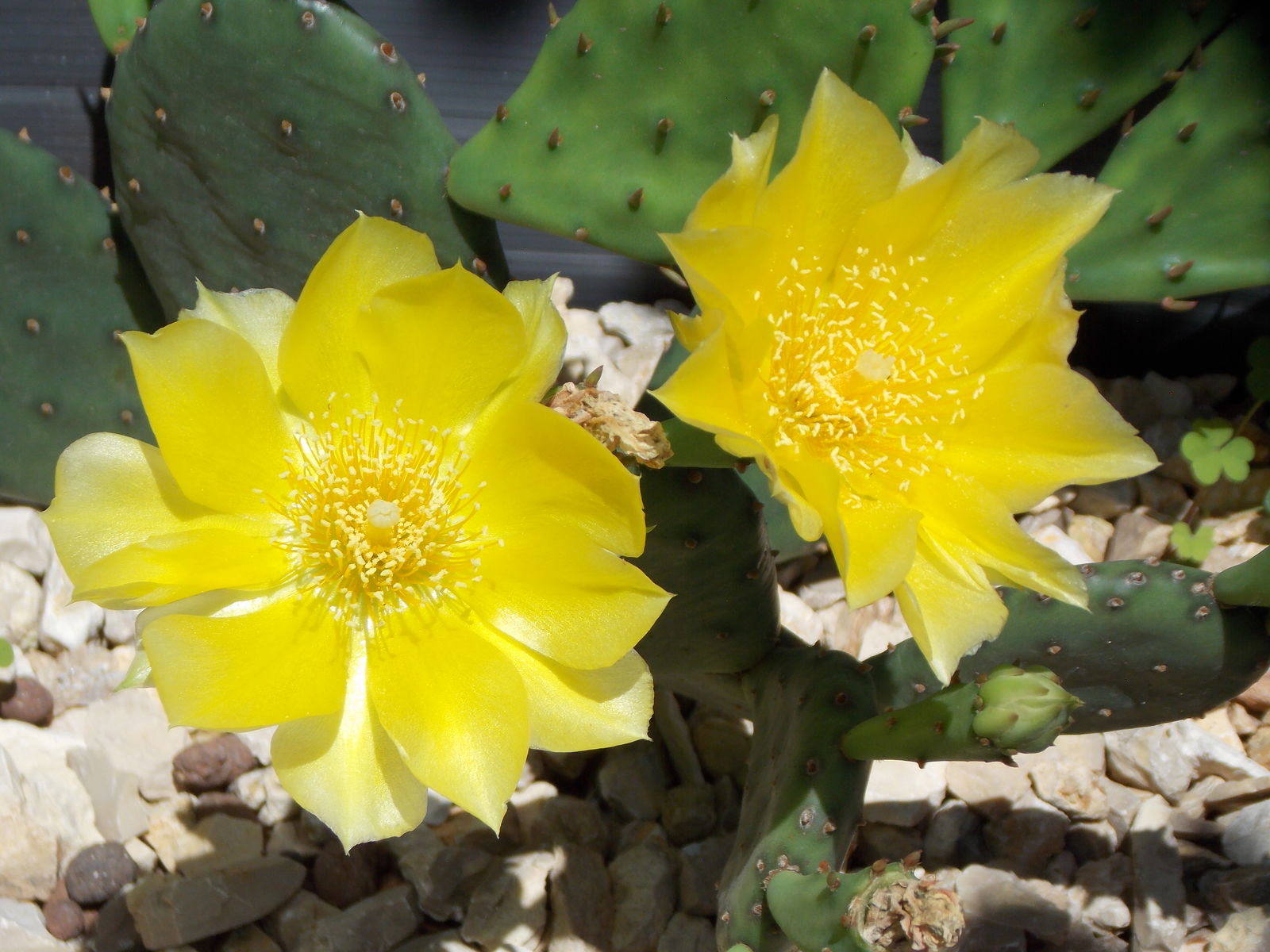
The plant consists of obovate, flattened green pads (cladodes) that store water. In late spring, bright yellow flowers, often with reddish centers, bloom along the margins of the pads 3. These are followed by edible, reddish-purple, pear-shaped fruits. While it has few large spines, its areoles are densely packed with glochids—tiny, barbed bristles that easily detach and irritate the skin.
This species requires full sun and exceptionally sharp drainage. During winter, the pads lose water, shrivel, and lay flat on the ground as a physiological mechanism to survive freezing temperatures, plumping back up in spring 2.
The most common cultivation failure is overwatering during winter or planting in heavy clay soils, which inevitably causes root rot.
Requires full sun, ideally 6-8 hours of direct sunlight daily to maintain its shape and bloom.
Water deeply only when soil is completely dry. Keep dry in winter to prevent rot.
Needs excellent drainage; use a sandy, gritty cactus mix with low organic matter.
Features tiny glochid bristles that cause skin irritation. Keep away from children and pets.
Extremely easy to care for, especially in outdoor rock gardens with freezing winters.
Inhabits open sandy soils, coastal dunes, and rocky glades stretching from southern parts of Canada throughout the eastern United States down into northern Mexico, thriving in temperate environments.
