
Light
Full Sun
Requires full sun. An outdoor location or a bright south-facing windowsill is highly recommended.
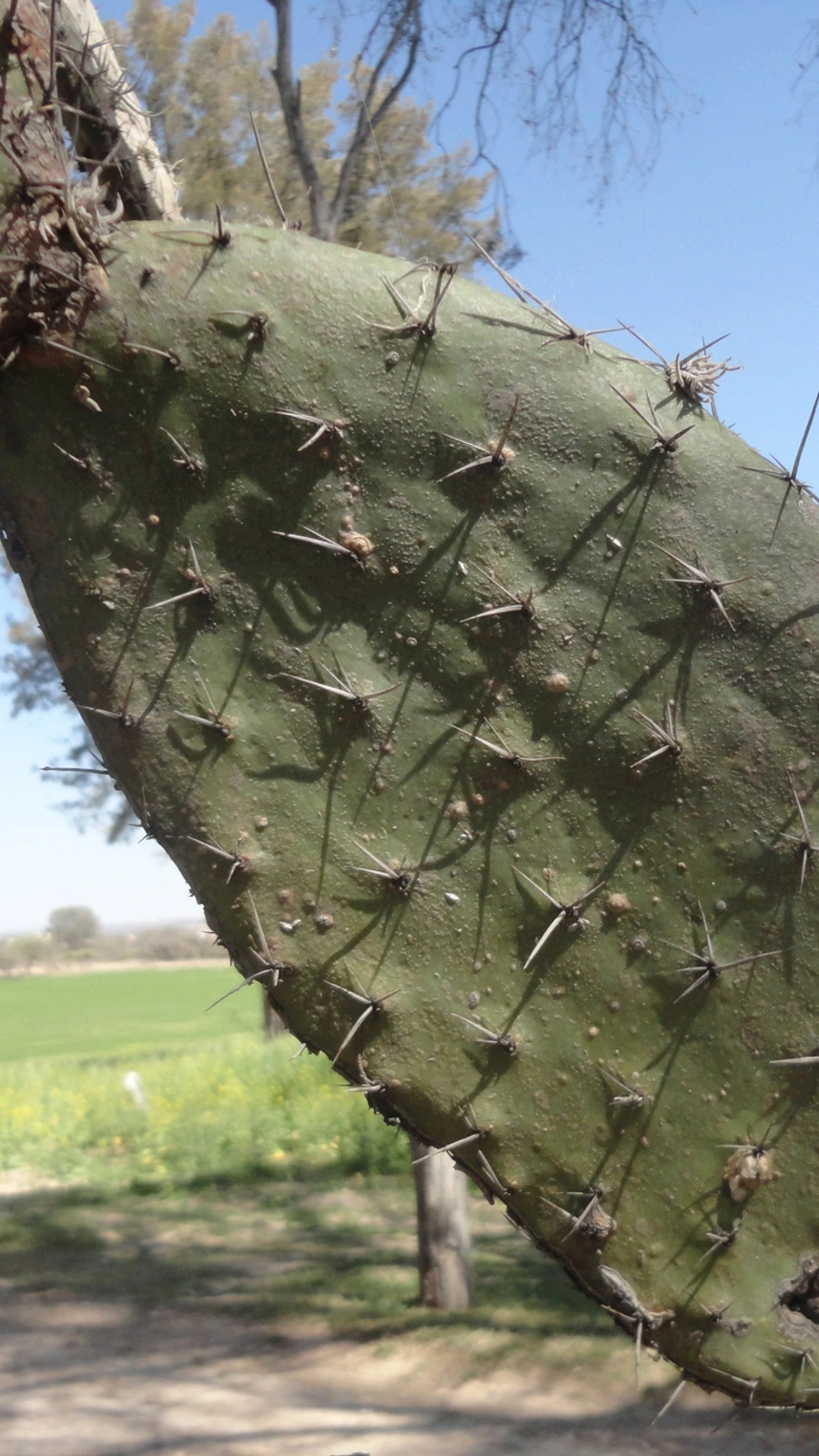 Reference image
Jalisco Prickly Pear
Opuntia jaliscana is a shrubby to tree-like succulent species belonging to the Cactaceae family, native to the arid and semi-arid regions of Mexico 1.
The species was named after the Mexican state of Jalisco, where it was first documented. Belonging to the diverse genus Opuntia, it is commonly characterized by its flat, segmented pads and typical prickly pear features 12.
This cactus is widely distributed throughout central and western Mexico, including Jalisco, Colima, Nayarit, and Guerrero 1. It thrives in dry deciduous shrublands, stony slopes, and open areas of oak-pine forests 2.
Opuntia jaliscana can grow up to 3 to 5 meters tall under optimal conditions. Its pads (cladodes) are obovate or elliptical, dull green, and carry distinct areoles equipped with yellowish glochids and sharp, stiff, grayish spines. The flowers are typically bright yellow or orange, fading to reddish tones 12.
In cultivation, it requires maximum sunlight exposure and highly aerated spaces. Watering should be sparse, performed only when the soil substrate has dried out completely. During winter dormancy, keeping the plant completely dry prevents root rot 2.
Overwatering in heavy, clay-rich soil is the leading cause of mortality due to root rot. Keeping the cactus in low-light indoor environments causes etiolation, where pads stretch abnormally and lose their structural integrity.
Requires full sun. An outdoor location or a bright south-facing windowsill is highly recommended.
Let the soil dry out completely between waterings. Reduce watering to a minimum in winter.
Requires a gritty, highly porous cactus soil mix with plenty of sand and perlite/pumice.
Contains sharp spines and tiny irritating glochids. Keep out of reach of children and curious pets.
Very easy to maintain if provided with bright light and protected from excess moisture.
Native to the dry valley slopes, rocky terrains, and semi-arid shrublands of central-western Mexico, particularly dominant in the state of Jalisco.
