
Light
Full Sun
Thrives best in full, direct sun; aim for a south- or west-facing window or patio.
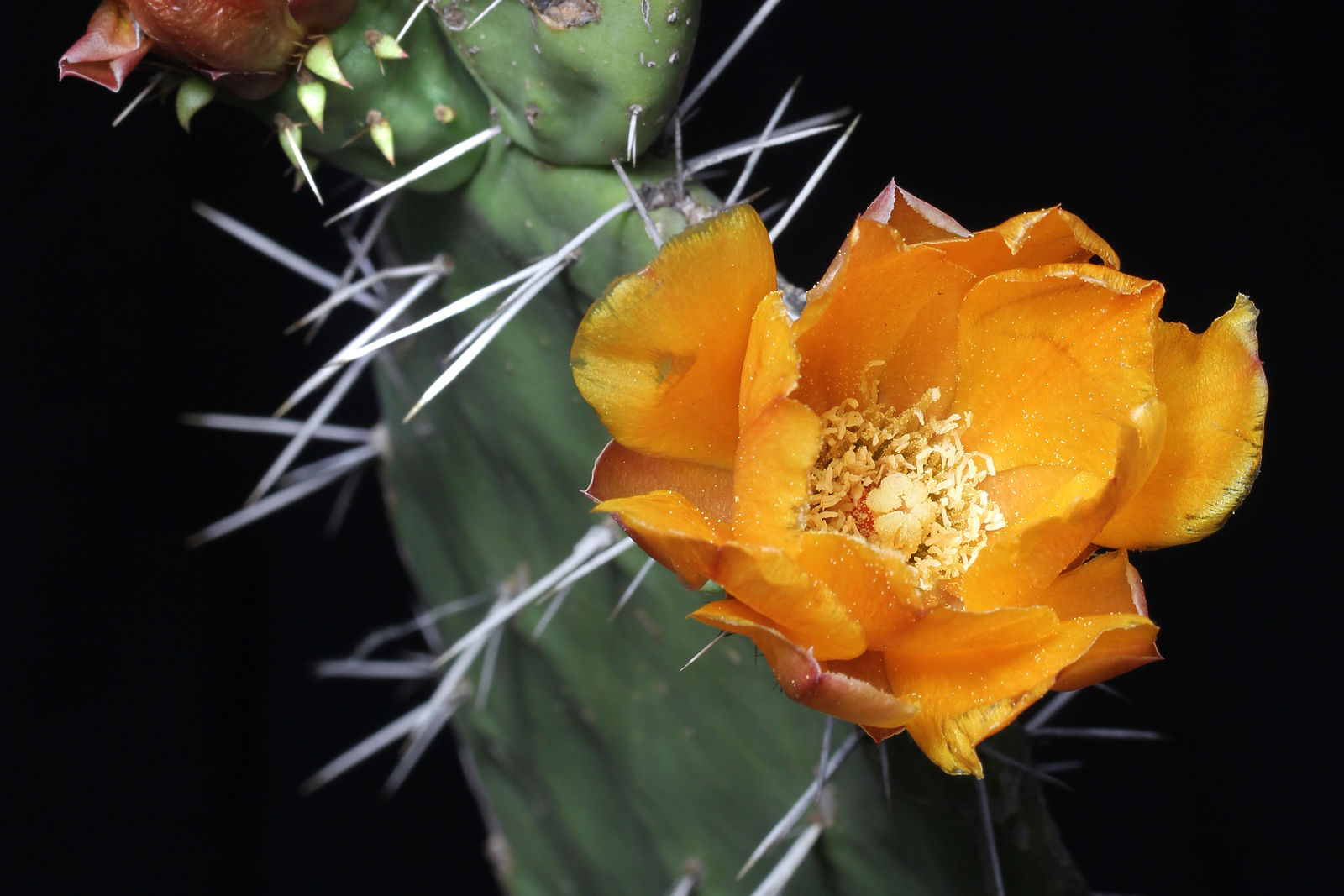 Reference image
Woolly-Spined Prickly Pear
Opuntia lasiacantha is a robust, shrubby succulent cactus belonging to the family Cactaceae, highly adapted to arid and semi-arid environments where it forms dense, protective thickets 1.
Described scientifically by Christian Gottfried Ehrenberg, the specific epithet 'lasiacantha' derives from Greek 'lasio' (woolly/shaggy) and 'acantha' (spine), referencing the woolly appearance of its young areoles and spine bases 2.
This species is native to central and southern Mexico, widely documented in states like San Luis Potosí, Jalisco, Hidalgo, and Oaxaca 1. It thrives in dry shrublands, grasslands, and oak forest borders at elevations of 1500 to 2600 meters above sea level.
It features upright, branching segments of oval to obovate green pads (cladodes). The areoles bear fine, needle-like yellowish spines along with irritating glochids. In late spring, it produces beautiful flowers in shades of yellow, orange, or red, followed by edible, pear-shaped reddish fruits 2.
Requires full sun exposure and extremely gritty, well-draining soil. Watering should follow the soak-and-dry method, ensuring the soil is completely dry between sessions. It displays moderate frost tolerance if kept totally dry during winter 3.
Overwatering is the primary cause of root rot and plant decline. Insufficient sunlight leads to weak, elongated growth (etiolation). Mishandling without gloves can cause severe irritation due to invisible glochids.
Thrives best in full, direct sun; aim for a south- or west-facing window or patio.
Water thoroughly only after the soil has completely dried out. Keep dry in winter.
Requires a highly mineral, fast-draining potting medium containing pumice, sand, and perlite.
Features tiny, irritating glochids that easily dislodge. Keep away from curious pets.
Very low-maintenance, provided it receives ample sunlight and is not overwatered.
Naturally distributed across the high-altitude arid grasslands, desert plains, and dry scrub forests of central and southern Mexico.
