
Light
Full Sun
Requires full, direct sunlight to maintain compact growth and spine density.
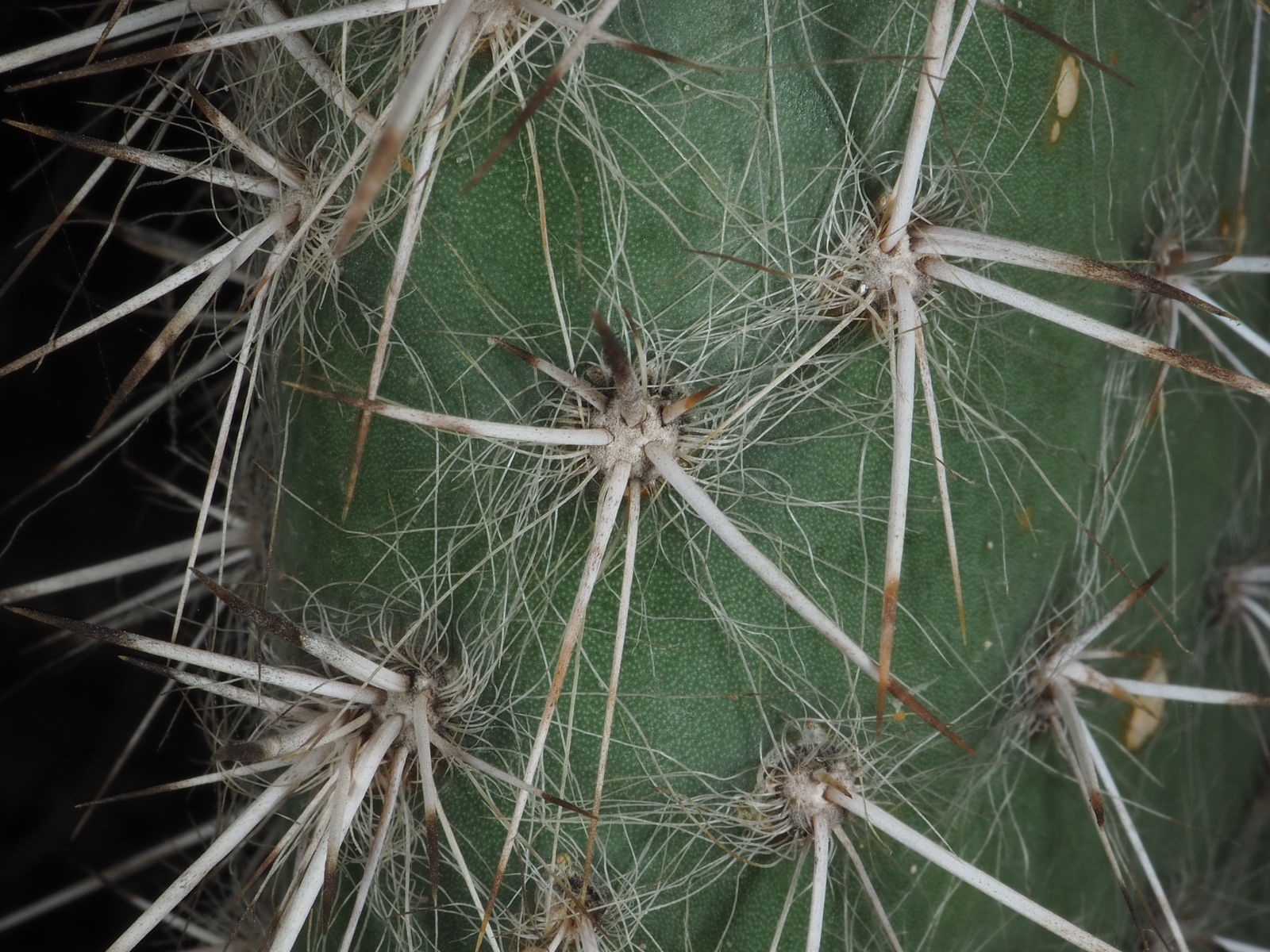 Reference image
Aaron's Beard Cactus
Opuntia leucotricha is an arborescent, perennial succulent shrub belonging to the Cactaceae family 1. Commonly referred to as Aaron's beard cactus or Duraznillo blanco, it is easily distinguished by its dense covering of white, hair-like spines.
This species was formally described by Augustin Pyramus de Candolle in 1828 2. The genus name Opuntia references the ancient Greek town of Opus, while the specific epithet leucotricha translates from Ancient Greek as 'white-haired,' highlighting the plant's characteristic soft-looking spines.
Native to the arid highlands and shrublands of central and northern Mexico, this cactus thrives in desert environments 1. It has also become naturalized in Spain, Italy, and parts of western South America, where Mediterranean-like climates facilitate its survival.
In its natural habitat, it can grow as a tree-like structure reaching up to 5 meters in height. The flattened stem segments (cladodes) are oblong to obovate and packed with flexible, long, white bristles. Bright yellow flowers bloom in late spring, followed by edible, aromatic, pale yellow or reddish fruits 2.
It requires full sun exposure and well-draining, gritty soil to prevent root rot. Watering should be sparse, matching its natural desert cycles, and kept to a absolute minimum during the cold winter dormancy.
Overwatering is the primary cause of failure, quickly leading to basal stem rot. Keeping the plant in a shaded indoor location will cause etiolation, stretching the stems into weak, unsightly shapes.
Requires full, direct sunlight to maintain compact growth and spine density.
Water deeply only after the soil dries out completely. Avoid winter watering.
Use a specialized cactus mix with excellent drainage, enriched with pumice or perlite.
Non-toxic, but features fine glochids that easily lodge in skin and cause irritation.
Highly resilient and perfect for beginners with bright, sunny spaces.
Hailing from the high-altitude semi-deserts of Central and Northern Mexico, this species is well-adapted to rocky soils and prolonged periods of drought.
