
Light
Full Sun
Requires at least 6 hours of direct, unfiltered sunlight daily for compact growth and flowering.
 Reference image
Coastal Prickly Pear
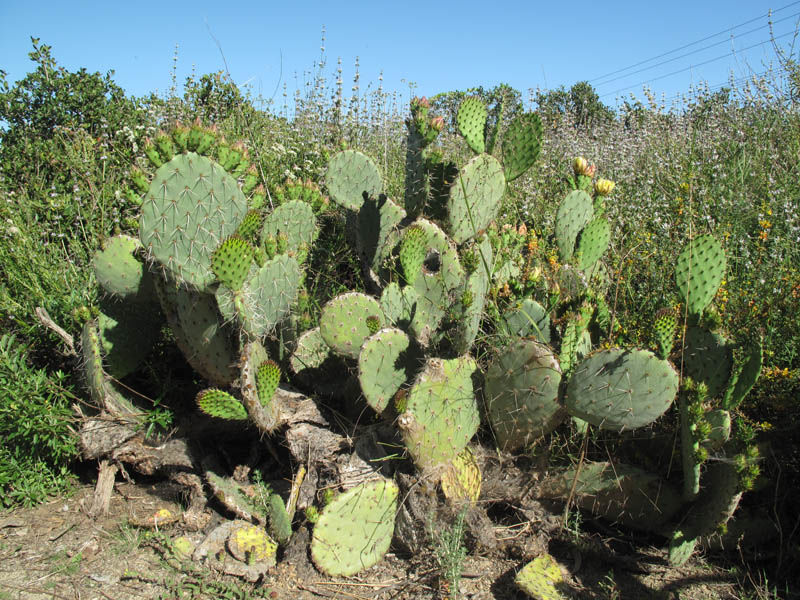
Opuntia littoralis, commonly known as the coastal prickly pear, is a sprawling, shrubby succulent species belonging to the cactus family (Cactaceae) 1. It is highly valued for its resilience against salt spray, wind, and severe drought.
This species was formally described and classified by George Engelmann 2. It belongs to the diverse genus Opuntia, which is characterized by jointed stems called cladodes or pads. Common synonyms include Opuntia engelmannii var. littoralis.
Native to the coastal regions of Southern California and Baja California, Mexico, it thrives in coastal sage scrub, chaparral, and sandy beach dunes 1. It is well-adapted to maritime Mediterranean climates with dry summers.
The plant consists of flattened, oval-to-obovate green pads covered in clusters of sharp spines and irritating microspines called glochids. In late spring, it produces vibrant yellow flowers that mature into reddish-purple, pear-shaped edible fruits.
It requires full sun exposure and extremely well-draining soil. It thrives in poor, sandy, or rocky substrates. Water moderately during the hot active growing season, and keep the soil almost completely dry throughout the winter 2.
Overwatering is the primary cause of root rot and plant decline. Keeping the plant in poorly drained pots or low-light indoor environments will lead to weak, elongated growth and prevent blooming.
Requires at least 6 hours of direct, unfiltered sunlight daily for compact growth and flowering.
Drought-tolerant. Soak thoroughly in summer only when dry, and withhold water during winter.
Use a gritty, fast-draining cactus mix amended with pumice, coarse sand, and perlite.
Non-toxic chemically, but physical caution is advised due to sharp spines and microscopic glochids.
Extremely easy to care for and highly resilient against neglect and drought.
Native to the coastal slopes, beach dunes, and semi-arid shrublands extending from coastal Southern California down into northwestern Mexico and the Baja California peninsula.
