
Light
Full Sun
Requires full direct sun; low light leads to weak, stretched pads (etiolation).
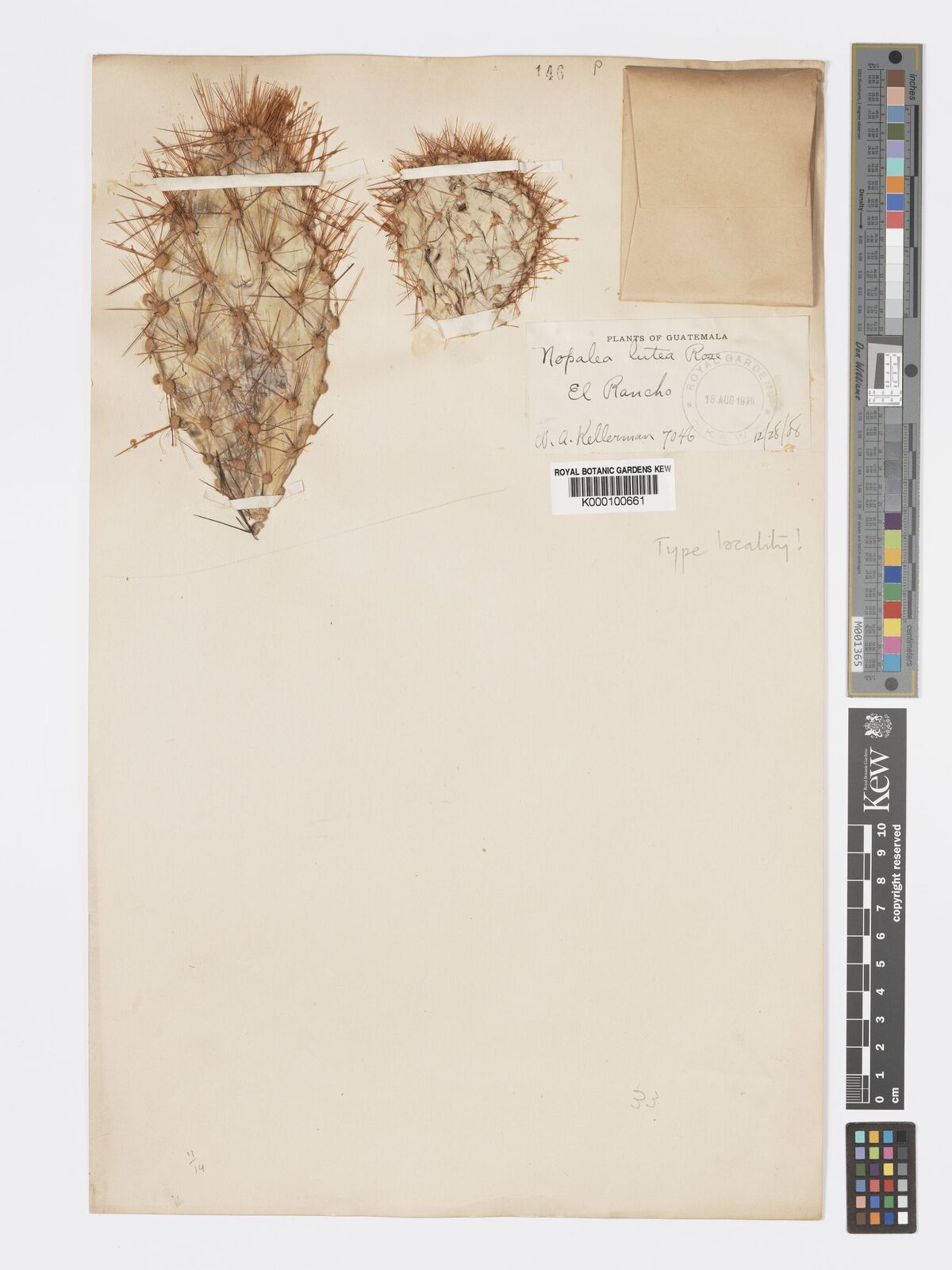 Reference image
Golden Flowered Tree Prickly Pear
Opuntia lutea (formerly classified under the genus Nopalea) is an arborescent, succulent cactus species belonging to the family Cactaceae. Known for its tree-like growth habit and vibrant yellow blossoms, it forms a distinct woody trunk with age, making it an architectural specimen for xeriscapes and indoor succulent collections.
Historically placed in the genus Nopalea due to its narrow flower morphology, recent genetic studies have integrated it into the broader genus Opuntia. The specific epithet "lutea" is derived from the Latin word for "yellow," directly referencing the rich golden hue of its diurnal flowers 1.
This species is native to Central America and southern Mexico. Its natural distribution spans Guatemala, Honduras, Nicaragua, and southern Mexican states. It thrives in seasonally dry tropical forests, arid shrublands, and rocky hillsides, where it adapts to nutrient-poor, well-draining volcanic soils 2.
In its natural habitat, Opuntia lutea grows as a small succulent tree, reaching heights of 3 to 5 meters. The cladodes (pads) are elongated, fleshy, and light-to-medium green. Areoles carry sparse spines but are heavily armed with tiny, irritating glochids. The bright yellow to orange-yellow flowers emerge from pad margins during spring and summer, followed by small fleshy fruits.
It requires full sun exposure and hot, dry conditions to mimic its tropical-dry origin. It should be grown in a highly porous, mineral-based potting substrate. Water thoroughly only when the substrate is completely bone-dry. Protect from prolonged freezing temperatures during winter.
Overwatering and poorly draining soil are the primary causes of failure, quickly leading to root rot. Insufficient light causes etiated, weak growth where pads stretch and lose their sturdy tree-like structure.
Requires full direct sun; low light leads to weak, stretched pads (etiolation).
Allow soil to dry out completely. Water sparingly in summer and almost never in winter.
Use a coarse, fast-draining cactus mix with high concentrations of pumice or sand.
Equipped with tiny, painful glochids that easily dislodge. Keep away from pets and children.
Very easy to grow as long as it is not overwatered and receives ample sunlight.
Naturally distributed through the dry tropical forests and rocky, semi-arid regions of Guatemala, Honduras, Nicaragua, and southern portions of Mexico.
