
Light
Full Sun
Requires full, direct sunlight for at least 6 hours a day.
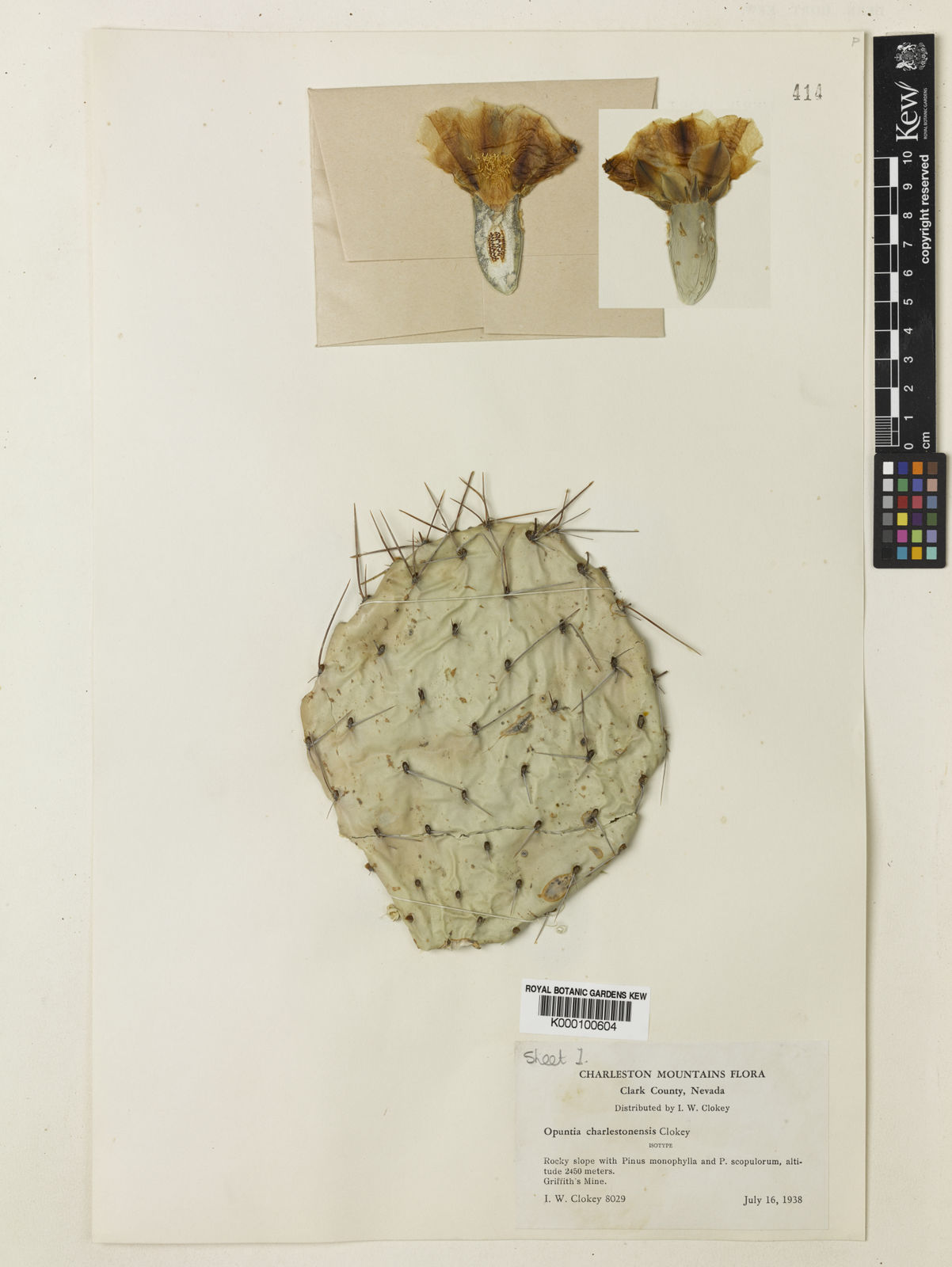 Reference image
Martin's Prickly Pear
Opuntia martiniana is a resilient succulent subshrub or shrub belonging to the Cactaceae family. Known for its spreading growth habit and flattened pads, it is exceptionally adapted to arid desert conditions and requires minimal human intervention once established.
Scientifically designated as Opuntia martiniana (L.D.Benson) Parfitt, this species was historically recognized under different subspecific classifications before being elevated to full species status 1. It is commonly referred to as Martin's prickly pear due to its classic paddle-like morphology.
Native to the Southwestern United States, particularly within Arizona, this species thrives in dry desert shrublands, rocky slopes, and sandy flats 2. It is accustomed to intense sunlight and well-draining mineral-rich soils.
This cactus forms clumps of bluish-green to grayish-green oval pads (cladodes). The pads feature distinct areoles armed with yellow to brown central spines and clusters of irritating, tiny glochids. In late spring, it produces vibrant yellow flowers, which mature into fleshy, purple-red fruits.
In cultivation, Opuntia martiniana is highly valued for xeriscaping and container gardening. It demands full sun exposure and excellent ventilation. Water must be applied sparingly, allowing the potting medium to dry out completely between sessions. During winter, watering should be suspended.
The most prevalent errors in caring for this plant include overwatering and placing it in low-light environments. Lack of adequate sunlight causes weak, pale, and elongated stem growth (etiolation). Poorly draining soil typically leads to root rot.
Requires full, direct sunlight for at least 6 hours a day.
Allow soil to dry out 100% between waterings; dry in winter.
Sandy, gravelly, and highly porous cactus potting mix is essential.
Contains tiny glochid spines that can irritate skin. Keep away from pets.
Very easy; ideal for beginners and drought-tolerant gardens.
Native to the arid deserts and rocky hillsides of Arizona, thriving in hot and dry climates.
