
Light
Full Sun
Demands full sun; needs at least 6 to 8 hours of direct sunlight daily to maintain structure.
 Reference image
 Reference image
Eastern Prickly Pear
Opuntia mesacantha is a cold-hardy, low-growing succulent subshrub in the Cactaceae family. Widely recognized as a key member of the eastern prickly pear complex, this plant is celebrated in xeriscaping for its extreme drought tolerance and vibrant summer blooms 1.
Originally described by the naturalist Constantine Samuel Rafinesque, Opuntia mesacantha was long synonymized under the broader Opuntia humifusa classification. Recent phylogenetic studies and detailed morphological analyses have reinstated it as a distinct species due to its specific spine structures and geographic isolation 2.
This species is native to the eastern and southeastern United States, including Tennessee, Maryland, South Carolina, Florida, and Louisiana. It thrives in well-drained, sandy environments such as coastal dunes, open pine barren ecosystems, and rocky outcrops under temperate conditions 1.
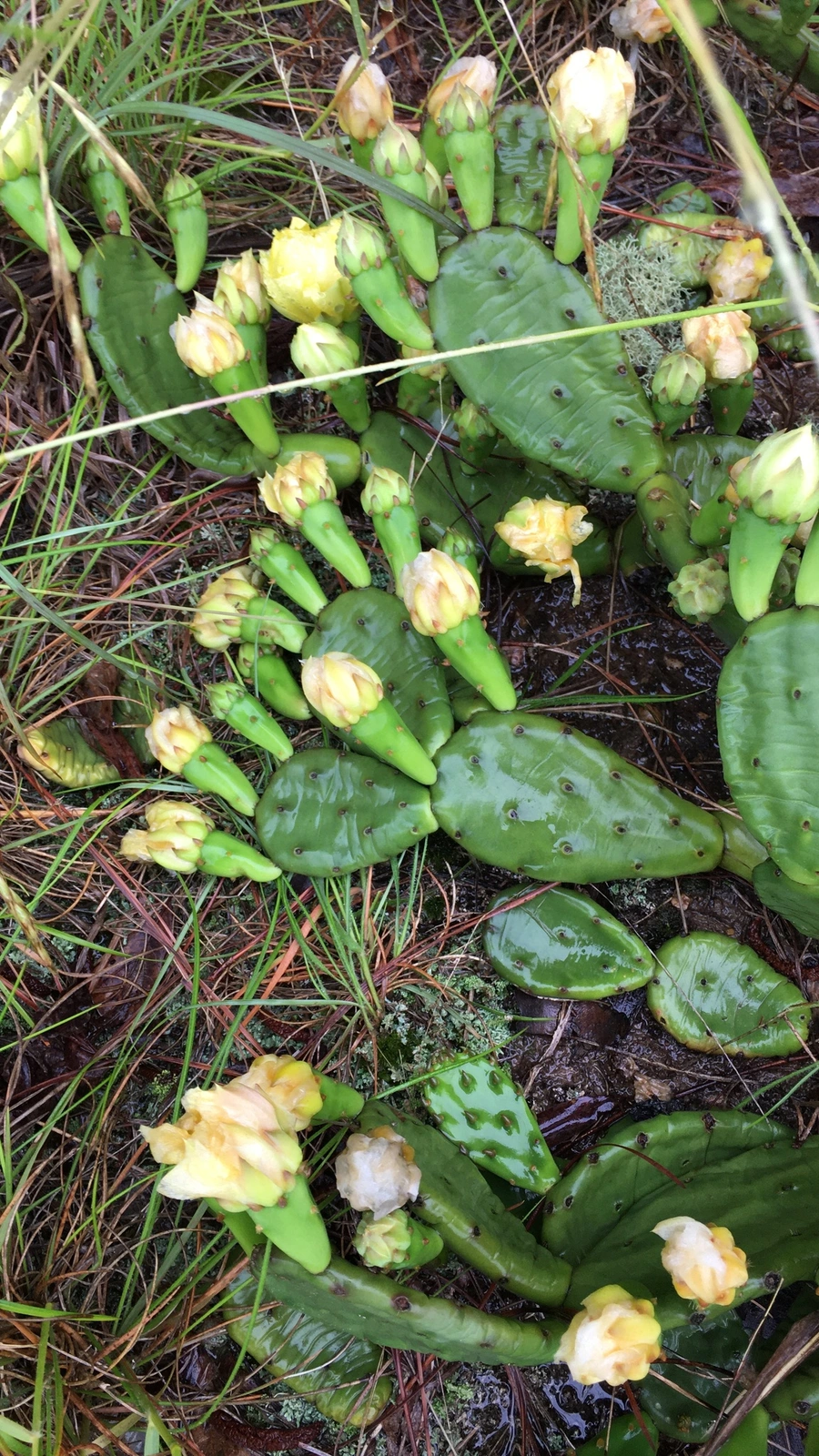
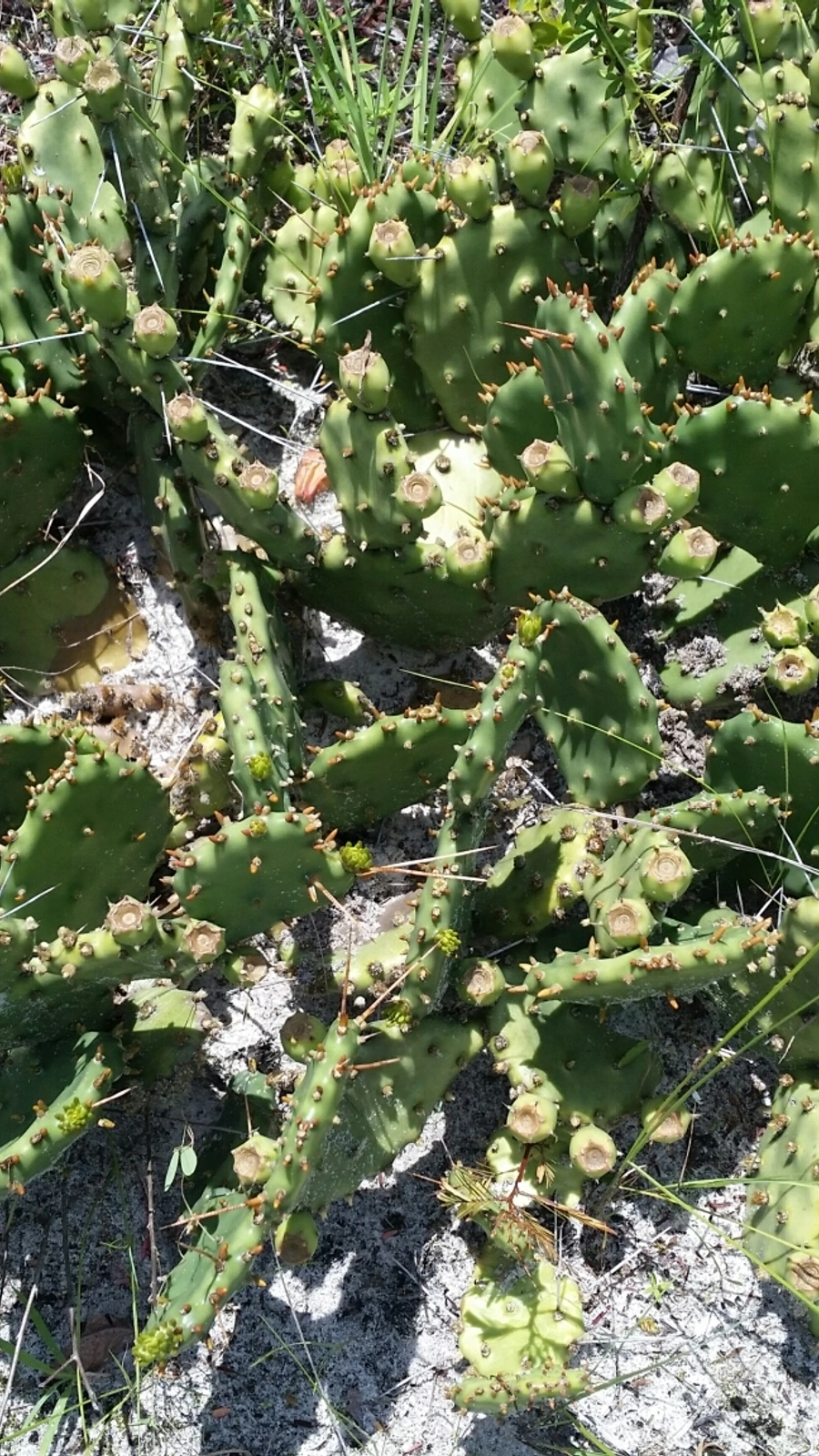
It features flattened, green, obovate jointed stems (pads) that can shrink and develop a purplish tint during cold winter months to prevent freeze damage. The areoles bear sharp spines accompanied by tiny, irritating glochids. Its spectacular flowers, blooming in late spring, are bright yellow, often showing reddish centers, followed by reddish-purple edible fruits.
Cultivating Opuntia mesacantha requires a location that receives full sun for most of the day. The soil must be highly porous, containing a mix of sand, grit, and low organic matter. It exhibits exceptional cold hardiness down to -15°C, provided the soil remains completely dry during freezing temperatures 2.
The most frequent error is overwatering, especially in late autumn and winter when the cactus is dormant. Inadequate light exposure leads to etiolation, where new pads grow thin, weak, and pale. Poor drainage quickly causes root rot.
Demands full sun; needs at least 6 to 8 hours of direct sunlight daily to maintain structure.
Water thoroughly only when the soil has dried out completely. Keep dry in winter.
Requires very gritty, well-aerated sandy soil to prevent moisture accumulation.
Non-toxic to pets, but possesses highly irritating glochid bristles that easily embed in skin.
Very easy to care for due to its extreme resilience to cold temperatures and dry conditions.
Mainly found throughout the eastern and southeastern coastal plains of the United States, preferring sandy, well-draining soils of pine barrens and dunes.
