
Light
Full Sun
Requires full sun. Place in a south or west-facing window with at least 6 hours of direct sunlight.
 Reference image
Military Prickly Pear
Opuntia militaris is a resilient and rare succulent subshrub belonging to the Cactaceae family. Known for its adaptability to harsh, arid conditions, it makes an excellent addition to xeriscapes.
Classified under the genus Opuntia, this species is distinguished by its structural growth habit 1. The specific epithet 'militaris' relates to its upright, rigid, and orderly growth of segments, reminiscent of military posture.
Native to Cuba and the wider Caribbean region, this species thrives in seasonally dry tropical biomes 2. It is commonly found growing on rocky hillsides, coastal scrublands, and nutrient-poor soils.
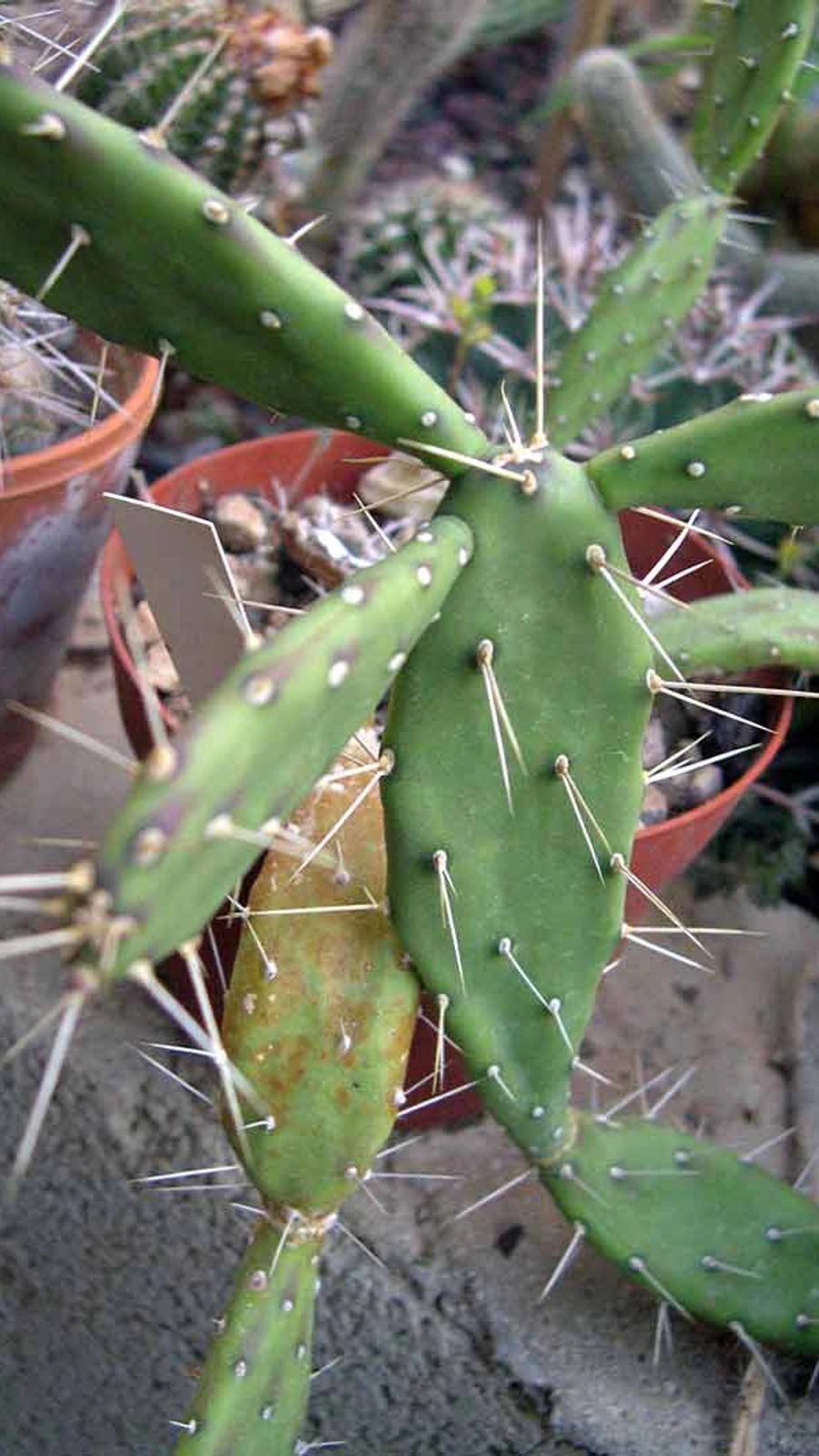
The plant features flattened, fleshy, oval-shaped green stem segments (cladodes). Areoles on the segments bear spines and clusters of glochids (tiny, irritating micro-spines). It produces beautiful, showy yellow flowers when mature.
In cultivation, Opuntia militaris requires minimal maintenance. It demands maximum sunlight and highly porous, gritty soil. Water deeply but infrequently during the growing season, and keep the soil dry during winter dormancy.
Overwatering is the primary cause of failure, leading to root rot 3. Cultivating the plant in rich, compacted soil or low-light conditions will cause weak, elongated stems and poor overall health.
Requires full sun. Place in a south or west-facing window with at least 6 hours of direct sunlight.
Allow the substrate to dry out completely between waterings. Reduce watering to a minimum in winter.
Requires a highly draining mix composed of cactus soil, coarse sand, pumice, or perlite.
Armed with irritating glochids. Keep out of reach of pets and children, and always handle with gloves.
Extremely easy to care for, provided it is not overwatered and receives sufficient light.
Native to Cuba and nearby Caribbean islands, where it populates seasonally dry tropical areas, thriving in rocky soils, coastal cliffs, and open, sun-drenched terrains.
