
Light
Full Sun
Requires full, direct sun. Shade will cause etiolation and weaken the plant.
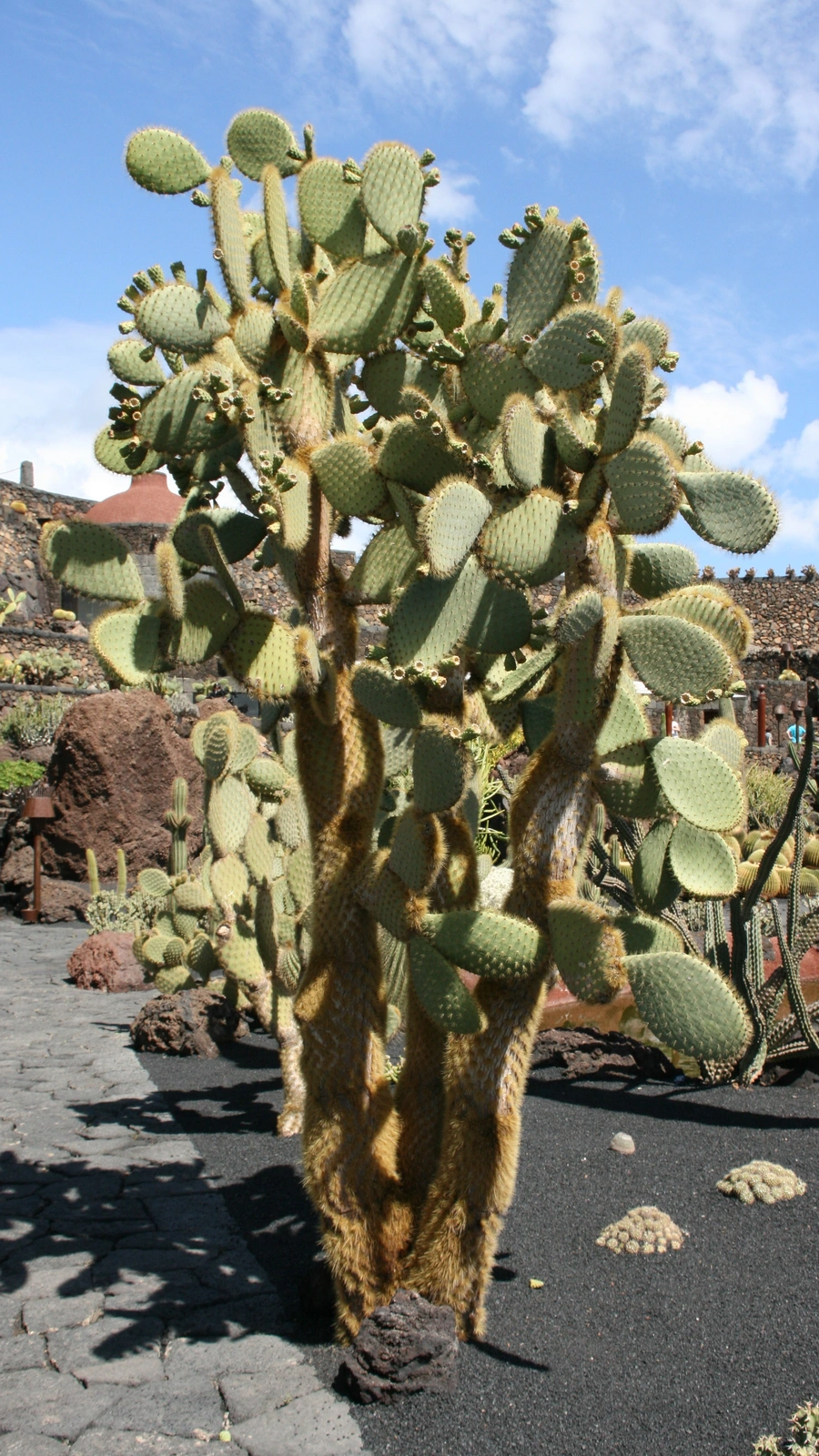 Reference image
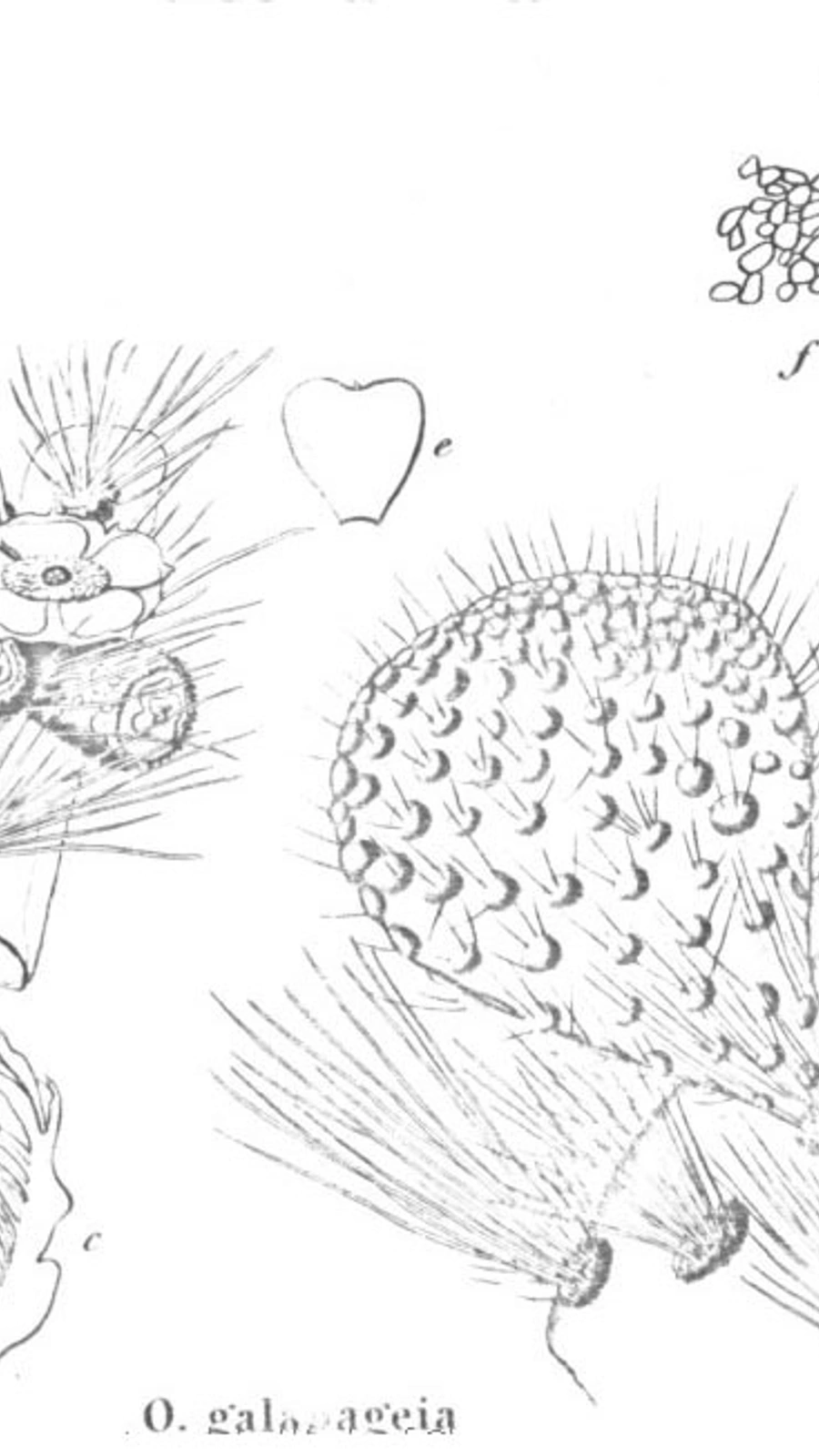 Reference image
Galapagos Tree Cactus
Opuntia myriacantha (synonym: Opuntia echios var. myriacantha) is a remarkable arborescent cactus species belonging to the family Cactaceae 1. Renowned for its massive tree-like habit and heavily spined pads, this species is one of the most iconic elements of the Galapagos Islands' flora, serving as a vital food and water source for giant tortoises and land iguanas.
The species epithet myriacantha translates from Latin to mean "myriad-spined" or "many-spined," highlighting its dense armor of yellow needles 2. While some taxonomists classify it as a variety or subspecies of Opuntia echios, it is frequently recognized as a distinct species due to its unique growth habit and morphological traits.
This species is strictly endemic to the Galapagos Islands, particularly well-represented on Santa Cruz Island 3. It thrives in arid lowlands, volcanic rocky landscapes, and coastal scrub zones, adapted to harsh sunlight and prolonged drought.
Opuntia myriacantha can reach heights of 4 to 10 meters, developing a thick, woody trunk covered in reddish-brown bark. The upper branches consist of fleshy green pads (cladodes) armed with long, golden-yellow spines. It produces bright yellow flowers that give way to spiny, edible green-to-reddish fruits.
In cultivation, it requires a position in full, uninterrupted sunlight. Watering should be sparse, allowing the soil medium to dry out completely between sessions. It prefers mineral-rich, porous soils composed of pumice, volcanic grit, and coarse sand.
Overwatering and poorly draining pots are the primary causes of root rot. In colder climates, high humidity coupled with low temperatures can induce fungal infections and rapid decay.
Requires full, direct sun. Shade will cause etiolation and weaken the plant.
Allow the potting mix to dry completely before watering. Keep dry in winter.
Prefers a mineral-based cactus mix containing pumice and volcanic sand.
Equipped with tiny, irritating glochids. Keep out of reach of children and pets.
Moderate. It is very drought-tolerant but highly sensitive to overwatering.
Endemic to the arid, volcanic terrains of the Galapagos archipelago. It developed its tall, tree-like trunk as an evolutionary defense against foraging giant tortoises.
