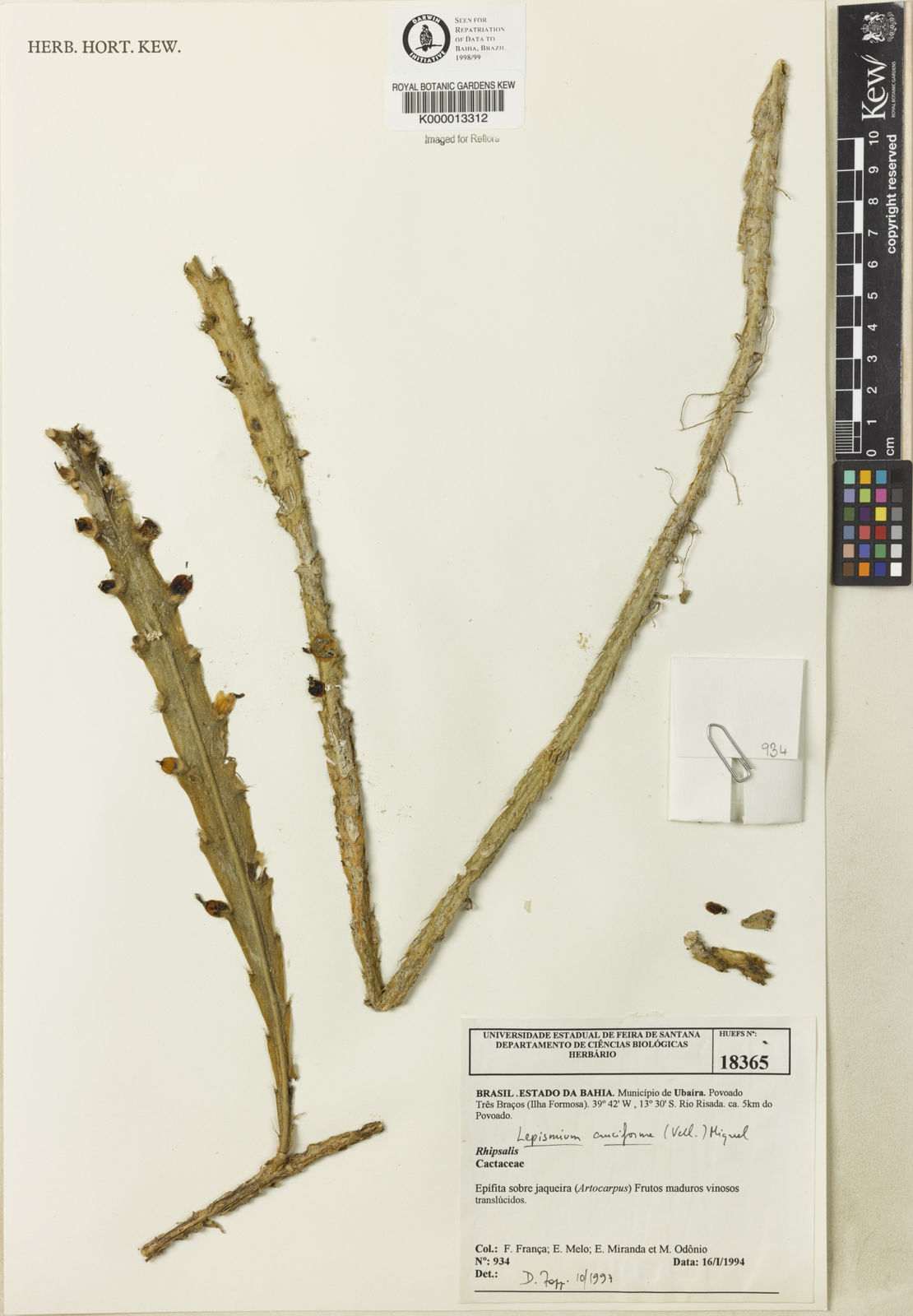
Species

Lepismium cruciforme

Lepismium cruciforme

Lepismium cruciforme

Lepismium cruciforme (Vell.) Miq. is treated as an accepted taxon in Plants of the World Online.1

The current source-backed classification places it in Cactaceae within Lepismium.12

Its recorded native range/source remark is AGEER, BZCMT, BZSSC, BZEFN, URU, AGE, BZEPE, BZLMG, BZSRS, BZSPR, BZECE, PAROO; Brazil to NE. Argentina.1

POWO records the plant context as epiphyte or lithophyte, seasonally dry tropical.1

This is a source-populated draft intended for later Kaktus Doktoru editorial rewriting; care advice and morphology should be reviewed before publication.

References

  1. Plants of the World Online. "Lepismium cruciforme (Vell.) Miq.". Royal Botanic Gardens, Kew. Accessed: 2026-06-10. https://powo.science.kew.org/taxon/urn:lsid:ipni.org:names:133803-1
  2. GBIF Secretariat. "Lepismium cruciforme". GBIF Backbone Taxonomy. Accessed: 2026-06-10. https://www.gbif.org/species/7279966

Plants In This Group

Lepismium cruciforme

Lepismium cruciforme

Lepismium cruciforme

Lepismium cruciforme is a highly ornamental, trailing epiphytic cactus belonging to the Cactaceae family. Often recognized by its ribbed, ribbon-like stems and distinctive white woolly areoles, this species is a popular choice for hanging baskets in indoor plant collections due to its striking color changes and weeping growth habit.

Taxonomy and Naming

Originally described in the 1830s, this plant was long categorized under the genus Rhipsalis 1. Modern botanical consensus places it in the genus Lepismium due to its distinct floral and stem structures. The specific epithet "cruciforme" refers to the cross-like shape often formed by its 3-to-4-angled stem segments.

Distribution and Habitat

This cactus is native to the seasonally dry tropical forests of South America, spanning eastern, southern, and central Brazil, northeastern Argentina, Paraguay, and Uruguay 2. In its natural habitat, it thrives as an epiphyte on tree branches or as a lithophyte on rocky cliffs, absorbing moisture and nutrients from the air and detritus.

Appearance

Its stems are segmented, fleshy, and can be flat or angled with 3 to 5 ribs. The margins of the stems host areoles filled with conspicuous tufts of white, cotton-like wool. Under high light or mild stress, the deep green foliage transitions to vibrant shades of magenta or purple. It produces small, delicate cream-to-pink flowers followed by ornamental, translucent red berries.

Cultivation

Unlike desert cacti, Lepismium cruciforme prefers filtered light and consistent, moderate watering. It thrives in well-aerated, organic-rich epiphytic soil mixes and benefits from higher humidity than standard cacti.

Common Mistakes

Overwatering in dense, non-draining soil is the leading cause of root rot. Conversely, keeping the air too dry can cause stem shriveling, while freezing temperatures can cause irreversible tissue damage.

References

  1. Plants of the World Online (POWO), Royal Botanic Gardens, Kew.
  2. Anderson, E. F. (2001). The Cactus Family. Timber Press.

Frequently Asked Questions

What is Lepismium cruciforme?
Lepismium cruciforme is a species-level taxonomy entry identified by the scientific name Lepismium cruciforme.
Which rank is Lepismium cruciforme?
Lepismium cruciforme is shown as a species in our botanical dictionary.
Which groups sit below Lepismium cruciforme?
No lower taxonomy landing pages are currently shown for Lepismium cruciforme.
Are there plants related to Lepismium cruciforme?
Yes. Related dictionary entries include Lepismium cruciforme.
Is this taxonomy page a care guide?
No. This page explains scientific classification; light, watering, and safety guidance belongs on individual plant pages.
Is Lepismium cruciforme a product category?
No. This is a scientific taxonomy record. Product categories are organized separately around customer search intent.
Why is the Latin name shown?
The Latin scientific name reduces ambiguity between common names across languages and regions.
Where can I see the parent ranks?
The taxonomy card shows the parent ranks of Lepismium cruciforme inside the scientific hierarchy.
Can this page change over time?
Yes. Taxonomy and dictionary content can be updated as botanical data, greenhouse observations, and collection records improve.
Why is this different from a plant detail page?
This page explains a classification node. Individual plant pages contain care notes, collection links, and practical growing information.