
Native OriginPeru, Bolivia
OriginAdana
TypeCrested / Monstrose
ProductionNursery Stock
Doctor's Note

First-week prescription

  1. Let the plant settle in a bright position protected from harsh midday sun for the first few days.
  2. Do not water unless the mix is fully dry; drain all excess after watering.
  3. Increase direct sun in stages.
  4. Delay repotting and fertilising until the plant has acclimated.
  5. Use thick gloves and tools around spines and glochids.
KD_AUSTROCYLINDROPUNTIA_SUBULATA_MONSTROSA_LG_001

Austrocylindropuntia subulata

Eve's Needle Cactus
TRY 550
In Stock
Only 4 pcs left
Size
Free ShippingVAT included.

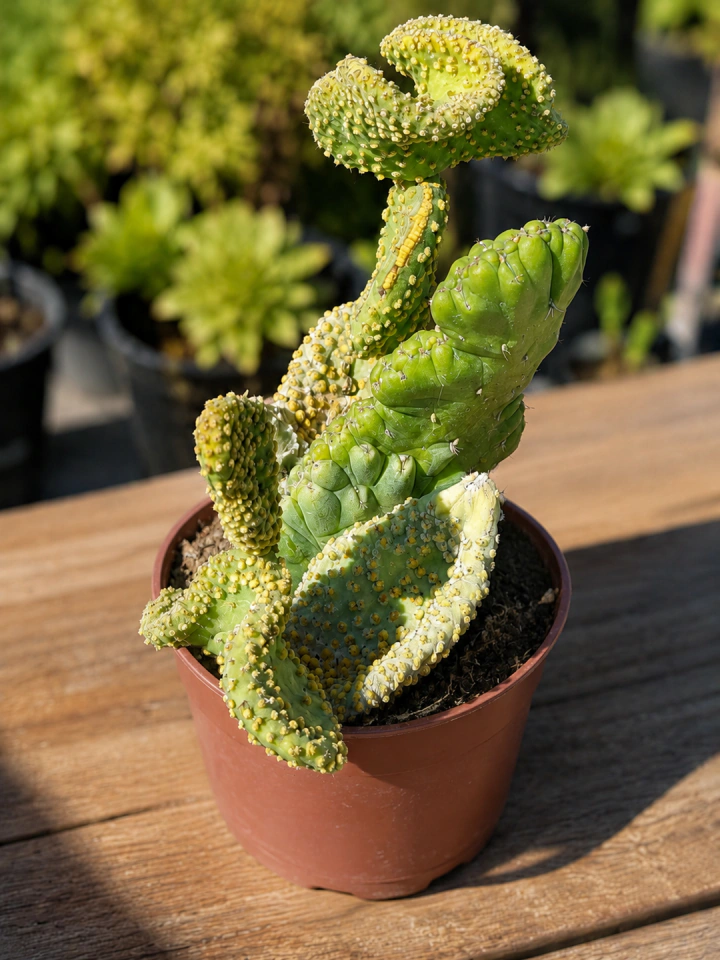
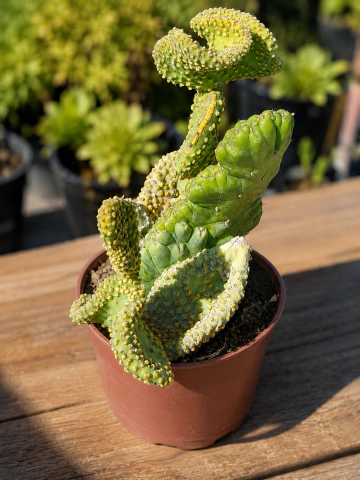
Austrocylindropuntia subulata Monstrosa is a separate form product selected for irregular, twisting, sculptural shoots rather than the regular cylindrical growth of the natural-species product.

This listing represents three separate Large plants verified as physical Pack 0001 stock. The dispatched living plant will be one of the stock specimens shown in the product gallery. Shoot direction, degree of distortion, yellow-green colour distribution, branch count, and surface texture vary naturally between living plants.

Provide a very bright position and a mineral-rich, fast-draining mix. Introduce stronger direct sun gradually rather than abruptly. Do not water again until the mix has dried throughout, and never leave the pot standing in water. Wear thick gloves when handling the plant because spines and hard-to-see glochids can cause mechanical injury.

Light
Full Sun

Strong light is preferred. Indoors use the brightest practical window; outdoors increase direct-sun exposure gradually because an abrupt change can scorch the surface.

Soil
Airy, mineral-rich, fast-draining cactus mix

Use a drainage-holed pot and an airy, mineral-rich, fast-draining mix. Avoid dense substrates that remain continuously wet.

Water
Measured

Do not use a fixed-day interval. Water deeply after the mix has dried throughout; reduce frequency when cool conditions and slow growth extend the drying time.

Difficulty
Easy

The plant is resilient when strong light and strict drainage are provided. The main risks are calendar-based overwatering and weak growth caused by insufficient light.

Frequently Asked Questions

Are the long sharp structures leaves or spines?
Both occur, but they are different organs. The long fleshy awl-shaped structures are true leaves; the hard structures emerging from areoles are spines, and the minute irritating structures are glochids.
Where is Austrocylindropuntia subulata native?
The current Kew record gives Peru and Bolivia as the native range. Many records from the Mediterranean, Africa, and other regions represent introduced or naturalized populations.
Does Eve’s needle cactus need direct sun?
It prefers strong light. A plant grown in shade should be acclimated to direct sun in stages rather than moved abruptly. Indoors, use the brightest practical position.
How often should it be watered?
Use the dryness of the entire growing medium rather than a fixed number of days. Drying time changes with season, pot, substrate, temperature, and airflow. Water thoroughly after it dries and let excess water escape.
What substrate is suitable?
Use an airy, mineral-rich cactus mix that drains quickly. Containers without drainage holes and dense mixes that remain wet increase the risk of rot.
Can it grow indoors?
It can be kept in a container if it receives very bright light and adequate airflow. Low light may produce weak growth, while persistently wet soil and high humidity create problems.
Is it safe around children and pets?
Strong spines and tiny glochids can cause mechanical injury. Keep the pot out of reach and use thick gloves and tools when handling the plant.
How does it differ from Austrocylindropuntia cylindrica?
A. cylindrica generally has shorter spines and shorter leaves that do not persist for long. Secure identification should consider stems, areoles, leaf persistence, and reproductive characters rather than one photograph.
Why is my plant not flowering?
Young container plants and specimens grown in insufficient light may not flower. Maturity, light, seasonal growth, and winter conditions all matter, so flowering cannot be guaranteed.
Can it be propagated from cuttings?
Stem cuttings are commonly used. Let the cut surface dry before planting and root the cutting in a fast-draining medium kept on the dry side. Protect yourself from spines and glochids.

Reviews

There are no reviews for this product yet.

Care reminder list

Get seasonal care reminders for this product at your preferred frequency. You can change the email address below and unsubscribe from any reminder email.