
Light
Full Sun
Strong light is preferred. Indoors use the brightest practical window; outdoors increase direct-sun exposure gradually because an abrupt change can scorch the surface.
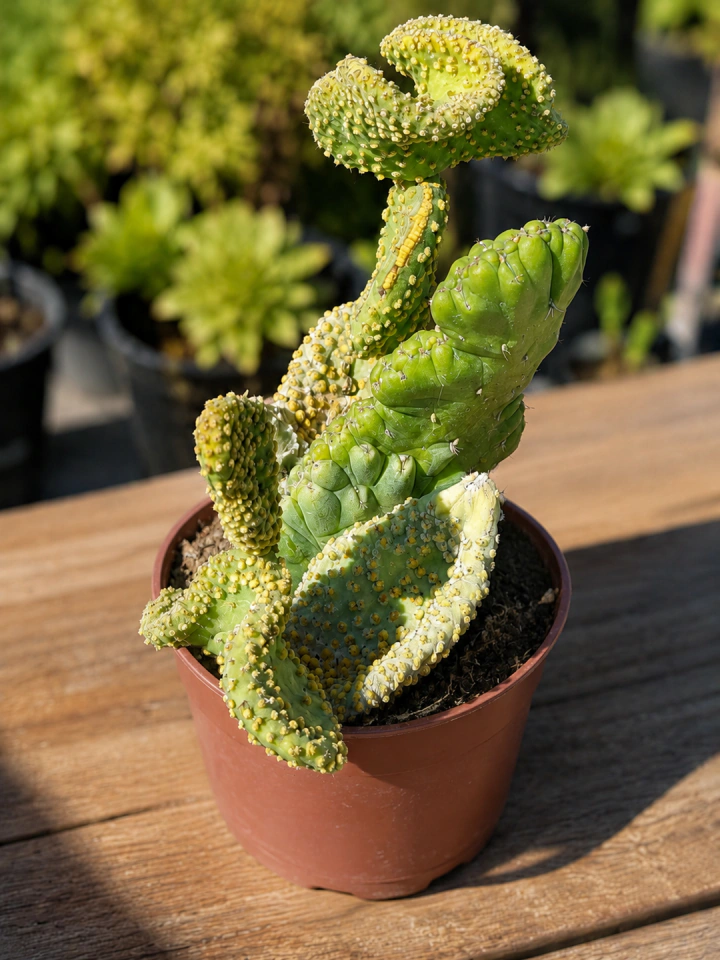
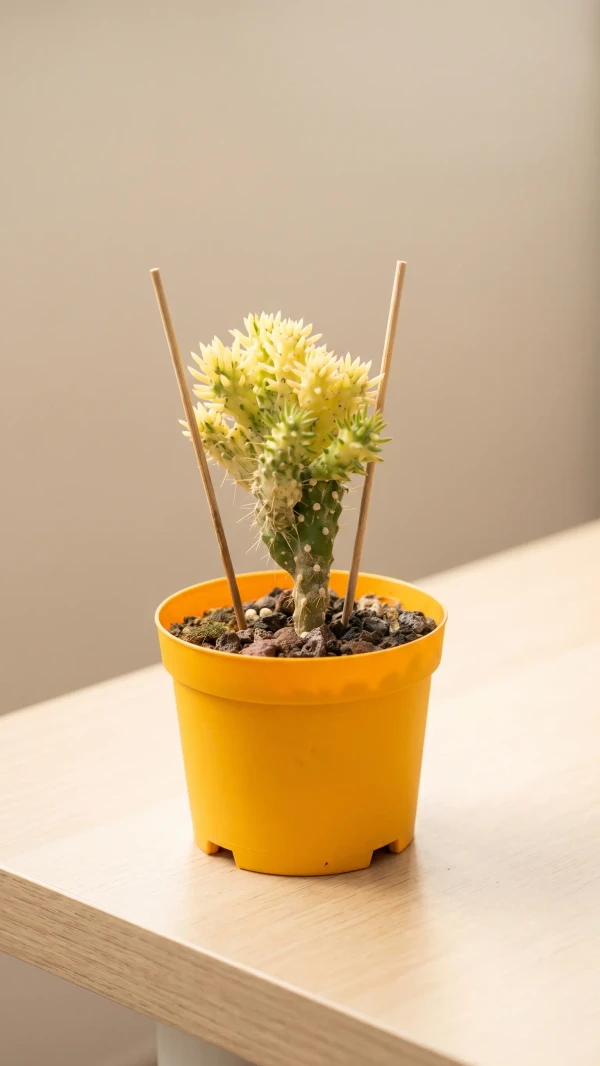
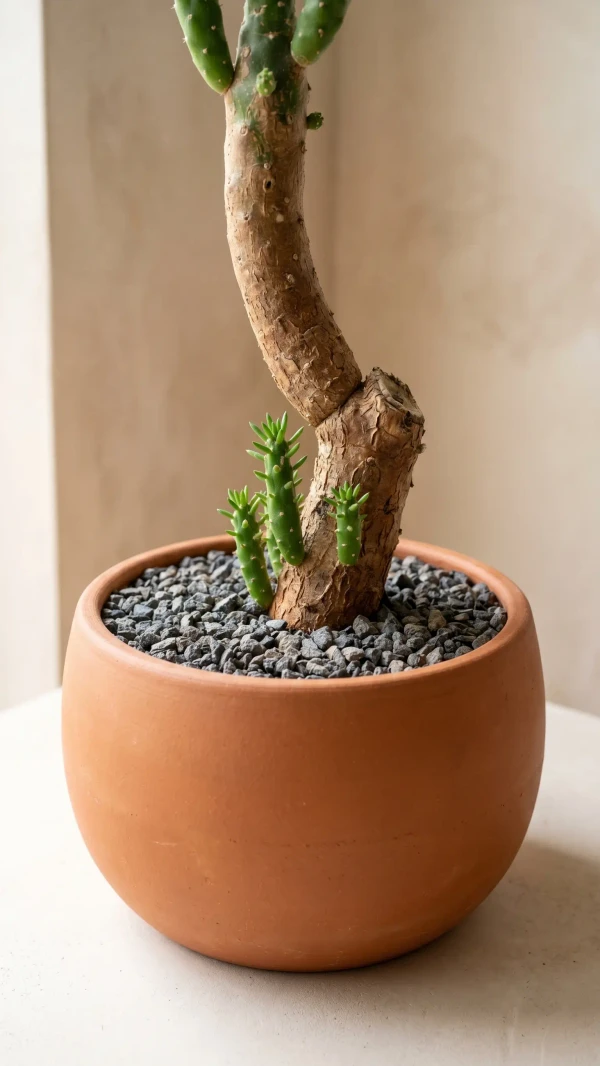
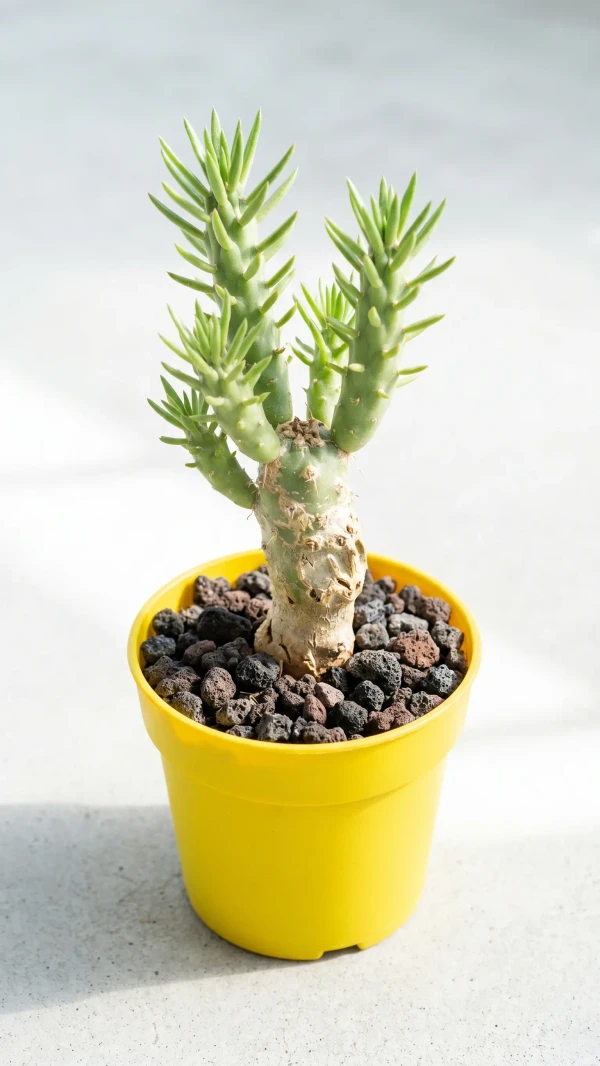
Eve's Needle Cactus
Austrocylindropuntia subulata is a cactus native to the dry Andean region of Peru and Bolivia. With age it can become a shrub or small tree-like plant.1 Its upright main stem may become woody, while the green lateral shoots are cylindrical and distinctly tuberculate. Areoles on the tubercles can carry strong spines and minute, irritating glochids.
The plant should not be described loosely as having only “needle leaves.” The long, fleshy, awl-shaped structures on the stem are true leaves; the sharp structures arising from the areoles are spines. The persistent cylindrical leaves of A. subulata have been studied anatomically and represent a notable leaf condition within Opuntioideae.2 The common name captures the silhouette, but it should not blur the distinction between leaves and spines.
In suitable outdoor conditions the plant can reach several metres, while container-grown plants usually remain smaller.3 Leaves are especially conspicuous on young growth. The trunk can darken and become woody as it matures. Flowers have been reported in orange-red to yellowish shades, but flowering should not be expected from every container plant or in every season.3
The similar Austrocylindropuntia cylindrica generally has shorter spines and shorter leaves that do not persist for long on the shoot.4 A secure identification should still not rest on a single photograph or the length of young leaves alone.
The current Kew backbone gives Peru and Bolivia as the native range.1 The species has been moved widely as an ornamental and has become naturalized or invasive in parts of the Mediterranean, North and southern Africa, and other regions.14 A wild record in Colombia, Spain, or another introduced region does not make that place part of the natural range.
The species develops more compactly in strong light. Indoors, use the brightest practical window position; outdoors, acclimate the plant gradually to direct sun. A plant kept in low light can scorch if moved abruptly into intense midday sun.3
Water according to the actual dryness of the growing medium rather than a fixed calendar. Once the mix has dried throughout, water the root ball thoroughly and let excess water drain quickly. Keeping it continuously moist is much riskier.3 Drying takes longer during cool, slow-growth periods, so a universal summer or winter interval would be misleading.
Use an airy, mineral-rich, fast-draining medium. Containers without drainage holes and dense mixes that retain water increase the risk of root and stem rot. Freezing conditions and persistently high humidity are also important stresses.3
The best-supported concern is mechanical injury, not an unsupported claim of chemical toxicity. Strong spines and hard-to-see glochids can lodge in skin. Keep the pot away from children, pets, and busy walkways, and use thick gloves plus tools when moving, pruning, or propagating the plant.3
Strong light is preferred. Indoors use the brightest practical window; outdoors increase direct-sun exposure gradually because an abrupt change can scorch the surface.
Do not use a fixed-day interval. Water deeply after the mix has dried throughout; reduce frequency when cool conditions and slow growth extend the drying time.
Use a drainage-holed pot and an airy, mineral-rich, fast-draining mix. Avoid dense substrates that remain continuously wet.
Strong spines and minute glochids present a mechanical injury risk. Keep the plant away from children, pets, and walkways, and use gloves plus tools when handling it.
The plant is resilient when strong light and strict drainage are provided. The main risks are calendar-based overwatering and weak growth caused by insufficient light.
The native range is Peru to Bolivia. Records from the Mediterranean, Africa, and other regions represent introduced or naturalized populations.[^1] [^1]: Plants of the World Online. “Austrocylindropuntia subulata (Muehlenpf.) Backeb.” Royal Botanic Gardens, Kew. Accessed: 2026-08-03. https://powo.science.kew.org/taxon/urn:lsid:ipni.org:names:27133-2
