
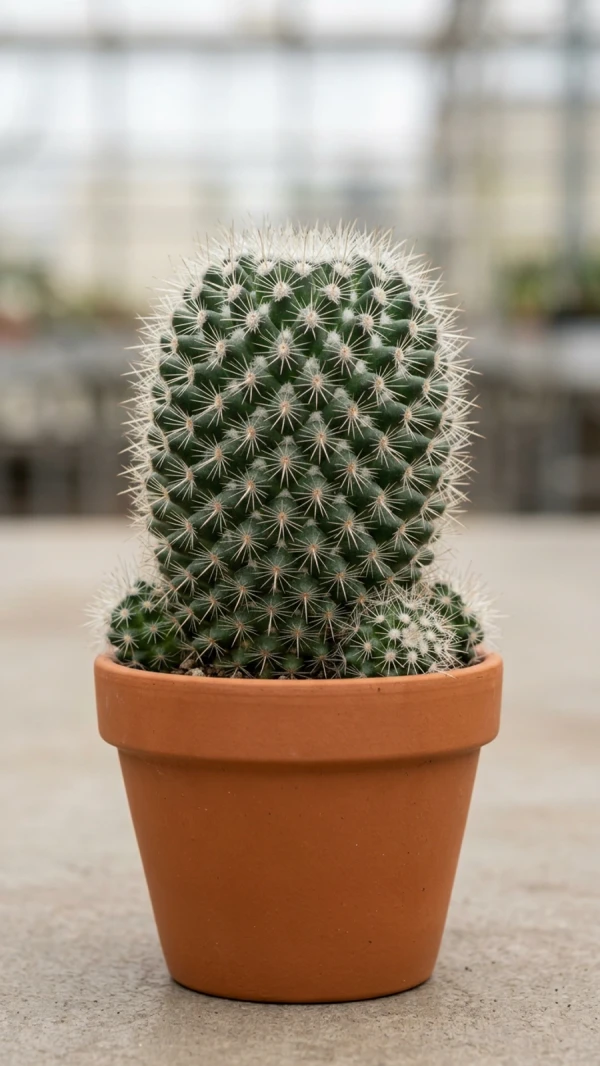
 Representative AI image
Mammillaria polythele
Many-Nipple Cactus
Mammillaria polythele: The Owl-Eye Cactus
Native to the high-altitude regions of Mexico, this resilient and captivating cactus is renowned for its cylindrical body and dense tubercles that give it a distinctive 'owl-eye' appearance. Short, stiff spines emerging from the tip of each tubercle add to its rustic and robust charm.
Why Add It to Your Collection?
- Aesthetic Appeal: As it matures into a columnar form, the rows of tubercles on its stem become more pronounced, offering a visual delight.
- Easy Care: Ideal for beginner cactus enthusiasts. It thrives easily with proper light and watering.
- Hardiness: More resistant to cold than other Mammillaria species, though it should still be protected from frost.
- Blooming: Typically produces small, pink or purplish flowers near the crown of its stem in spring, adding to its unique beauty.
Notes from Kaktüs Doktoru: Mammillaria polythele is a charismatic plant that, with minimal attention, will create a unique atmosphere in your home or office for many years. Place it on a bright windowsill and water it when dry; it will take care of the rest.
Optimal: 24 °C
Thrives in bright indirect light or filtered sun; avoid harsh midday direct sunlight.
Use a well-draining cactus mix high in pumice and coarse grit.
Water only when the substrate is completely dry. Keep almost dry in winter.
Very easy to care for, provided it is not overwatered.
Frequently Asked Questions
Is Mammillaria polythele toxic to pets?
How often should I water it?
What kind of pot and soil should I use?
When and how does Mammillaria polythele bloom?
Should it receive direct sunlight?
Where should I keep my cactus in winter?
What is its growth rate?
Why is the bottom of my cactus turning yellow or soft?
Should I fertilize it?
How is it propagated?
Reviews
There are no reviews for this product yet.
Recently Viewed
Care reminder list
Get seasonal care reminders for this product at your preferred frequency. You can change the email address below and unsubscribe from any reminder email.
