
Light
Direct Sun
Requires full sun or very bright indirect light; thrives in southern exposures.
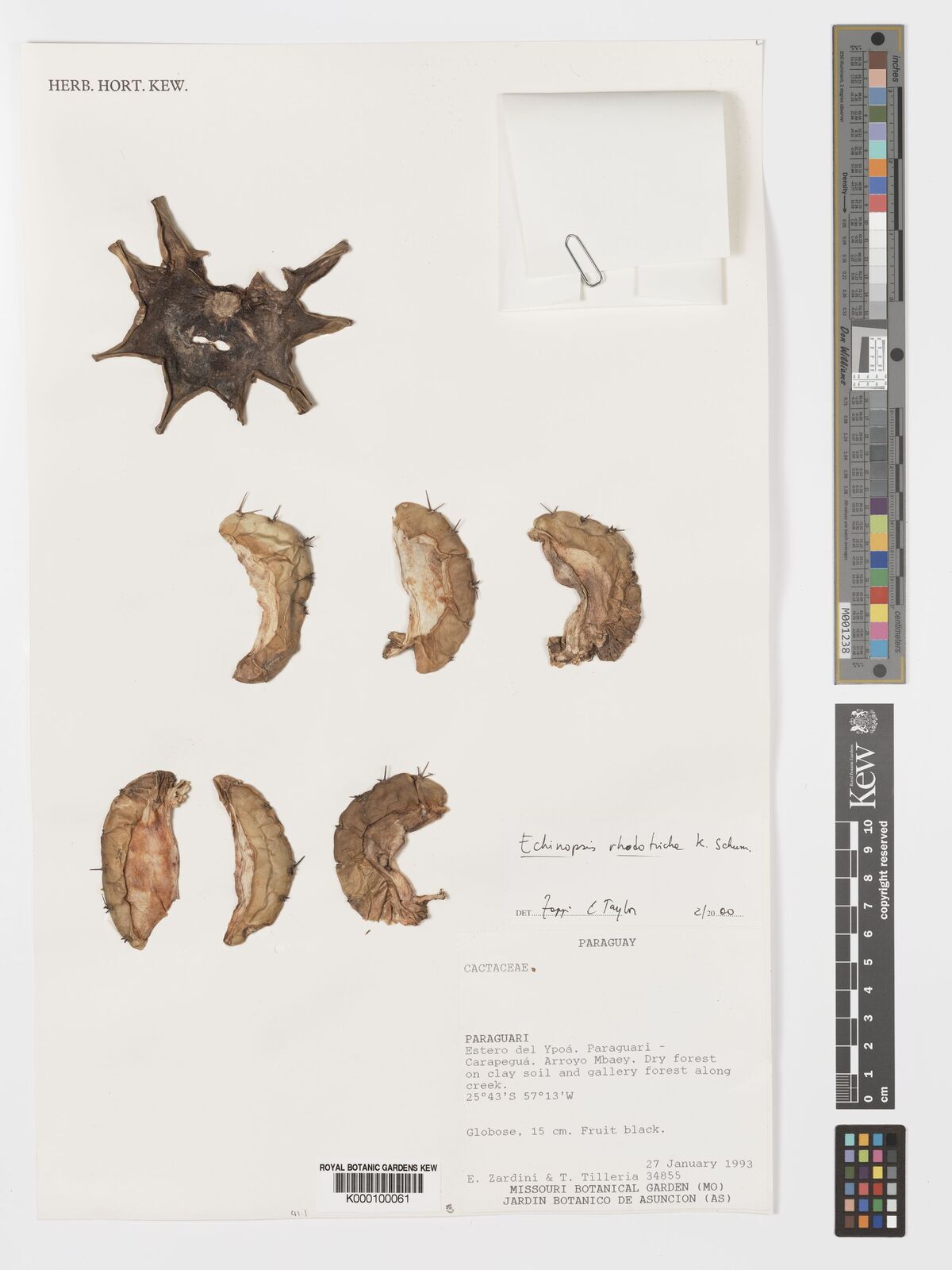 Reference image
Red-Spined Acanthocalycium
Acanthocalycium rhodotrichum is a prominent, globose to cylindrical succulent cactus belonging to the family Cactaceae. Known for its robust spination and attractive diurnal flowers, it is highly valued in amateur and professional succulent collections globally.
The genus name Acanthocalycium originates from the Greek words for thorny calyx, highlighting the spiny scales on the floral tube 1. The specific epithet rhodotrichum refers to the reddish-brown woolly hairs found on its young spines and flower buds. It is historically classified under Echinopsis rhodotricha.
This species is native to the subtropical regions of South America, spanning across northeastern Argentina, Paraguay, eastern Bolivia, and southwestern Brazil 2. It typically thrives in the dry Chaco shrublands, deciduous forests, and grassy rocky hillsides.
It features a solitary, dark green stem that can become cespitose with age. The ribs are prominent and carry woolly areoles. Spines are strong, curved, starting reddish-brown and fading to a dull grey. The funnelform flowers are large, white to pale pink, opening during the day in late spring and summer.
This cactus requires a highly porous mineral substrate to facilitate rapid drainage. Bright, direct sunlight is essential for maintaining dense spine development and promoting rich blooms. Watering should be thorough but infrequent, allowing the soil to dry completely between cycles.
Overwatering during the winter dormancy period is the primary cause of root rot. Lack of adequate sunlight leads to etiolation, where the stem becomes weak, pale, and unnaturally elongated.
Requires full sun or very bright indirect light; thrives in southern exposures.
Water deeply in summer but let dry fully. Keep completely dry in winter.
Prefers an inorganic gritty mix with high pumice, gravel, and sand content.
Non-toxic to pets, but the stiff, sharp spines pose a physical hazard.
Very easy for beginners, provided they do not overwater during winter.
Indigenous to the subtropical dry forests and savanna grasslands of central South America, thriving in sandy or stony soils under intense sunlight.
