
Scientific taxonomy article
Auto-generated taxonomy record for Acanthocalycium.
Acanthocalycium
Auto generated taxonomy record for Acanthocalycium.
Auto-generated taxonomy record for Acanthocalycium.
Acanthocalycium hoevenii
General Characteristics of Acanthocalycium hoevenii Acanthocalycium hoevenii is a succulent subshrub species belonging to the Cactaceae family, native to the arid regions of Argentina . This cactus typically has a globular or short columnar stem that may slowly elongate as it matures. Prominent ribs are present on the stem, and strong spines emerge from areoles arranged along these ribs. The spines are usually brownish or grayish, giving the plant a distinctive appearance. This species naturally grows in desert and dry shrubland biomes and is known as a relatively hardy plant due to its adaptation to harsh conditions. Growth and Flowering Acanthocalycium hoevenii typically blooms in spring or early summer. The flowers are funnel shaped and usually emerge from areoles near the apex of the plant. Their colors can vary by species, but are generally in shades ranging from white to pale pink, offering distinct beauty . These flowers usually open during the day, promoting insect pollination. When properly cared for, it can bloom regularly in a home environment. Soil selection and watering regimen are critical for the plant's healthy development and flowering. Key Features: Stem: Globular or short columnar, with prominent ribs. Spines: Strong, brownish/grayish. Flowers: White to pink, funnel shaped, emerging from the apex. Habitat: Arid regions of Argentina. Growth Rate: Slow. References Plants of the World Online (POWO). Kew Science. "Acanthocalycium hoevenii". Global Biodiversity Information Facility (GBIF). "Acanthocalycium hoevenii".
Acanthocalycium keuhhasii
Genel bakış\n Acanthocalycium keuhhasii is a perennial, succulent subshrub in the family Cactaceae, native to the arid and semi arid mountainous regions of western and northwestern Argentina . Known for its dense, fierce spination and showy funnel shaped flowers, this cactus is highly adapted to withstand harsh alpine like conditions in its natural habitat.\n\n Sınıflandırma ve adlandırma\nThe species is classified under the genus Acanthocalycium . The generic name is derived from the Greek words "akantha" (spine) and "kalyx" (calyx/bud), referring to the characteristic spiny scales covering the flower tube . The specific epithet keuhhasii honors a prominent plant explorer or cactus enthusiast. Recent molecular and morphological studies maintain its status within Acanthocalycium .\n\n Doğal yayılış ve habitat\nThis taxon is widespread across several provinces in Argentina, including Catamarca, La Rioja, San Juan, San Luis, Mendoza, Salta, and Jujuy . It is typically found at elevations between 1000 and 2500 meters above sea level, growing on rocky slopes, gravelly plains, and crevices within subtropical mountain biomes.\n\n Görünüm\nThe stem is solitary, globose when young, and becomes short cylindrical with age, displaying a dark green to grayish green epidermis. It features prominent ribs lined with woolly areoles. The spines are stiff, varying from yellowish brown to gray, providing excellent shade and protection. The summer blooming flowers are yellow, orange, or reddish, distinguished by their uniquely spiny floral tubes.\n\n Kültürde bakım\nIn cultivation, Acanthocalycium keuhhasii requires an extremely porous, mineral based cactus substrate . It thrives under full, direct sunlight, which promotes strong spine development and abundant flowering. During the winter dormancy, the plant should be kept completely dry and placed in a cool, frost free location to encourage the next season's blooms.\n\n Sık görülen bakım hataları\nThe most common pitfall is overwatering, particularly during the cold winter months, which quickly leads to root rot . Poorly draining soil and insufficient light also cause etiolation, wherein the stem stretches unnaturally toward the light, weakening its overall structure and defense mechanisms.\n\n Kaynaklar\n Plants of the World Online (POWO), Kew Royal Botanic Gardens.\n Anderson, E. F. (2001). The Cactus Family. Timber Press, Portland.
Acanthocalycium keuhhasii
Genel bakış\n Acanthocalycium keuhhasii is a perennial, succulent subshrub in the family Cactaceae, native to the arid and semi arid mountainous regions of western and northwestern Argentina . Known for its dense, fierce spination and showy funnel shaped flowers, this cactus is highly adapted to withstand harsh alpine like conditions in its natural habitat.\n\n Sınıflandırma ve adlandırma\nThe species is classified under the genus Acanthocalycium . The generic name is derived from the Greek words "akantha" (spine) and "kalyx" (calyx/bud), referring to the characteristic spiny scales covering the flower tube . The specific epithet keuhhasii honors a prominent plant explorer or cactus enthusiast. Recent molecular and morphological studies maintain its status within Acanthocalycium .\n\n Doğal yayılış ve habitat\nThis taxon is widespread across several provinces in Argentina, including Catamarca, La Rioja, San Juan, San Luis, Mendoza, Salta, and Jujuy . It is typically found at elevations between 1000 and 2500 meters above sea level, growing on rocky slopes, gravelly plains, and crevices within subtropical mountain biomes.\n\n Görünüm\nThe stem is solitary, globose when young, and becomes short cylindrical with age, displaying a dark green to grayish green epidermis. It features prominent ribs lined with woolly areoles. The spines are stiff, varying from yellowish brown to gray, providing excellent shade and protection. The summer blooming flowers are yellow, orange, or reddish, distinguished by their uniquely spiny floral tubes.\n\n Kültürde bakım\nIn cultivation, Acanthocalycium keuhhasii requires an extremely porous, mineral based cactus substrate . It thrives under full, direct sunlight, which promotes strong spine development and abundant flowering. During the winter dormancy, the plant should be kept completely dry and placed in a cool, frost free location to encourage the next season's blooms.\n\n Sık görülen bakım hataları\nThe most common pitfall is overwatering, particularly during the cold winter months, which quickly leads to root rot . Poorly draining soil and insufficient light also cause etiolation, wherein the stem stretches unnaturally toward the light, weakening its overall structure and defense mechanisms.\n\n Kaynaklar\n Plants of the World Online (POWO), Kew Royal Botanic Gardens.\n Anderson, E. F. (2001). The Cactus Family. Timber Press, Portland.

Acanthocalycium klinglerianum
Acanthocalycium klinglerianum is a slow growing, perennial succulent subshrub belonging to the Cactaceae family, native to the arid environments of South America . Highly appreciated by succulent collectors, it is famous for its attractive globular symmetry, fierce spination, and striking seasonal blooms.

Acanthocalycium leucanthum
Acanthocalycium leucanthum is a distinctive and highly resilient member of the Cactaceae family. Previously classified under Echinopsis leucantha , this species is well known for its large, tubular white flowers and prominent, curved spine structure .
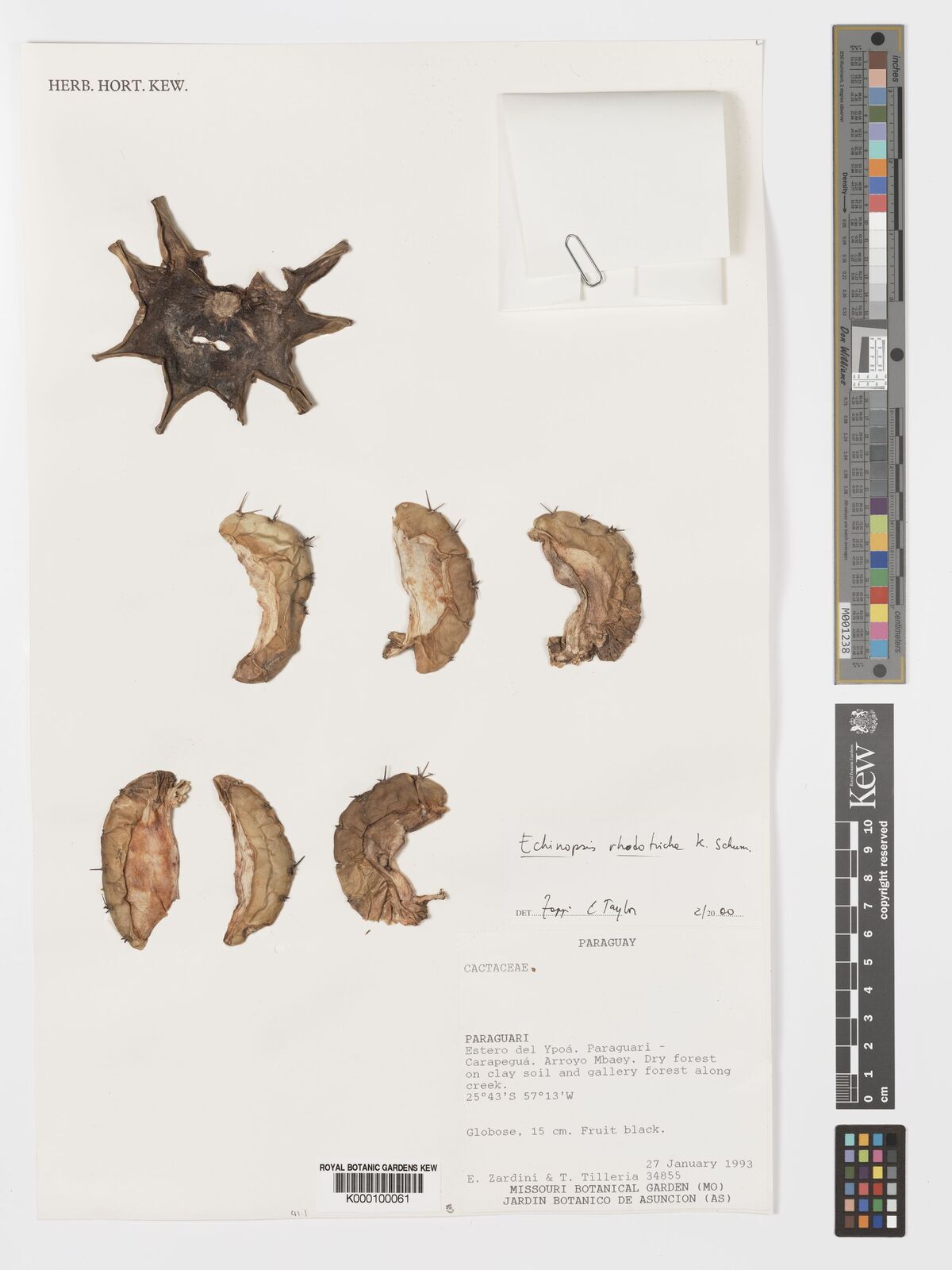
Acanthocalycium rhodotrichum
Acanthocalycium rhodotrichum is a prominent, globose to cylindrical succulent cactus belonging to the family Cactaceae. Known for its robust spination and attractive diurnal flowers, it is highly valued in amateur and professional succulent collections globally.

Acanthocalycium spiniflorum
Acanthocalycium spiniflorum is a globular to short columnar cactus species belonging to the Cactaceae family, native to the arid steppes of Argentina, South America . This succulent typically grows solitary but can form clusters over time by producing offsets from its base. Its aesthetic appearance and relatively easy care make it a popular choice among cactus collectors.

Acanthocalycium thionanthum
Acanthocalycium thionanthum is a hardy, globose to short cylindrical cactus species within the family Cactaceae. Highly prized among collectors for its striking sulfur yellow to orange yellow blossoms, this species showcases remarkable adaptability to harsh semi arid conditions .
