
Light
Direct Sun
Requires at least 6 hours of direct sunlight daily to maintain its compact shape and spine density.
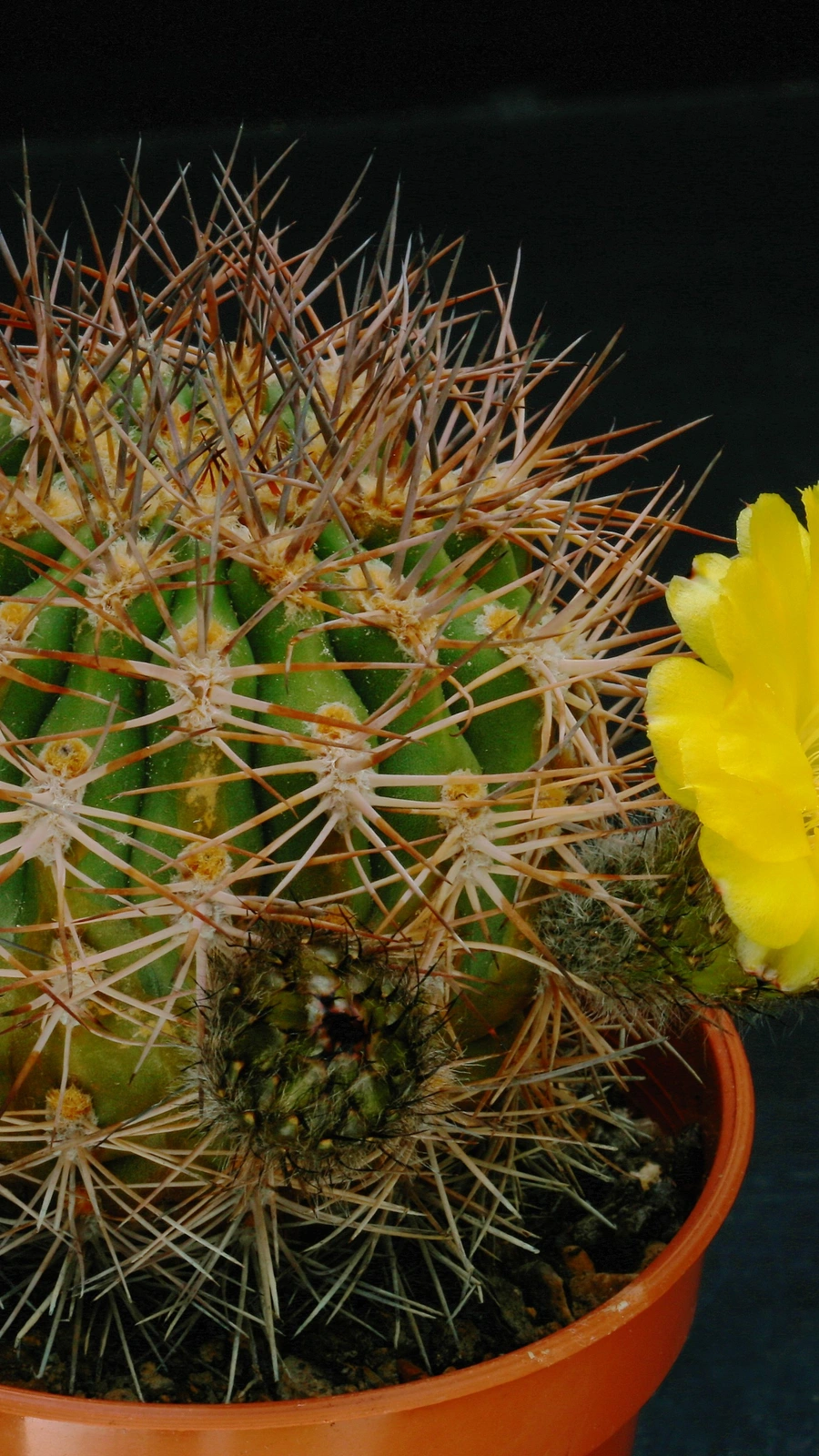 Reference image
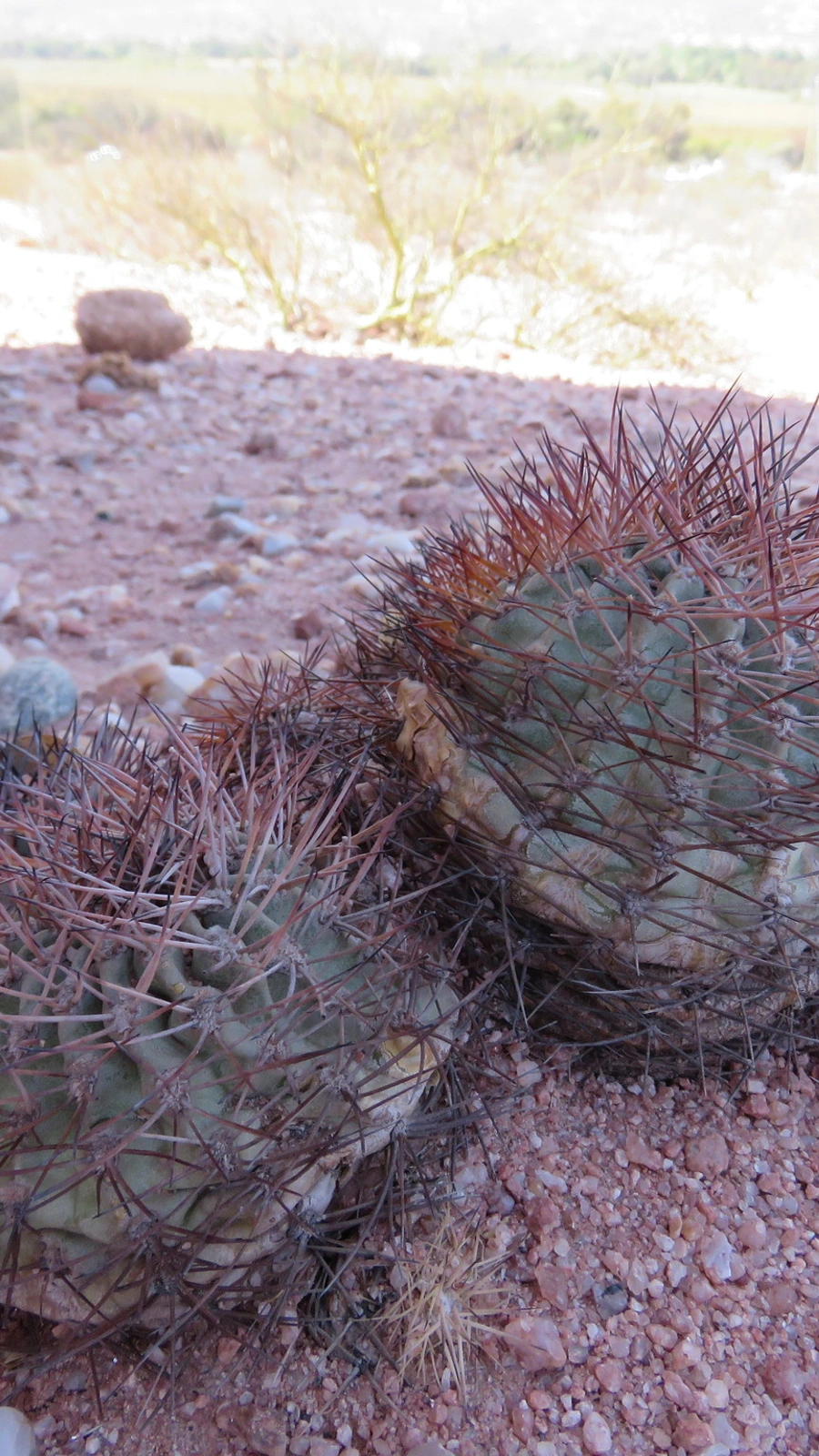 Reference image
Sulfur-flowered Cactus
Acanthocalycium thionanthum is a hardy, globose to short-cylindrical cactus species within the family Cactaceae. Highly prized among collectors for its striking sulfur-yellow to orange-yellow blossoms, this species showcases remarkable adaptability to harsh semi-arid conditions 1.
The genus name "Acanthocalycium" derives from the Greek words "akantha" (spine) and "kalyx" (calyx), referring to the characteristic spiny scales covering the flower tube 2. The specific epithet "thionanthum" translates to sulfur-yellow flowered, highlighting its most prominent ornamental feature.
Native to northwestern Argentina, this species is commonly found in provinces such as Salta, Catamarca, and Tucumán 1. It thrives at high elevations, ranging from 1,500 to 3,000 meters above sea level. It populates dry, rocky mountain slopes and gravelly plains exposed to intense solar radiation 2.
The plant body is typically solitary, gray-green to dark green, with sharp ribs adorned with strong, gray to dark brown spines. In late spring and summer, funnel-shaped flowers emerge near the apex. The flowers are usually pale yellow or sulfur-colored, though orange and red forms also occur in specific wild populations.
In cultivation, Acanthocalycium thionanthum requires minimal maintenance. It demands maximum sunlight and excellent air circulation. The potting medium must be highly porous and mineral-rich to mimic its wild rocky substrate. Water should be applied sparingly, only after the soil has dried out entirely 1.
Overwatering during the winter dormancy period is the most frequent cause of root rot. Keeping the plant in a low-light, warm indoor setting during winter will cause etiolation, weakening the spine structure and preventing future flower bud formation.
Requires at least 6 hours of direct sunlight daily to maintain its compact shape and spine density.
Allow the soil to dry out completely between waterings. Keep dry in winter.
Mineral-rich, well-draining cactus soil with a high percentage of pumice and grit.
Non-toxic, but features sharp spines; handle with care and keep away from pets and children.
Very easy for beginners, provided it receives plenty of light and is not overwatered.
Found in the high-altitude rocky terrains of Salta, Tucumán, and Catamarca, where it tolerates extreme temperature fluctuations between day and night.
