
Light
Bright Indirect Light
Requires abundant bright, indirect or filtered sunlight to thrive.
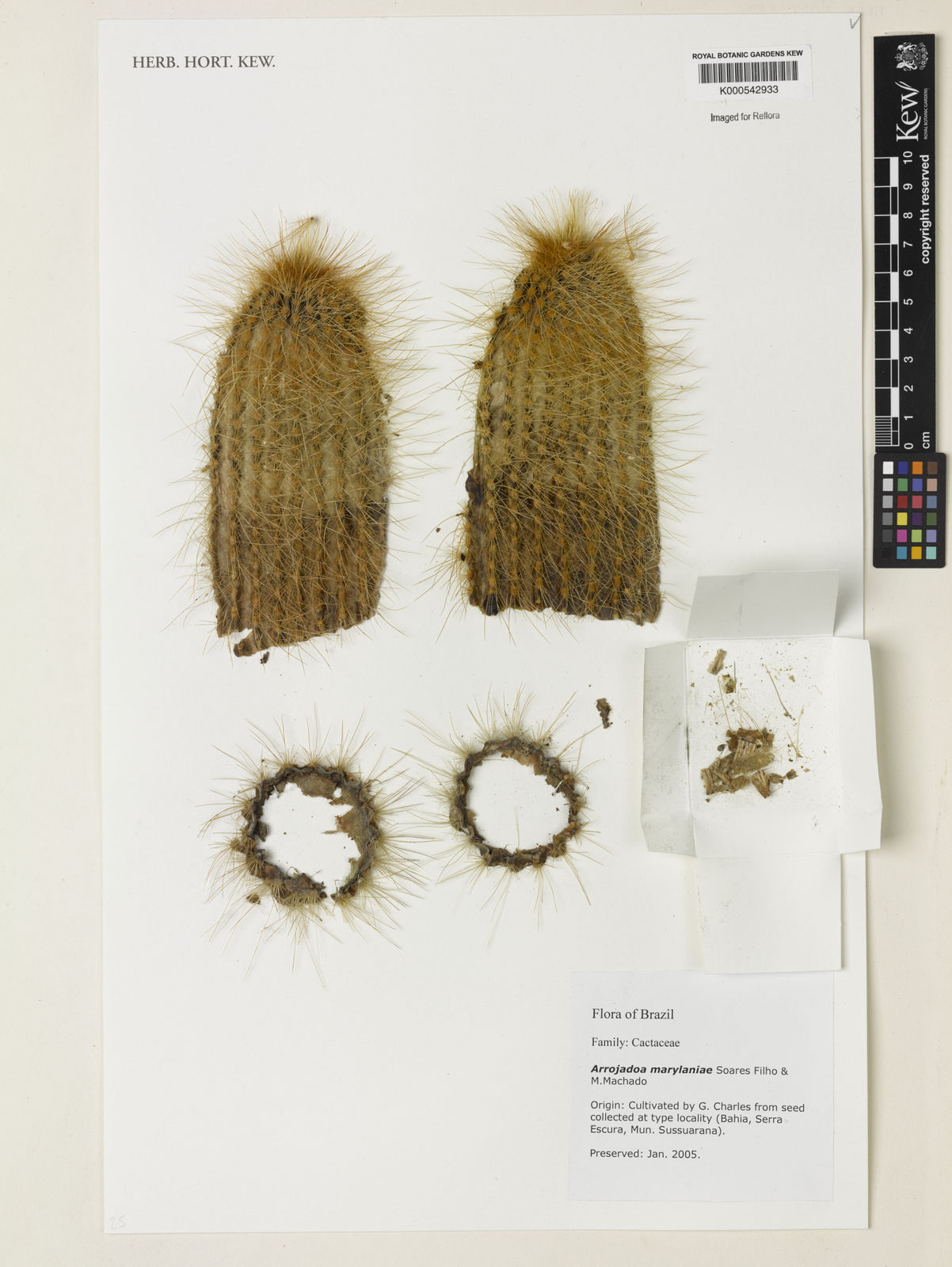 Reference image
Marylan's Arrojadoa
Arrojadoa marylaniae is an exceedingly rare and highly sought-after cactus species belonging to the family Cactaceae. Known for its distinctive growth habit, this succulent subshrub is highly valued among collectors for its unique cephalium and vibrant flowers 1.
Belonging to the genus Arrojadoa, which is famous for producing flowers from specialized terminal structures called cephalia, this species was named to honor the discoverer Marylan. It stands out in taxonomic classifications due to its specific rib structure and spine density 2.
This species is endemic to the seasonally dry tropical biomes of northeastern Brazil, specifically located within the state of Bahia 1. It thrives in rocky outcrops, quartz fields, and shallow, nutrient-poor soils characteristic of the Caatinga vegetation. Due to severe habitat loss, it is currently listed under critical conservation status.
Arrojadoa marylaniae exhibits cylindrical, erect to sprawling green stems divided into prominent ribs. As the plant matures, it develops a woolly, bristly ring-like cephalium at the stem tips. Bright tubular flowers, usually in shades of pink, red, or magenta, emerge from this woolly structure, adapted for hummingbird pollination 2.
In cultivation, it requires expert care. It demands bright, filtered sunlight and a highly porous, purely mineral-based potting substrate with excellent drainage. Watering should be deep but infrequent, allowing the soil to dry out completely. Minimum winter temperatures must be kept above 10°C to prevent rot.
The most common mistake is overwatering, particularly during the cooler winter dormant period. Placing the plant in heavy clay soils or lack of adequate air circulation will quickly lead to root decay.
Requires abundant bright, indirect or filtered sunlight to thrive.
Allow soil to dry out completely between waterings; dry in winter.
Mineral-heavy mix with high ratio of pumice, perlite, and coarse sand.
Spiny stems can cause physical injury; keep away from children and pets.
Hard to grow; recommended for experienced succulent collectors.
Endemic to the dry, rocky quartz fields of the Caatinga region in Bahia, Brazil.
