
Scientific taxonomy article
Auto-generated taxonomy record for Arrojadoa.
Arrojadoa
Auto generated taxonomy record for Arrojadoa.
Auto-generated taxonomy record for Arrojadoa.
Arrojadoa albiflora
Arrojadoa albiflora is a rare and captivating columnar cactus species native to the seasonally dry tropical forests and shrublands of northeastern Brazil. Belonging to the family Cactaceae, this endemic succulent subshrub is highly valued for its unique growth form, ring like woolly cephalium at the stem joints, and delicate white tubular flowers, distinguishing it from other members of its genus .
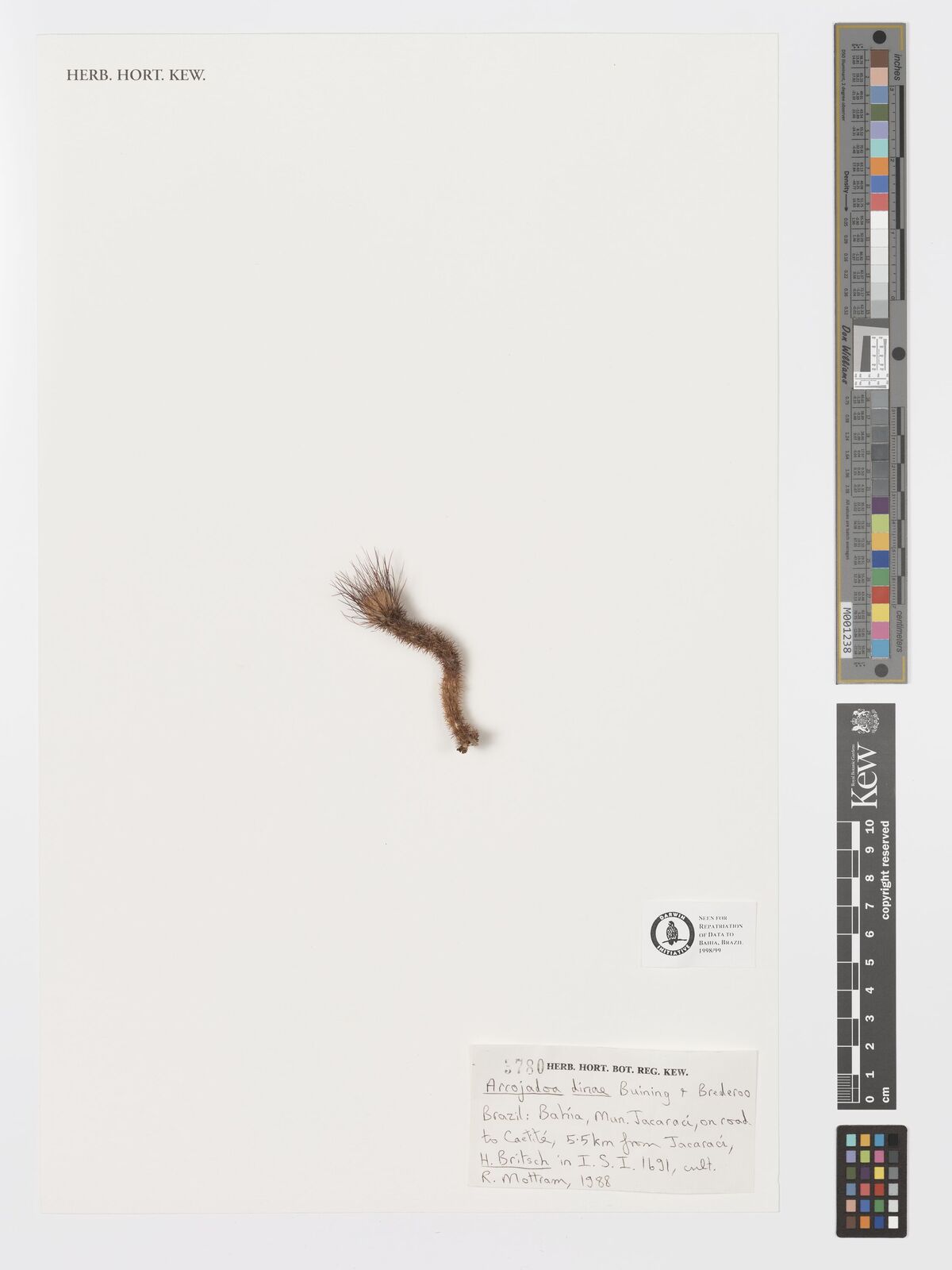
Arrojadoa dinae
Arrojadoa dinae is a unique, semi shrubby succulent cactus endemic to Brazil, highly prized by collectors for its slender stems and distinct ring like flowering structures called cephalia .
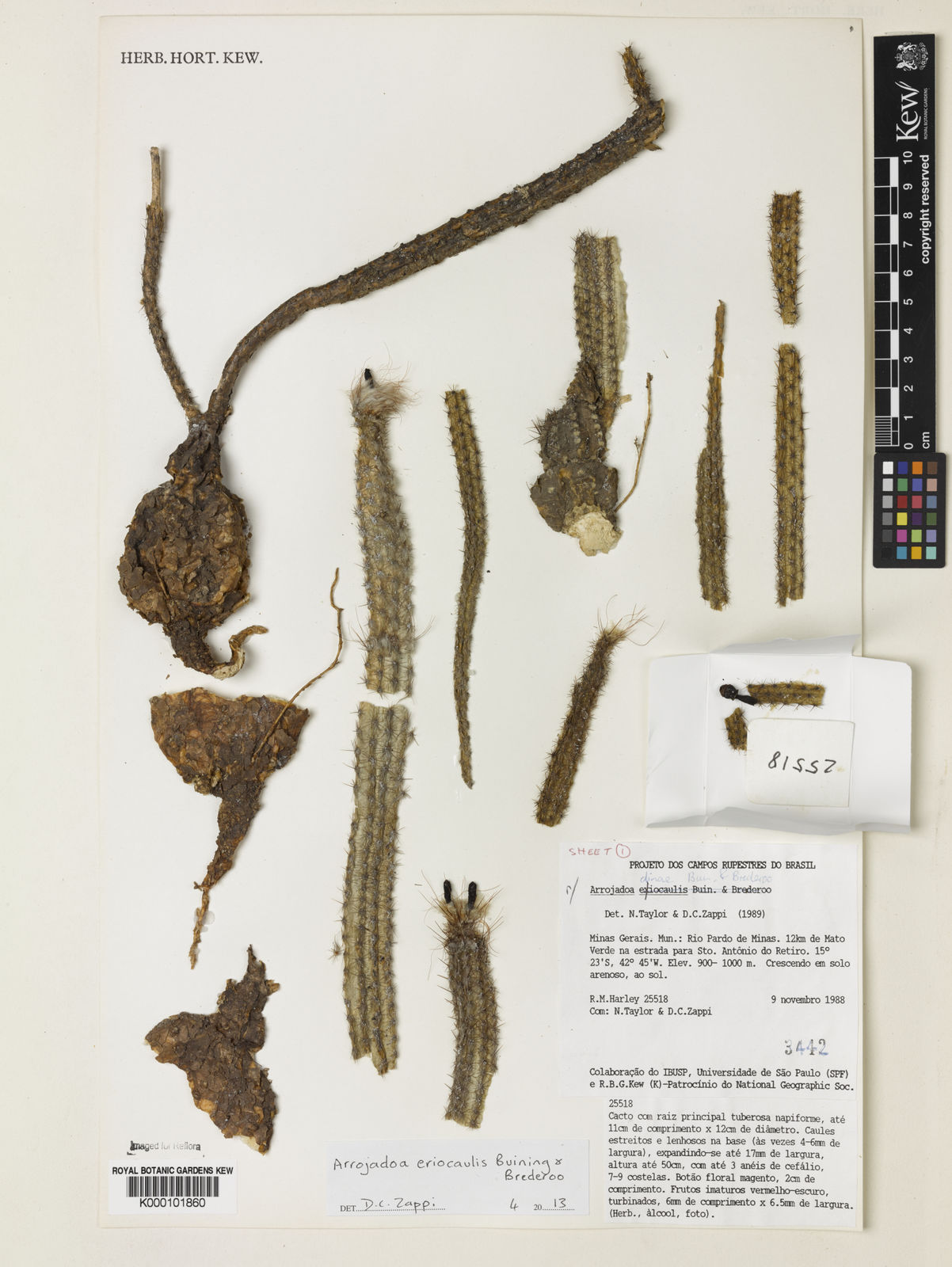
Arrojadoa eriocaulis
Arrojadoa eriocaulis is a rare, highly sought after cactus species within the Cactaceae family, distinguished by its tuberous root system and slender, semi scandent stems. Unlike typical desert cacti, it forms a fleshy subterranean caudex and exhibits a shrubby habit .
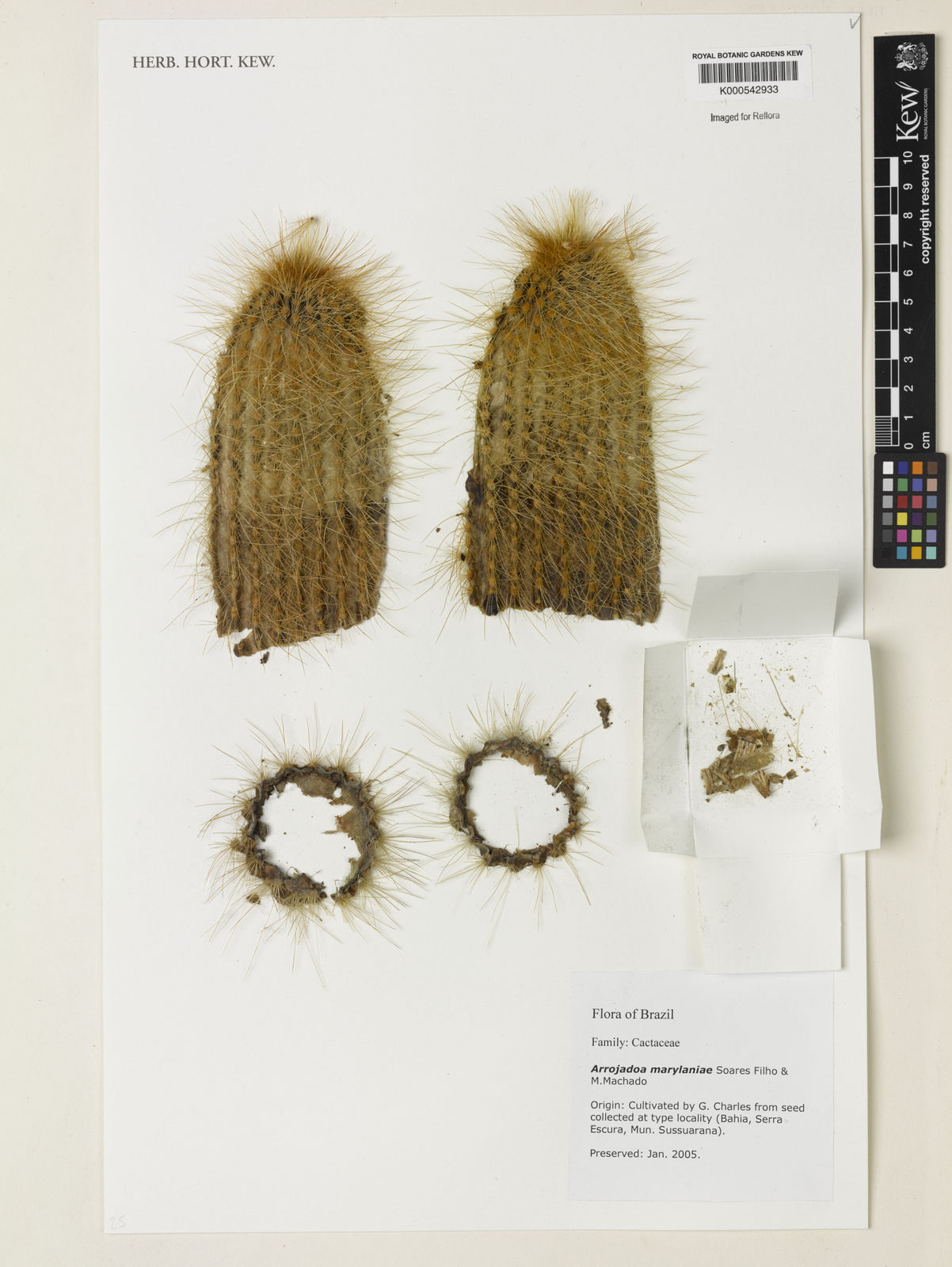
Arrojadoa marylaniae
Arrojadoa marylaniae is an exceedingly rare and highly sought after cactus species belonging to the family Cactaceae. Known for its distinctive growth habit, this succulent subshrub is highly valued among collectors for its unique cephalium and vibrant flowers .

Arrojadoa multiflora
Arrojadoa multiflora is an elegant, slender, semi erect succulent subshrub belonging to the family Cactaceae. Native to the seasonally dry tropical zones of northeastern Brazil, this species is highly sought after by cactus enthusiasts for its unique ring like cephalium structures and profuse tubular flowers .
Arrojadoa olsthoorniana
Overview\n Arrojadoa olsthoorniana is an intriguing succulent subshrub belonging to the Cactaceae family, celebrated for its unique growth form and colorful cephalium flowers . Unlike many massive columnar cacti, this species remains relatively slender, making it a prized specimen for collectors of rare succulent flora.\n\n Taxonomy and naming\nThis species belongs to the genus Arrojadoa , which was named in honor of Miguel Arrojado Lisboa, a Brazilian railroad superintendent . It is distinct within its genus, characterized by specific stem and floral morphology.\n\n Natural distribution and habitat\nNative to northeastern Brazil, particularly regions like Bahia, Pernambuco, and Ceará, Arrojadoa olsthoorniana thrives in the seasonally dry tropical Caatinga biome . It grows on rocky soils and stony outcrops, often tucked under deciduous shrubs that offer partial shade.\n\n Appearance\nThis succulent subshrub produces thin, erect to sprawling cylindrical stems. The stems are ribbed and adorned with small, dense clusters of spines. Its most striking feature is the terminal cephalium—a woolly, bristly structure at the stem tip from which small, tubular, pinkish red flowers emerge during the warm season.\n\n Care in cultivation\n Arrojadoa olsthoorniana requires a porous, well draining mineral substrate and bright, filtered sunlight. It benefits from regular watering during its active summer growing season, provided the soil dries out completely between waterings. Winter temperatures must be kept strictly above 10°C, with minimal moisture.\n\n Common care mistakes\nOverwatering is the primary cause of failure, quickly leading to root and stem rot. Placing the plant in heavy, organic soil or exposing it to freezing temperatures will also cause rapid decline.\n\n References\n Plants of the World Online (POWO). Kew Science.\n Anderson, E. F. (2001). The Cactus Family. Timber Press.

Arrojadoa penicillata
Arrojadoa penicillata is an elegant, thin stemmed, shrubby cactus species belonging to the family Cactaceae . It is highly prized by collectors for its unique, brush like colorful cephalium that forms at the tip of its stems.
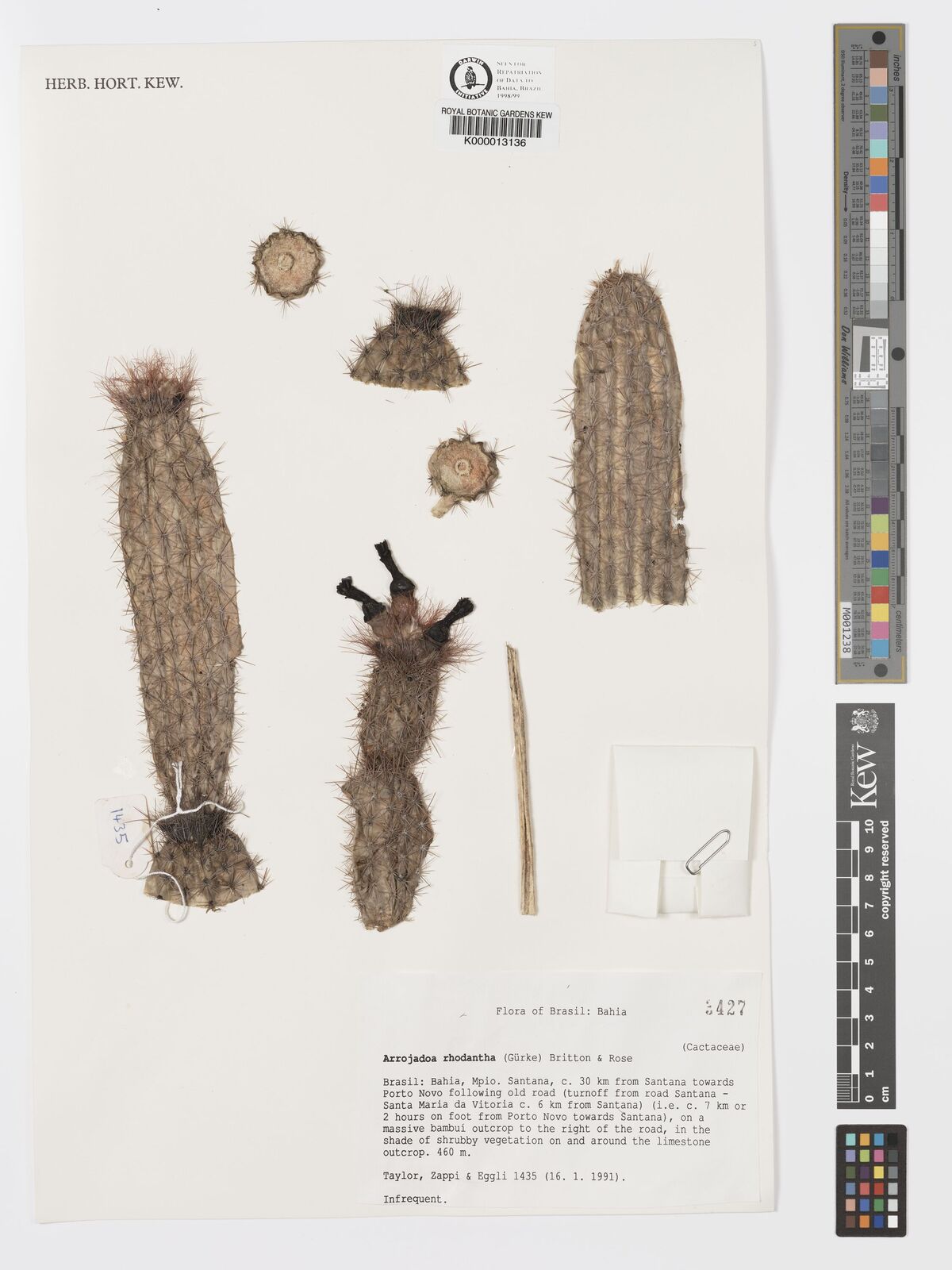
Arrojadoa rhodantha
Arrojadoa rhodantha is a unique, semi scandent or shrubby cactus species belonging to the Cactaceae family, native to the seasonally dry regions of Brazil. Known for its slender, branching stems and characteristic woolly cephalium, it is a highly prized specimen among cactus enthusiasts and specialized collectors .
