
Light
Bright Indirect Light
Prefers bright, filtered light or partial shade; avoid scorching midday direct sun.
 Reference image
 Reference image
Multicolored Whip Cactus
Arrojadoa multiflora is an elegant, slender, semi-erect succulent subshrub belonging to the family Cactaceae. Native to the seasonally dry tropical zones of northeastern Brazil, this species is highly sought after by cactus enthusiasts for its unique ring-like cephalium structures and profuse tubular flowers 1.
Belonging to the tribe Cereeae within the Cactaceae family, the genus Arrojadoa was named in honor of Miguel Arrojado Ribeiro Lisbôa, a Brazilian railway engineer and botanist. The specific epithet multiflora translates to "many-flowered" in Latin, reflecting the plant's characteristic display of multiple bright tubular blossoms bursting from its stem joints 2.
This species is native to northeastern Brazil, including states such as Bahia, Ceará, Paraíba, Pernambuco, Piauí, and Rio Grande do Norte 1. It thrives within the semi-arid "Caatinga" biome, growing primarily on rocky outcrops, quartzitic gravel soils, and in the cracks of sandstone formations.
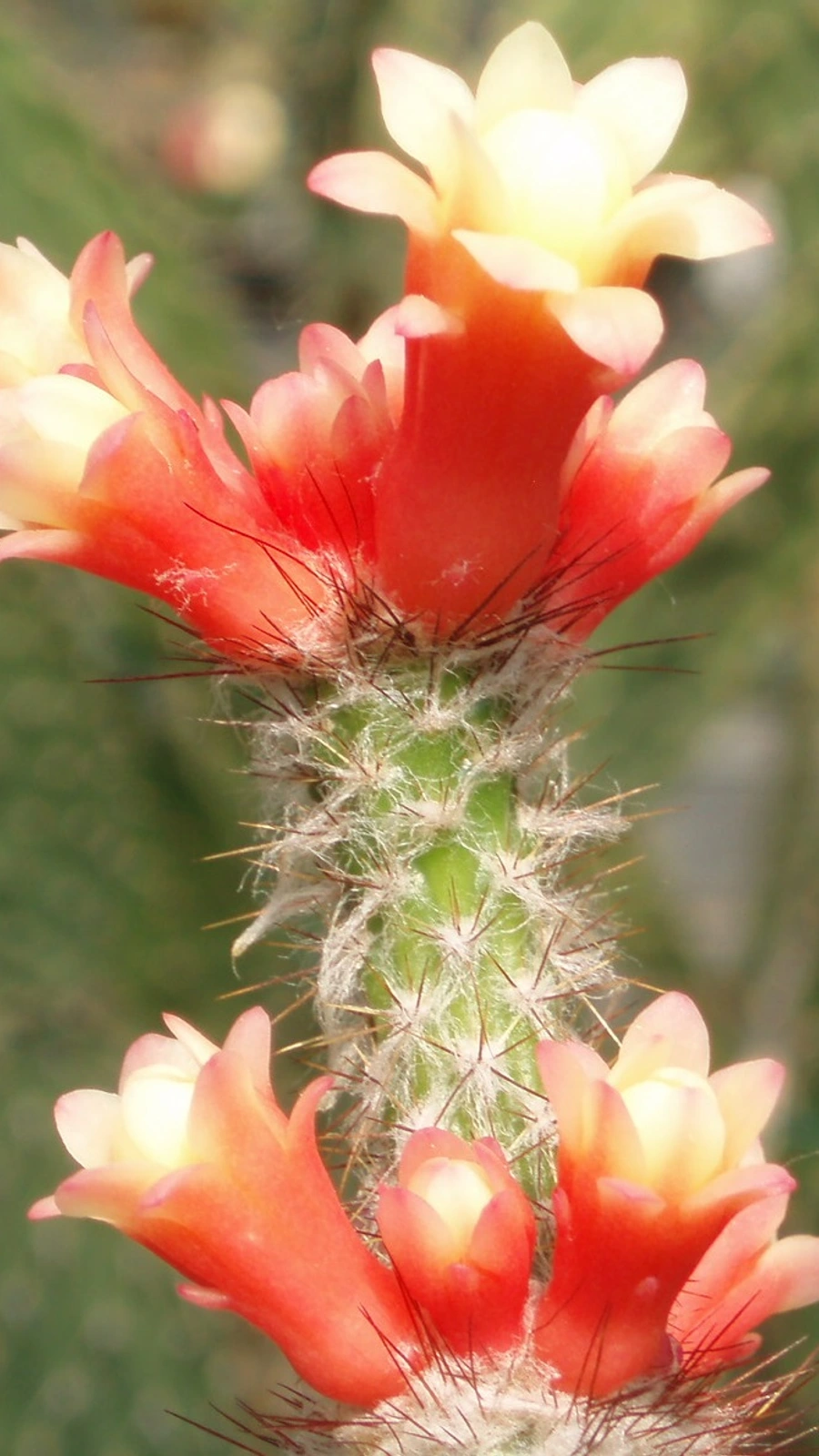
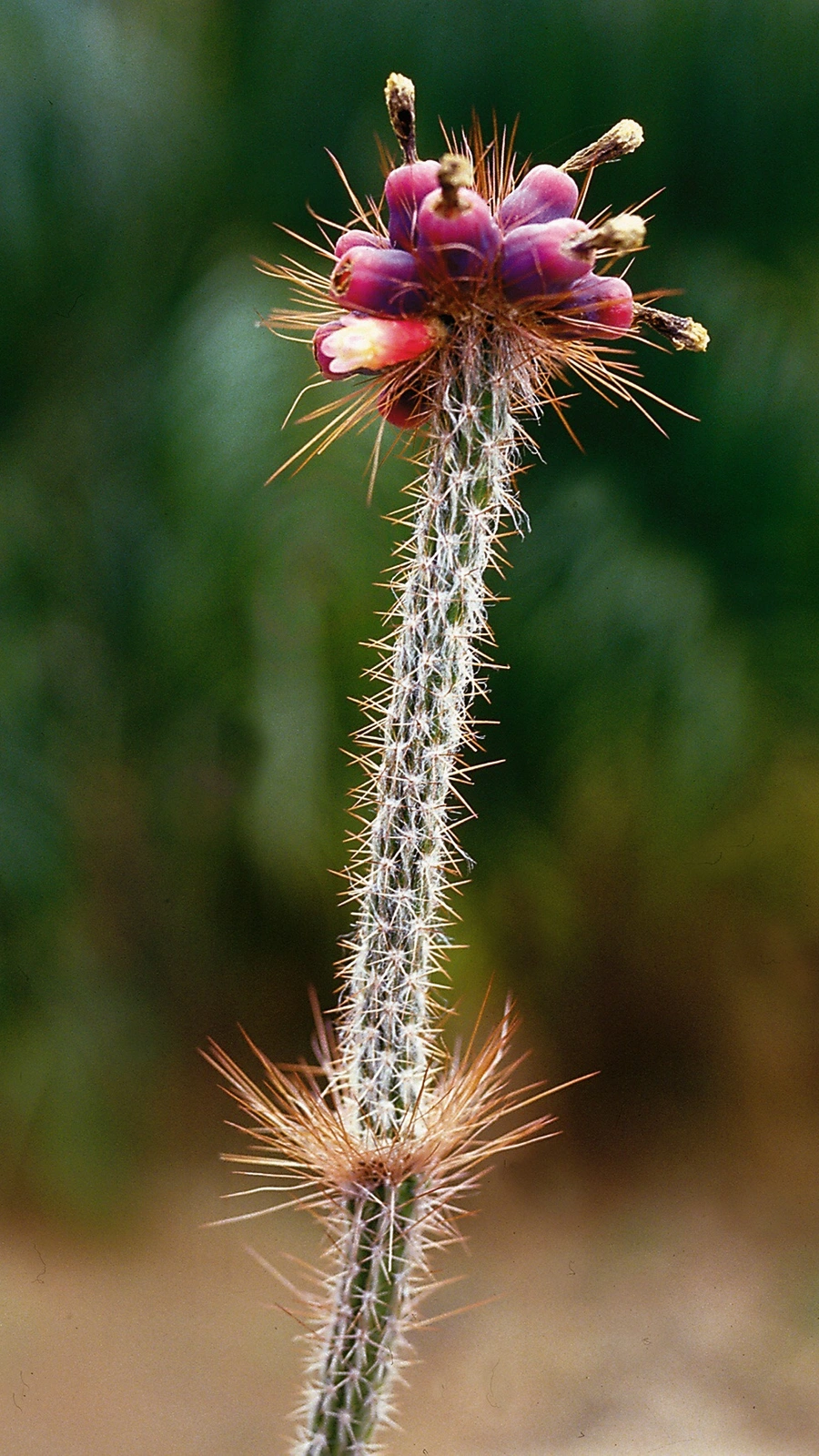
It features thin, cylindrical stems that branch from the base. The stems are green to grayish-green. The most distinctive feature is the woolly, bristly ring (pseudocephalium) that forms at the apex and stem joints. From these rings, clusters of small, tubular, pinkish-purple or red flowers emerge, which are highly attractive to hummingbirds 2.
Unlike harsh desert cacti, Arrojadoa multiflora prefers a slightly warmer and more humid environment in winter. It thrives in bright, filtered light rather than harsh direct sunlight. Watering should be thorough during the active growing season once the soil has completely dried out. In winter, keep it relatively dry and warm 1.
The most common issues stem from overwatering and poor soil drainage, which quickly lead to root rot. Additionally, exposure to temperatures below 10°C (50°F) for extended periods can cause chilling damage, scarring, or loss of the specimen.
Prefers bright, filtered light or partial shade; avoid scorching midday direct sun.
Water thoroughly during spring and summer once the soil dries out; reduce watering significantly in winter.
Requires a gritty, well-aerated soil mix rich in inorganic materials like pumice and coarse sand.
Features fine, sharp spines that can irritate skin. Keep out of reach of pets and children, though non-toxic.
Moderate care level; more sensitive to cold temperatures and root wetness than desert cacti.
Endemic to the semi-arid Caatinga region of Northeastern Brazil, where it grows among quartzite rocks and gravelly soils under seasonal tropical climates.
